collaborative structure


  • Health Insurance Company Experiences The Bounty Effect

    When Presbyterian Health Plan denied Dave Bexfield of Albuquerque, New Mexico reimbursement for a multiple sclerosis treatment trial, Bexfield launched a campaign to recover the $200,000 he spent on the treatment. He contacted media, bombarded Presbyterian with calls and emails, and ultimately lined his garage walls with the insurer’s denial letters, according to an August 1, 2014 column by David Segal in the New York Times.

    The treatment was a stem cell transplant trial sponsored by the National Institutes of Health. The trial worked in that Bexfield no longer takes M.S. medication and the disease is in remission. But the stem cell transplant was apparently not a covered benefit when Bexfield received the treatment. Ironically, Presbyterian Health Plan added this treatment to the benefits for Bexfield’s plan a few months after he finished the trial. A Presbyterian spokesperson reportedly called the timing “unfortunate.”

    Unfortunate indeed for Presbyterian Health Plan in that Bexfield refused to back down. Presbyterian reportedly insisted that the only reason the company had added stem cell transplants for M.S. as a benefit was that the federal government had mandated it. So Bexfield submitted a Freedom of Information Act request and received documents indicating there was no federal mandate. This suggested that Presbyterian had decided on its own based on the treatment’s merits to begin covering stem cell transplants after Bexfield had completed the trial. After receiving many additional letters and media calls, Presbyterian changed course. Presbyterian Health Plan President Lisa Farrell Lujan agreed to reimburse Bexfield not only the $200,000, but also an additional $198,000 in interest at 18 percent, according to the Times.

    Boom. The Bounty Effect had arrived at Presbyterian Health Plan, and the company seized the opportunity to change. The Bounty Effect happens when exigent circumstances compel businesses, governments and organizations to change their structures from command-and-control to collaborative. The exigent circumstances were groundbreaking advances in stem cell research. Bexfield’s campaign and the resulting media attention drove The Bounty Effect home. In this situation, Presbyterian adopted a more collaborative approach. Often structural change starts small and grows. This episode may pave the way for more fundamental structural changes at the company.

    In my latest book, The Bounty Effect: 7 Steps to The Culture of Collaboration, one of the 7 steps is Processes. And a key process is employing Measurement Counter-Measures which curb the measurement mania that can complicate collaboration and compromise value. The point is that a maniacal focus on measurement can produce the opposite of the intended result. Clearly, Presbyterian’s measurement mania produced myopia in that claims representative had difficulty seeing beyond the numbers.

    The $200,000 for the stem cell transplant would cost the insurer in the short run, but the money produces a living, breathing example of an insurance customer who may potentially avoid further treatment for M.S. and save the insurer plenty. One measurement counter-measure is to perform a common sense reality check. If the numbers defy common sense, that’s our cue to pause and reconsider. Employing Measurement Counter-Measures is often the hardest collaborative process for financial professionals to adopt.

    Lujan, Presbyterian’s president, is the company’s former CFO and was previously an audit manager with Arthur Andersen. She told the Times that the individual decisions Presbyterian made in Bexfield’s case were correct but that consistent policies had to be balanced against fairness. “When I looked at the forest, I came to a different conclusion than those who had looked at each individual tree,” according to Lujan.

    The old reimbursement decision was obsolete, because of scientific breakthroughs. Clinging to an antiquated coverage decision would expose the company to possible litigation, bad publicity, and a hit to its reputation. More fundamentally, the old decision—and the structure that produced that decision—failed the fairness test and the common sense reality check.

    The Bounty Effect prompted Lujan to take a key step—but changing the structure requires much more. If only the CEO can see the forest and use a fairness test, the organization flies blind and the business suffers. In adopting a collaborative structure, the challenge for Presbyterian and for many organizations is empowering people at all levels to consider the big picture, participate in decisions and take action. This requires, among other shifts, changing the recognition and reward system and enabling spontaneous interaction so that all Presbyterian Health System team members share a view of the forest and not just individual trees.
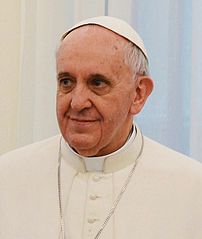


  • Pope Francis Promotes Collaborative Structure

    The least collaborative organization is changing its structure.

    Which organization? Well, here are some of its characteristics. This global enterprise pays a few people to make decisions while everybody else follows orders. The CEO’s direct reports act like a royal court and compete for face time. Senior leaders often live lavishly and consume conspicuously. Headquarters micromanages satellite offices. Bureaucracy and formality reduce efficiency.  Internal competition runs rampant. The command-and-control organizational structure quashes dissent.

    Sound familiar? This description fits many global corporations and government entities. This particular multinational spent $170 billion in the United States in 2010, according to The Economist. The organization is the Catholic Church and, more specifically, the Roman Curia, the church’s centralized administrative operation.

    Like many corporations, the Catholic Church suffers from an obsolete organizational structure that is compromising value. And like many corporations, reform-minded leaders have tried introducing a new approach. But entrenched interests and a centralized bureaucracy rife with intrigue, fiefdoms, and Machiavellian motivations has frequently derailed change.

    Enter Pope Francis setting the stage for change by wearing a simple white robe and black shoes rather than the regal vestments and ruby shoes of his predecessor. He has washed the feet of inmates and has Pope Francis smallopted to live in a guest quarters rather than the Vatican’s deluxe papal apartments in the Apostolic Palace. There are signs the Pope’s frugal tone is rippling across the Church. In March, the Pope accepted the resignation of Bishop Franz-Peter Tebartz-van Elst of Limburg, Germany who spent the equivalent of $43 million on a new house and office complex.  In April, the Atlanta Archdiocese announced that it would sell Archbishop Wilton Gregory’s $2.2 million mansion.

    Beyond Pope Francis’ rejection of the trappings of office, he is taking steps to adopt a more collaborative structure in the Roman Curia and in the global Catholic Church. The Pope has chosen a “working group” of eight cardinals from outside the Curia to collaborate with him on changing the structure.

    Cardinal Francesco Coccopalmerio heads the Vatican department that writes the church laws that will codify reforms. The Religion News Service quotes Cardinal Coccopalmerio as saying “The big change is the emphasis on collegiality, on collaboration.” Now Pope Francis, Cardinal Cocopalmerio and other new church leaders are focused on breaking down barriers among silos so that information flows around the organization rather than from top to bottom. Cardinal Cocopalmerio has proposed naming a “moderator of the Curia” to identify inefficiencies and cut through red tape.

    Pope Francis participates in meetings without dominating them and embraces broad input. Cardinal Donald Wuerl of Washington, D.C. recently attended one such meeting at the Vatican about appointing new bishops. Typically, popes never attend such meetings. Pope Francis reportedly stayed for three hours. “We’re all sitting around the table, and he comes in and pulls up a chair,” Cardinal Wuerl told Fox News.  At another similar meeting, a senior cardinal asked the Pope what he thought about the topic. “If I told you what I think, you would all agree,” Pope Francis responded according to Cardinal Wuerl. “I want to hear from you what you think.”

    Perhaps most significantly, according to Cardinal Wuerl, the Pope has repeatedly advocated a collaborative process through which “the Holy Spirit can be heard.”  And the Holy Spirit isn’t going to be heard if just one person speaks. “He wants all of us to be speaking with him so at the end of the day he can say this truly was the fruit of the work of the Spirit.”

    Hallelujah. Many corporations in multiple industries including United States government agencies can learn from the Pope’s example. It takes more than window dressing and a desire for change to create value through collaboration.  The only viable approach is changing the organizational structure which, in turn, shifts the culture. My research on collaboration indicates that changing the structure requires seven steps—plan, people, principles, practices, processes, planet and payoff. Pope Francis has demonstrated that making progress through these steps requires that a leader set the stage for change so that others feel comfortable participating.

    In essence, The Bounty Effect has hit the Catholic Church. The Bounty Effect happens when exigent circumstances compel companies, governments and organizations to change their structures from command-and-control to collaborative. For the Catholic Church, exigent circumstances range from sexual abuse scandals to corruption and cronyism at the Vatican. And it’s The Bounty Effect that led to the election of Pope Francis and the structural change now underway.