instant messaging


  • The Amazing, Disappearing (and Collaborative) Phone Call

    Texting and instant messaging (IM) have rapidly supplanted voice calls as our preferred communication mode. When we say “I spoke with him” or “I had a conversation with her” often we’re referring to text chat rather than voice. This lack of real talking adversely impacts collaboration.

    In many organizations, people never bother to set up their voice mail. And we increasingly view voice calls as intrusive. Yet companies have redesigned their physical spaces ostensibly to encourage intrusions such as on-the-fly and chance encounters which can spark collaboration.
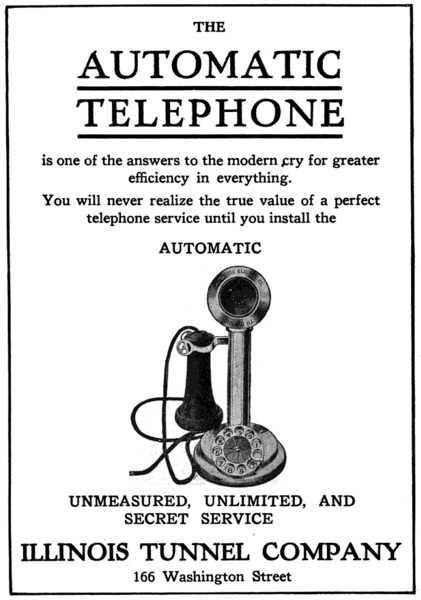
     

    Telephone advertisement
    1910 Advertisement for the automatic (dial) telephone service of the Illinois Tunnel Company in Chicago
    When I wrote the first edition of The Culture of Collaboration book in 2006, I summed up the deserialization of work and interaction as the “in-box culture is dead.” The idea was that something called presence would allow us to see who’s available and that we could connect with anybody in the organization via instant messaging. Then—and this is the important point—we could escalate that instant messaging session into a spontaneous voice or video call with the simultaneous capability of collaboratively working on documents, spreadsheets, presentations or in any application. So there was no longer a need to schedule voice and video calls. Through real-time collaboration, we could create far greater value.

    Somehow IM took hold in companies but escalation to voice and video calls has seemingly stalled. And use of voice on mobile devices has plummeted. At one time speakerphone quality was a key attribute of devices, but Apple iPhone and Samsung Galaxy marketing barely mention voice.

    IM has the advantage over email in that it’s nearly real-time and there’s an expectation of immediate response. So it’s easy to find people and connect with them. The problem is that like email IM and texting are one dimensional. It can be difficult to determine the real meaning and the emotion behind the words. If we talk with each other on a voice call, we can often understand each other better, cut to the chase and resolve issues more quickly than through IM. If the issues are more involved, a video call fits the bill.

    Also, people feel less isolated when using real-time voice and video. In fact, there are signs that we are desperate for real connection and interaction that IM and texting can’t deliver. The New York Times recently ran a story on how people are using calls to customer service representatives as therapy sessions. Increasingly, companies are training representatives to show compassion and focus on the emotional needs of the customer rather than rush them off the line.

    This phenomenon cuts both ways. Increasingly, customer service representatives are anxious for a real connection. I experienced this first hand when I called a credit card company recently to discuss my airline co-branded card. The representative told me about her background as a former flight attendant and a singer with a band. I also learned that she had a degree in advertising, likes to roller blade and moved from California to Florida. At the end of the call, she arranged a mileage bonus and said “thanks for letting me be me.” We both felt connected in a way that an IM session with the card company could never deliver.

    I’m currently writing a new edition of The Culture of Collaboration book and assessing where we’ve gone wrong and how we can get collaboration back on track. When it comes to tools, we’re half way there. Rather than getting stalled with texting and IM (not to mention social media), our challenge is to maximize our ability to find and connect with people. This means turning some of those texting and IM sessions into voice and video calls so that together we can create value.


  • Mayo Clinic Enhancing Collaboration

    The Mayo Clinic, founded on the principle of collaboration, is taking collaboration and innovation to the next level. With a mission nothing short of transforming how healthcare is experienced and delivered, Mayo’s Center for Innovation integrates emerging collaborative tools into processes and culture. The Center for Innovation includes Mayo’s innovative S.P.A.R.C. design lab.


    While writing The Culture of Collaboration book, I conducted on-site research at S.P.A.R.C. and throughout Mayo. Now it’s time for an update. The catalyst was a recent conversation with Chris Yeh of PBworks, which offers a hosted wiki-oriented business collaboration platform with newly-added integrated voice conferencing. Mayo is piloting PBworks along with other online collaborative spaces. “We call it a sandbox where people can figure things out,” Francesca Dickson of Mayo’s Center for Innovation told me yesterday during a Skype video call.


    Francesca and Beth Kreofsky of Mayo’s Center for Innovation provided an inside view of how Mayo is evolving, and we talked about the role of tools. Aside from PBworks, Mayo is also piloting “ideation” tools that let team members share ideas and build on them based on “focused questions.” One such tool is Jive.


    Besides asynchronous social tools, Mayo is now piloting instant messaging in several departments including nursing and radiology. Paging, a precursor to instant messaging, is deeply engrained in Mayo’s culture. Anybody can page the CEO and expect a prompt call back. Hierarchy is muted at Mayo, and the CEO is always a practicing physician. Mayo’s culture is ripe for IM and unified communications through which people can connect spontaneously through IM, voice or video regardless of level, role or region.


    Meantime, paging persists at Mayo. The Center for Innovation’s mission is to keep Mayo, well, innovating. So the Center is demonstrating to the organization that IM offers a clear advantage over paging.


    Video is another tool that’s part-and-parcel of Mayo’s culture. Mayo was an early user of videoconferencing to encourage collaboration among its three campuses. Mayo has already piloted Cisco TelePresence with a hospital in Duluth, Minnesota. And beginning in April, patients in Canon Falls, Minnesota will receive consultations from Mayo specialists via TelePresence.


    By integrating new collaborative tools into its already collaborative culture, Mayo will likely enhance healthcare delivery and create greater value.