Networking with people who share your interests is often the first step to effective cross-organizational collaboration, but staying in touch with people after conferences and trade shows is by no means automatic. The first step is a system that makes contacting people easy. I have blogged extensively about presence, which is the ability of a person or device to communicate with others and display levels of availability. IM has introduced us to presence. But what about people we meet at conferences whose information is on business cards rather than in a database? Echoing the classic 1995 book Being Digital by Nicholas Negroponte, it’s a challenge of turning atoms into usable bits.
I attend many conferences, and I usually end up with a pocket full of business cards, some with notes on the back about conversations and follow-up items. While I make and receive calls and exchange email with some of these contacts, I rarely find the time to manually enter the information from every business card into my contact database. There is, however, an effective solution.
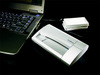
I’ve been using an incredibly-useful product that automates business card data entry. CardScan Team combines simple and intuitive contact management software and a sleek business card scanner with the ability to share the database with colleagues on a network. I scanned a stack of cards, one after the next, and processed the pile in a couple of minutes. CardScan Team efficiently recognized name, email, phone numbers, fax, address, URL and other information and placed it in the right fields instantly. The software is smart enough to know that there are many ways people indicate phone numbers on cards including “p” or “tel.”
I assigned a customized category with the name of the conference so that I could easily query the database for all of the contacts I met at that venue. CardScan Team displays the front of each business card and provides the option of scanning the back. The software also enables users to export the data to Microsoft Outlook. CardScan Team had trouble with only one card in my stack that displayed some fiery red text, but the software let me easily make a couple of quick changes to the data. CardScan Team, which costs $399.99, synchronizes with mobile devices. The product also includes secure data back-up and password-protected access to that data via a browser.
CardScan Team enhances collaboration by letting us share contact information with colleagues in real time and by dramatically decreasing the time and hassle factor involved in keeping in touch.


 The Culture of Collaboration Blog