Science


  • Health Insurance Company Experiences The Bounty Effect

    When Presbyterian Health Plan denied Dave Bexfield of Albuquerque, New Mexico reimbursement for a multiple sclerosis treatment trial, Bexfield launched a campaign to recover the $200,000 he spent on the treatment. He contacted media, bombarded Presbyterian with calls and emails, and ultimately lined his garage walls with the insurer’s denial letters, according to an August 1, 2014 column by David Segal in the New York Times.

    The treatment was a stem cell transplant trial sponsored by the National Institutes of Health. The trial worked in that Bexfield no longer takes M.S. medication and the disease is in remission. But the stem cell transplant was apparently not a covered benefit when Bexfield received the treatment. Ironically, Presbyterian Health Plan added this treatment to the benefits for Bexfield’s plan a few months after he finished the trial. A Presbyterian spokesperson reportedly called the timing “unfortunate.”

    Unfortunate indeed for Presbyterian Health Plan in that Bexfield refused to back down. Presbyterian reportedly insisted that the only reason the company had added stem cell transplants for M.S. as a benefit was that the federal government had mandated it. So Bexfield submitted a Freedom of Information Act request and received documents indicating there was no federal mandate. This suggested that Presbyterian had decided on its own based on the treatment’s merits to begin covering stem cell transplants after Bexfield had completed the trial. After receiving many additional letters and media calls, Presbyterian changed course. Presbyterian Health Plan President Lisa Farrell Lujan agreed to reimburse Bexfield not only the $200,000, but also an additional $198,000 in interest at 18 percent, according to the Times.

    Boom. The Bounty Effect had arrived at Presbyterian Health Plan, and the company seized the opportunity to change. The Bounty Effect happens when exigent circumstances compel businesses, governments and organizations to change their structures from command-and-control to collaborative. The exigent circumstances were groundbreaking advances in stem cell research. Bexfield’s campaign and the resulting media attention drove The Bounty Effect home. In this situation, Presbyterian adopted a more collaborative approach. Often structural change starts small and grows. This episode may pave the way for more fundamental structural changes at the company.

    In my latest book, The Bounty Effect: 7 Steps to The Culture of Collaboration, one of the 7 steps is Processes. And a key process is employing Measurement Counter-Measures which curb the measurement mania that can complicate collaboration and compromise value. The point is that a maniacal focus on measurement can produce the opposite of the intended result. Clearly, Presbyterian’s measurement mania produced myopia in that claims representative had difficulty seeing beyond the numbers.

    The $200,000 for the stem cell transplant would cost the insurer in the short run, but the money produces a living, breathing example of an insurance customer who may potentially avoid further treatment for M.S. and save the insurer plenty. One measurement counter-measure is to perform a common sense reality check. If the numbers defy common sense, that’s our cue to pause and reconsider. Employing Measurement Counter-Measures is often the hardest collaborative process for financial professionals to adopt.

    Lujan, Presbyterian’s president, is the company’s former CFO and was previously an audit manager with Arthur Andersen. She told the Times that the individual decisions Presbyterian made in Bexfield’s case were correct but that consistent policies had to be balanced against fairness. “When I looked at the forest, I came to a different conclusion than those who had looked at each individual tree,” according to Lujan.

    The old reimbursement decision was obsolete, because of scientific breakthroughs. Clinging to an antiquated coverage decision would expose the company to possible litigation, bad publicity, and a hit to its reputation. More fundamentally, the old decision—and the structure that produced that decision—failed the fairness test and the common sense reality check.

    The Bounty Effect prompted Lujan to take a key step—but changing the structure requires much more. If only the CEO can see the forest and use a fairness test, the organization flies blind and the business suffers. In adopting a collaborative structure, the challenge for Presbyterian and for many organizations is empowering people at all levels to consider the big picture, participate in decisions and take action. This requires, among other shifts, changing the recognition and reward system and enabling spontaneous interaction so that all Presbyterian Health System team members share a view of the forest and not just individual trees.

  • California Academy of Sciences Collaborates to Discover Mammals

    Collaboration requires long-term thinking. That’s where universities, libraries, museums, and research organizations often eclipse for-profit companies. Pressure to generate quarterly returns can compromise long-term value, particularly at publicly-held companies. With less pressure to deliver immediate results, research-driven, non-profit organizations can focus more on creating long-term value. Maybe it’s a new take on history or a scientific discovery. Regardless, the work product may remain relevant hundreds of years from now.


    That said, competition internally and within fields of study can prove more ferocious in the research arena than in corporations—whether it’s competing for limited grant dollars or for publishing articles in academic journals. Like corporations, the best research organizations mitigate unhealthful competition by thinking and acting towards creating long-term value. In this realm, long-term value can extend into eternity.


    Knowing the collaborative mindset of the California Academy of Sciences, I accepted an invitation to attend a briefing and preview tour last Thursday of the Academy’s new Extreme Mammals exhibit, which runs through September 12, 2010. For background on architectural collaboration in the Academy’s building design, see my February 17, 2009 post.


    San Francisco is the Extreme Mammals exhibit’s second stop after opening at the American Museum of Natural History in New York.  Over tea and cupcakes, I had a compelling pre-tour conversation with Greg Farrington, the self-proclaimed “chief penguin” or executive director of the Academy. Farrington, a chemist, is the former president of Lehigh University. “You might think everything in the world has been discovered at least twice, but it hasn’t,” Farrington noted. Touring the exhibit confirmed Farrington’s point.

      
    Elephant-shrew
      
    The exhibit features extinct, living and recently-discovered mammals including the striped rabbit identified as a new species in 1999 and the gray faced sengi or giant elephant shrew discovered in 2008. Galen Rathbun,  
    a behavioral biologist at the Academy and Francesco Rovero of the Trento Museum of Sciences in Italy and other collaborators discovered the gray-faced sengi in the Ndundulu Forest in Tanzania’s Udzungwa Mountains. It was the first new species of giant elephant shrew discovered in 126 years.


    Rathbun accompanied us on the tour and later took a small group behind several locked doors to view a collection of shrew specimens shelved inside fireproof cabinets in the Academy’s research collections. The collections include 26 million specimens of animals, insects, reptiles, birds, plants, fish and gems. Rathbun noted that several collaborating research institutions had loaned shrew specimens to the Academy for research.


    One participant asked birds and mammals curator Jack Dumbacher if we could look inside the special cabinet that contains extinct animals and so-called “type specimens” of newly-discovered mammals. Dumbacher obliged, and we walked down the aisle past many rows of cabinets until we reached a shorter cabinet set apart from the others. As Jack unlocked the cabinet, he unleashed a ripe odor along with a feast for the eyes of preserved birds, rodents, and bats. The treasures also include the largest egg in the world from the elephant bird of Madagascar. A model of the egg is on display in the Academy’s public area.


    Back to the public galleries and the Extreme Mammals exhibit. Scientists and administrators from global institutions have collaborated on the show, which the American Museum of Natural History organized. Collaborators shared knowledge, pieced together skeletons and gathered skulls, fossils and taxidermy specimens for Extreme Mammals. The result is a compelling experience for visitors who gain insight into the extreme variety of mammals and the awesome biodiversity of our planet.


  • Collaborate to Fix Venture Capital and Innovation Ecosystem

    With a severe liquidity squeeze and a withered initial public offering (IPO) market, the venture capital industry and entrepreneurs face incredible challenges. The infrastructure to take companies public has nearly collapsed.


    “The ecosystem is broken,” Judy Estrin told an audience at the Tech Policy Summit this week in San Mateo, California. Judy, serial entrepreneur and former chief technology officer of Cisco, was referring to the ecosystem comprising venture capitalists, investment bankers, universities, entrepreneurs, scientists, customers and others that has launched scores of innovative and profitable companies including Intel, Apple, Cisco and Google over the last forty years.


    Judy has become a crusader for innovation, one of the Ten Cultural Elements of Collaboration that I identify in The Culture of Collaboration book. While there have been “exit” opportunities for venture-backed companies in recent years, those exits have been almost entirely mergers and acquisitions (M&A). “M&A is not enough to spur innovation,” Judy insists. Therefore, we must fix the innovation ecosystem and repair the IPO market to regain innovation leadership.


    In her book, Closing the Innovation Gap (McGraw-Hill, 2009), Judy chronicles the breakdown of the innovation ecosystem.  She argues that sustainable innovation never happens in a vacuum. “It is not just a flash of brilliance from a lone scientist, nor is it simply the result of a group going offsite to brainstorm and play team-building games.” Judy also quotes Danny Hillis, former vice president of research and development at Walt Disney Imagineering, as saying essentially that the key is not only to create the “soup” where people brainstorm, but also to develop a system that translates their ideas into something effective. Clearly, Judy believes that collaboration is key to innovation.


    Collaboration is also key to fixing the innovation ecosystem. Let’s face it. Greed-fueled star culture helped break the ecosystem. To fix it, we must recruit and promote collaborators throughout the ecosystem. This means funding entrepreneurial teams focused on the fundamentals of building great companies. It also means rebuilding the public trust that companies are rooted in innovation rather than hype. It also means changing expectations to embrace long-term growth over short-term returns.  


  • Architectural Collaboration and the California Academy of Sciences

    As I gazed at the Big Dipper, the Little Dipper and other amazingly-clear star formations last Thursday evening, there was no distraction from city lights or from the fog that often defines San Francisco.

    I was sitting in the world’s largest digital planetarium, which uses real-time data from NASA plus immersive video technology. The NASA data accurately represents the current night sky, and the immersive video technology makes visitors feel like they’re travelling through space.


    The star-studded evening program was a departure from the usual daytime planet presentation in honor not only of Charles Darwin’s 200th birthday last Thursday evening, but also of the launch of NightLife at the California Academy of Sciences. NightLife is a weekly Thursday evening event featuring bars, food plus all of the Academy exhibits. 


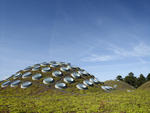
    I walked, Lagunitas India Pale Ale in hand, through the recently-reopened museum and marveled at the Rainforest Exterior four-story glass rainforest with its colorful poison frogs and Borneo bats and the graceful movement of jellyfish in the Steinhart aquarium, which includes thirty-eight thousand animals. Aside from official certifications that the Academy is the “greenest” museum on the planet, I found the museum’s “Living Roof” stunning and unique.   Living Roof The 197-thousand foot roof features seven hills containing many native plant species. The concept was to blend the building’s environment with that of Golden Gate Park and to reduce the Academy’s energy needs by creating oxygen, capturing rainwater and avoiding the heat-trapping disadvantages of tar-and-asphalt roofs.


    After a decade of planning and $500 million in expenses, the Academy reopened last fall to much fanfare.

    At the time, the San Francisco Chronicle ran an interesting story by John Cote that described how the Academy’s board of directors chose an architectural team for the project. By July of 1999, the board had reportedly narrowed its search to five finalists. According to the story, a British architect arrived with five associates, two trays of slides and detailed mockups of two specific designs. He spoke for an hour and a half.


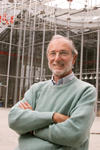
    When it was Italian architect Renzo Piano’s turn, he began by rearranging the room chairs in a circle. He then used a blank pad to sketch as he listened to board members describe the importance of nature, biodiversity, and naturalistic forms. Renzo Piano Ultimately, Piano and his team got the job because of his collaborative approach. Rather than simply presenting options to the board, Piano engaged and involved his client. The result reflects broad input and the collaborative sessions between architect and client.


    Too often in organizations, people make decisions in a vacuum. Those decisions are handed down to people who must implement them. This causes a chasm between the decision makers and the decision implementers and many others who are impacted by decisions. Then there’s a lot of talk like “They want us to ….” Or “they’ve decided that we’re supposed to….” So, an “us and them” mentality develops and sucks the motivation, innovation and value out of an organization.


    In contrast, collaborative organizations make decisions by involving and engaging people across levels, functions, business units and regions. When people have a stake in decisions, “us and them” dissolves. I’ve written in The Culture of Collaboration book and in this blog about the interplay of culture, environment and tools in sparking collaboration. In his initial session with the Academy’s board, Renzo Piano used all three. He changed the culture by involving the board in the conceptual process. He redesigned the environment by rearranging the rooms chairs in a circle. And he used a blank sketch pad as a collaborative tool.


    It’s a reminder—one that we stress in The Culture of CollaborationÒ Workshop—that collaborative culture can begin with a team gathering or a spontaneous exchange. In the case of the California Academy of Sciences, the result is an extraordinarily functional and “green” architectural masterpiece.


  • Sustainability Fuels Collaboration Consciousness

    Both academia and business are realizing that the lack of collaboration can impede progress. Traditionally, university researchers compete for limited grant money, so there is little incentive to collaborate.

    In a Christmas day story in The New York Times, Claudia H. Deutsch reported on several academic sustainability centers that focus on collaborating across disciplines. One is the Golisano Institute for Sustainability at the Rochester Institute of Technology. The article quotes Nabil Nasr, the institute’s director, as saying “the problem of sustainability cuts across economics, social elements, engineering, everything. It simply cannot be solved by one discipline, or even by coupling two disciplines.” Well said!

    Now The Dow Chemical Company, through its foundation, is funding a Sustainable Products and Solutions Program at The Center for Responsible Business at the Haas School of Business at The University of California-Berkeley. Dow is providing $10 million over the next five years and sending a Dow leader to Berkeley as an executive-in-residence. Part of his role is to recruit other industry partners to fund the program. What’s compelling about the sustainability program is that the Department of Chemistry is collaborating with the business school and the program will likely involve students and faculty from other disciplines. The bottom line is that environmental and sustainability concerns run deep enough and are so complex that they’re sparking collaboration among people who would otherwise do one of three things: compete with each other, ignore one another, or remain at odds with each other.

    Urgency in the environmental realm is clearly driving collaboration across disciplines, but sustainability is by no means the only area in which universities and corporations should be applying collaborative principles, practices and processes. In the business realm…marketing should be collaborating with research and development, R&D should be collaborating with information technology, sales should be collaborating with the market research group, and so on. This should be happening asynchronously and in real time.