Organizational Culture


  • Changing Organizational Structures for Collaboration

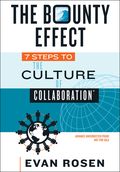
    My new book entitled The Bounty Effect: 7 Steps to The Culture of Collaboration® is now available. It’s the second book in a series which includes The Culture of Collaboration®: Maximizing Time, Talent and Tools to Create Value in the Global Economy. The Bounty Effect shows how to change the structure of organizations for collaboration.

    Why do organizations need to change their structures? The Industrial Age was command and control. The Information Age is collaboration. Yet Industrial Age structures render collaboration dead on arrival in the Bounty Effect Jacket JPGInformation Age. Remnants of these structures—including organization charts, performance reviews, meetings and mission statements—inhibit organizations from using new collaborative methods and tools that spark innovation. Now we’re at the point where many organizations—from corporations and small businesses to universities and government agencies—have a desire to collaborate.  Some have taken action to instill collaborative culture. But what’s holding back collaboration is obsolete organizational structures, which we must change.

    The Bounty Effect gets its name from the mutiny that occurred on the H.M.S Bounty in 1789. Before the mutiny, Captain William Bligh used a well-worn management technique: command-and-control. The mutiny forced the structure and culture to change as Bligh became a collaborative leader and his loyalists participated in decisions as they struggled for survival aboard a small boat. The mutiny was an exigent circumstance, one that compels immediate action.

    The Bounty Effect happens when exigent circumstances compel businesses, governments and organizations to change their structures from command and control to collaborative. Triggers include disruptive market forces, new competitors, regional slowdowns, natural disasters, terrorist attacks and global downturns.

    The book is about how to seize the opportunity that The Bounty Effect provides and change the organizational structure in seven steps.  My objective in writing the book is to provide a framework for structural change necessary to transform organizations into collaborative enterprises. And The Bounty Effect demonstrates how collaborative enterprises create far more value than command-and-control organizations. Using the framework, people and organizations can determine how to redesign and adopt a collaborative structure that fits. I welcome your input.


  • How Bean Counting Compromised Value at General Motors

    Too often companies emphasize numbers over products and forecasting over customers. Such firms typically focus on short-term results over long-term value. This creates greater internal competition and encourages shorter-term supplier relationships rather than enhancing collaboration internally among functions and externally with business partners.

    The relentless focus on numbers at the expense of domain expertise figures prominently in the book, Car Guys vs. Bean Counters (Portfolio, 2011) by Bob Lutz, former vice chairman of General Motors. Fifty years ago, GM products were the epitome of design. Over the last half century, though, the company’s products have steadily lost traction with customers. This decline culminated in the company’s reorganization under Chapter 11 in June of 2009. While many factors contributed to GM’s bankruptcy, short-sighted bean counting was undoubtedly one of them.

    “It’s time to stop the dominance of the number crunchers, living in their perfect, predictable, financially projected world,” writes Bob, who specializes in getting people’s attention. I first encountered Bob early in my career when I was reporting on the auto industry and attending the introduction of the Jeep Grand Cherokee at the 1992 North American International Auto Show in Detroit. Bob exuded machismo as he drove the SUV through a plate-glass window into the hall, shocking me and other journalists awaiting the usual dull presentations. At the time, Bob was president of Chrysler.

    Bob’s detractors consider him an old-school, shoot-from-the-hip executive who makes decisions based on his gut with little analysis. In reality, Bob understands the need for left brain and right brain driven people to collaborate regardless of their titles or functions. And he encourages more junior people to challenge him. In short, he values constructive confrontation, one of the ten cultural elements of collaboration I introduce in my book, The Culture of Collaboration

    The former Marine Corps pilot insists that “car guys” should run auto companies, “supermarket guys” should run supermarkets, and “software guys” should run software companies. He concedes that these “guys” can be of either sex. Too often, as I noted in The Culture of Collaboration book, boards of directors and senior leaders believe that if they hire “star players” these supposed stars can and will achieve results regardless of their domain knowledge or industry experience. Some prominent management consulting firms reinforce this skewed logic. The so-called star players are typically numbers-driven MBA’s interested more in units rather than in products and in forecasting rather than in customers. The organization promotes these internally-competitive numbers crunchers and sidelines others who focus on improving products and interacting with customers.

    Of course, quantitative analysis is critical to any business. The problem arises when quantitative analysis dominates and pervades every aspect of a business while designing awesome products and creating market stickiness take a back seat. As Lutz chronicles in his entertaining and informative Chevrolet 1957 book, once upon a time design dominated the auto industry. Think of the tail fin era of the late 1950’s which gave rise to cars including the 1957 Chevrolet and the 1959 Cadillac (see images, Chevy image courtesy Trekphiler). Designers originated products. By the 1970’s, General Motors had reigned in designers, made design “part of the system,” and assigned product origination to a department called Product Planning staffed by former finance people.

    Neither the old design-driven General Motors nor the newer numbers-driven organization is a model of collaboration. In the 1960’s, when design and the designers were at their pinnacle, Lutz writes thatCadillac 1959  chief designers in well-tailored suits graced magazine covers. Essentially, designers had become stars and expected star status and treatment within GM and in society. Chief designers often silenced and sidelined people in other functions.

    When GM reduced the role of designers, the organization empowered product planning to originate products in a vacuum. Handing plans off to designers with the instruction “go design this” hardly enhances collaboration. Ideally, designers would lead a design process with input from, engineering, manufacturing, marketing, sales and dealers. In a collaborative organization, people come together across departmental and functional barriers to share ideas and develop products and services in concert.

    At least among senior leaders, GM more recently came closer to this ideal when it hatched the Chevrolet Volt, a hybrid electric/gas car introduced in December, 2010. Lutz, who had advocated an all-electric vehicle, describes how he sat across from Jon Lauckner, former GM vice president of product planning, as Lauckner sketched out the first drawing depicting the “sequential” hybrid technology of the Volt. This differs from the “parallel” hybrid technology of the Toyota Prius (The Volt is designed to go forty miles without using gasoline unlike the Prius which alternates between electric and gas). And almost immediately people Lutz dubs “unconventional thinkers” in design and product planning began collaborating.

    Whether it’s skimping on ingredients in restaurant kitchens or using inferior paint in automobile assembly plants, focusing on numbers over products and forecasting over customers reinforces the wrong organizational values. In time, team members become comfortable sacrificing products and shortchanging customers. Ultimately, value evaporates.  More collaborative organizations use quantitative analysis as a tool rather than as the primary organizational focus.


  • Collaborative Chaos at the New York Times

    Journalism, at its best, involves constant collaboration.

    In television newsrooms, reporters, producers and assignment editors engage in a continuous conversation about stories and often edit scripts together in real time. While real-time group writing is a relatively new phenomenon in education and business, reporters and producers frequently write story introductions and “teases” together. This traditionally involves no electronic screen-sharing or web conferencing, but rather colleagues shouting to one another across the newsroom or two people hunched over a single terminal. In newspaper newsrooms, a similar continuous dialogue occurs among reporters and editors. Some colleagues get to know one another so well that they even finish each other’s sentences.

    All of this newsroom interaction requires informality. Corporations and government agencies are increasingly embracing informality, because of a growing realization that formality compromises value creation. But informality is nothing new in newsrooms. The informality of journalism dates back at least to the early 20th Century when few reporters got “formal” higher education and the socialization that accompanies it. Newsrooms then felt more like police stations in which colleagues sat in an open room exchanging sarcastic, irreverent banter. And though most journalists (and many police) now graduate from college and the journalistic culture has evolved, newsrooms have nevertheless retained much of their informality.

    Films about journalism have captured this informality. Examples include the 1931 and 1974 versions of The Front Page, written by Ben Hecht and Charles MacArthur, about newspaper reporting in Chicago. Also, the 1976 film, All the President’s Men, directed by Alan Pakula, about Washington Post reporters Bob Woodward and Carl Bernstein’s investigative reporting on the Watergate scandal, reveals the constant conversation among all the players in the Post newsroom. The conversation continues down corridors and into the elevator where executive editor Ben Bradlee (played by Jason Robards), in a dramatic moment, instructs Woodward (played by Robert Redford) and Bernstein (played by Dustin Hoffman) to “print it” meaning to run a story about Watergate.

    Fast forward to 2011. Traditional journalism is under siege, in part because of the Great Recession’s 
    Page One ravages but mostly because of systemic shifts in the media industry. These include shrinking audiences and advertising dollars flowing to Web-based alternatives including social media. Against this backdrop comes Page One: Inside the New York Times, a documentary directed by Andrew Rossi, which attempts to capture a leading newspaper and its people at a pivotal point. (Photo of Times newsroom above courtesy of Magnolia Pictures)

    The reviews have been mixed, a charitable adjective for Michael Kinsley’s take on the film that ran in—of all outlets—the New York Times itself. Kinsley takes the documentary to task for flitting “from topic to topic, character to character, explaining almost nothing.” Kinsley suggests that the movie is disjointed and confusing. The film does take up a series of topics: WikiLeaks, the Pentagon Papers, the Times survival, Comcast’s purchase of NBC Universal, Twitter’s impact, the Times’ plagiarism scandal involving former reporter Jayson Blair, Iraq, the Apple iPad, and the ups and downs of the Tribune Company, among others.

    And all of this comes in the form of a continuous conversation upon which we as the audience eavesdrop. “Like a shopper at the supermarket without a shopping list, “Page One” careens around the aisles picking up this item and that one, ultimately coming home with three jars of peanut butter and no 2-percent milk,” Kinsley writes. Yes, but the collaborative process is rarely pretty.

    In The Culture of Collaboration book, I identify the Ten Cultural Elements of Collaboration that are typically present when collaboration works. One of these elements is collaborative chaos, which is exactly what Page One reveals. Collaborative chaos, the unstructured exchange of ideas to create value, lets the unexpected happen and generate rich returns. In the film, we see former cocaine addict and current Times media columnist David Carr sharing ideas with his sources, his colleagues and his editor, Bruce Headlam. These exchanges culminate in value creation, Carr’s columns. And the film invites us into the Times daily story conferences during which editors jostle over which articles should appear on the front page.

    Kinsley, no stranger to journalism as the former editor of the New Republic and Slate, would undoubtedly argue that while confusion may prevail in newsrooms, it’s the job of the filmmaker to present a more organized picture. But attempting to sanitize or beat the collaborative chaos out of the Times or any news operation would present a distorted view. It would be like eating street food in an upscale setting, a current trend in the restaurant business incidentally.

    Journalism, and collaboration itself, involves a continuous conversation during which collaborative chaos prevails, recedes, only to prevail again all the while creating value.


  • MIT Technology Review Featuring The Culture of Collaboration

    Technology journalist and former Wall Street Journal reporter Lee Gomes and I had a thought-provoking chat earlier this week about collaboration. Lee was interviewing me for a question-and-answer style profile in the MIT Technology Review. The Review was capping off a series of stories about collaboration with the interview on The Culture of Collaboration book. I’m glad that the editor accurately summed up my perspective in the headline: "Collaborating Takes More than Technology."

    You can read the article here.

    Lee did a good job playing devil’s advocate. Among the issues and questions he raised: “Command and control might not be pretty, but it gets things done. Couldn’t an overemphasis on collaboration paralyze an organization?" I responded this way:

    "What paralyzes an organization is when management compromises value by failing to tap ideas, expertise, and assets. What also paralyzes an organization is when requests for decisions languish in in-boxes rather than hashing out issues spontaneously. Paying a few people to think and paying everybody else to carry out orders creates far less value than breaking down barriers among silos and enabling people to engage each other spontaneously."


  • Every Worker is a Knowledge Worker

    Management consultants, technology vendors, and human resources departments often segregate workforces into “knowledge workers” and everybody else.  In a collaborative organization, every worker is a knowledge worker. Every team member contributes, shares knowledge, and participates in making decisions, whether he or she is loading crates, designing products, servicing customer accounts, creating tactical marketing plans, or determining long-term strategy.

    My current column for Bloomberg BusinessWeek.com entitled "Every Worker is a Knowledge Worker" describes how organizations can desegregate the workforce. You can read the column here.


  • U.S. Embassy Vatican Gains Influence by Sharing

    After delivering a keynote speech for the Tagetik User Conference 2010 in Lucca, Italy late last month, I wanted to experience first-hand the collaborative movement in the United States Department of State.

    So, I visited the United States Embassy to the Holy See. With only six diplomats plus local staff, the embassy is undoubtedly one of America’s smallest. Unlike every other U.S. embassy, Embassy Vatican represents the U.S. government not just to a sovereign nation, but also to the largest single organization on Earth. That organization is the Catholic Church and its 1.2 billion Catholics globally.

    With a geographically-dispersed constituency, Embassy Vatican requires more than a physical location to accomplish U.S. policy objectives. That’s where virtual or eDiplomacy plays a role. Sure, there are often reasons for U.S. diplomats to press the flesh with Church officials, but Embassy Vatican need not be physically located in the Vatican. And, in fact, it’s not. The embassy is across the Tiber River in Rome, Italy.

    To reach the embassy, I made my way to Aventine Hill, an upscale neighborhood of Rome. What distinguishes the villa housing Embassy Vatican from the other mansions on the tree-lined block is the soldiers and small artillery across the street, security at the gate plus metal detectors at the entrance to the building. I waited in a converted living room decorated with portraits of former U.S. ambassadors and pictures of popes with U.S. presidents ranging from Reagan to Obama.

    Vatican Embassy - Julieta Valls Noyes In time, I was shown into an elegant office with a view of the embassy’s lush garden. Julieta Valls Noyes, Deputy Chief of Mission, extended her hand. She then introduced Mark Bakermans, Embassy Vatican’s point person on collaborative tools. After brief pleasantries, Julieta was ready to embrace the informality so necessary to collaboration. “I’ve already greeted you, so I can remove my jacket,” she smiled.

    Our conversation focused on the challenges of representing the United States to a global constituency. “We’re a small embassy, but what happens here has universal interest,” according to Julieta. To encourage information exchange and collaboration, Julieta had advocated building a Microsoft SharePoint portal for the embassy. However, according to Julieta, the tiny embassy lacked the necessary bandwidth. So, the State Department’s eDiplomacy team sent people to Rome. In May of 2009, a Diplopedia wiki-based internal site went live. For more on Diplopedia, see my September 14, 2010 post on “Taking Collaborative Risk at the State Department.”

    Clearly, Embassy Vatican’s use of Diplopedia is raising the embassy’s profile within the State Department. On an average month, the site gets 300 to 400 visitors. But that number spikes considerably when issues involving the Catholic Church hit the news. As the Catholic Church sex scandal bubbled up to banner headlines last February, Embassy Vatican’s Diplopedia site became a State Department clearinghouse for information on the scandal and the Church’s reaction to it. Most of the staff at Embassy Vatican contributes to the Diplopedia site, but Mark noted that the challenge is getting people across the State Department to comment on posts and share knowledge. For Diplopedia to enhance collaboration, consumers of information must also become contributors to information.

    I asked Julieta whether she would provide an inside view of the State Department’s internal ideation tool called Secretary Clinton’s Sounding Board, which is based on a blogging platform. For more on Secretary Clinton’s Sounding Board, see my September 14, 2010 post. Julieta invited me to sit on the edge of her desk (more informality!) as we viewed spirited debate from employees on topics ranging from recruitment of Hispanics to paying interns. Notably, one of the State Department’s most senior officials participated in the discussion and helped shape the ideas.

    The State Department has used Secretary Clinton’s Sounding Board to create workplace improvements. These range from installing showers for team members who ride bicycles to installing donation boxes so that employees can deposit left-over foreign currency from trips. The State Department then uses the money to aid families of Department people such as those who were Haiti earthquake victims. Ultimately, the State Department may use the ideation tool to craft diplomacy. Julieta insists that a separate ideation tool for diplomacy hosted on the Department’s classified site makes more sense than integrating diplomacy with workplace issues.

    Like so many organizations, the State Department still faces cultural issues that impede collaboration. These include rank-consciousness, unnecessary manifestations of hierarchy and silos among levels, teams and regions. Nevertheless, collaborative culture is starting to take hold—and tools like Diplopedia and Secretary Clinton’s Sounding Board are extending and enhancing that culture.


  • Taking Collaborative Risk at The State Department

    Shifting from command-and-control to collaborative culture involves what might be termed collaborative risk, but some organizations are realizing that there’s greater risk in clinging to old ways of working.


    State Department Logo One organization that is recognizing the need for taking collaborative risk is the United States Department of State. “We’re a very risk-averse culture,” notes Duncan MacInnes, principal deputy coordinator for the Bureau of International Information Programs. State Department professionals fear that misstating policy or saying the wrong thing could become a diplomatic crisis. This parallels the fear in companies that trade secrets or market-moving information could leak. Nevertheless, the State Department has determined that the benefits of collaborating internally and externally outweigh the risks of resisting work style change.


    Change agents across the State Department are guiding the culture towards embracing collaboration. These change agents have wisely realized that eliminating disincentives to collaboration is as important as creating incentives. Therefore, the Department has updated its policies to eliminate disincentives to taking collaborative risk. “People will make mistakes, and those who have made too many mistakes have not been dinged for it,” according to MacInnes. This approach is critical to shifting the culture, because people must feel that the organization values collaborative risk and will provide the cover for them to try new ways of working.


    Externally, the State Department enables embassies to broadcast their own events including speeches by ambassadors on the Web with input from the public. The State Department uses ConnectSolutions Podium high-definition webcasting, which lets users ask live text questions, text chat with each other about the event, and leave video comments. The ConnectSolutions Real-Time Collaboration Platform enhances and extends Adobe Connect web conferencing. Embassies are also using the tool to collaborate internally. At first, embassy staff resisted the shift. “We’re showing them a new way to work, and we’re meeting in the middle,” says Tim Receveur, a foreign affairs officer coordinating global use of the tool.


    Aside from real-time collaboration, the State Department is also chalking up results in collaborating asynchronously. Over 3500 State Department team members have contributed some 12,000 articles to Diplopedia, an internal online encyclopedia based on Wikipedia. You can view an amusing video on Diplopedia here. The Department has also seen compelling growth in the use of an ideation tool. Ideation means developing and refining ideas so that people can make their organization better. The tool, dubbed Secretary Clinton’s Sounding Board, is based on a blogging platform. The tool lets people across embassies, bureaus, regions and levels of leadership brainstorm, make process improvements and create value collaboratively.


    In the last eighteen months, people have contributed 1800 ideas. “What in the past would have been water-cooler conversation that went nowhere is now [getting results], because the person who can make it happen is part of the conversation,” explains Richard Boly, director of e-Diplomacy. The ideation tool lets a person hired locally who’s working in a small West African consulate to collaborate, brainstorm and develop communities of interest with counterparts globally.


    One success factor for Richard and his team as they guide the work style shift is focusing on “the how rather than the what” for starters and saving the “thorniest issues” for last. By thorniest issues, Richard means U.S. policy and diplomacy. Meantime, he and his colleagues are encouraging culture shift and emphasizing use of collaborative tools for brainstorming improvements in “how” policy can be crafted. As the culture warms to the new way of working, the change agents believe diplomats will more collaboratively create policy itself.  


    Private industry is now looking to the State Department for clues regarding how to engage people effectively through corporate ideation tools. Increasingly, companies collaborate through ideation tools with their customers, but lag in collaborating internally. A big factor is fear. Companies often fail to give people cover so that they take collaborative risks. In this case, the Federal government may clear a path for business.


  • Incenting the Intelligence Community to Collaborate

    Instilling collaborative organizational culture often requires changing the recognition and reward system. But internally-competitive entrenched interests will undoubtedly resist changes to how the organization pays and promotes people. Also expect resistance from people who believe there’s no reason to incent people, because they should do as they’re told.


    James Clapper Tuesday, during James Clapper’s confirmation hearing as director of national intelligence, Senator Carl Levin (D-Michigan) asked Clapper why it’s necessary to incent the intelligence community to collaborate. Levin was referring to Clapper’s pre-hearing questionnaire in which he apparently wrote that, if confirmed, he would achieve progress in information sharing by the “disciplined application” of incentives—both rewards and consequences. “Why do we need incentives,” Levin asked “Why don’t we just need a directive from the President by executive order, for instance? Otherwise, why do we need incentives, rewards and consequences?”


    Clapper responded, “One way of inducing change in culture is to provide rewards for those who collaborate and, I suppose, penalties for those who don’t.” He added, “And obviously directives are effective too.” You can watch Levin’s questions and Clapper’s testimony before the Senate Intelligence Community on C-SPAN here (counter 1:37:06). Incidentally, collaborative organizations achieve more with the carrot than the stick. Penalties for failure to collaborate are anti-collaborative in that they spread fear. Instead, reward and recognize collaborators; then others will get the message and start changing their behavior.


    Since the 9/11 terrorist attacks, the intelligence community has struggled to shift from a culture of competition and information hoarding among agencies to a collaborative culture in which people share data and information. For background on this, see my December 30, 2009 post. I have advised senior leaders of the intelligence community about the transition. On the sixth anniversary of the terrorist attacks, I gave a speech to the community sponsored by the Office of the Director of National Intelligence (ODNI).


    In the speech, I highlighted four areas. One was aligning recognition and reward systems to encourage collaboration. ODNI, the entity formed after September 11, has been driving collaboration among the sixteen agencies that comprise the intelligence community. Some agencies have balked, ostensibly for security reasons, about sharing their data across the community. While security concerns are valid, perceived loss of control and inter-agency rivalry also play a role.


    The leaders whom I’ve advised implicitly understand the value of collaboration in developing better intelligence and thwarting terrorists. They also understand institutional resistance. James Clapper currently serves as Under Secretary of Defense for Intelligence and formerly served as the director of the National Geospatial-Intelligence Agency (NGA) and the Defense Intelligence Agency (DIA). This multi-agency intelligence background gives Clapper an advantage in guiding the shift in the intelligence community’s culture in that an insider committed to change has more credibility than an outsider does. Clapper must draw on his alliances and relationships across the community to help break down barriers among agencies and adopt collaborative culture.  


  • The Much-Maligned Meeting and Collaboration

    The “M” word creates more outbursts of opinion than practically any other word in business.


    I’m referring to the word meeting. Almost everybody has a—usually negative—gut reaction to the notion of meetings. Plenty of people would prefer being stuck on a tarmac than stuck in a meeting. Even though water and snacks are often available at meetings, our time belongs to others. On the tarmac, there’s no guarantee of refreshments, but at least our time is our own. In fact, meeting-bashing has become welcome break-room conversation.


    Nevertheless, technology vendors have invested huge resources in meetings. So, it’s not just employers who want to load up our schedules with meetings. There are vendors with vested interests in making meetings even more integral to our work than they are now.


    Last night on CNN’s “Larry King Live,” Larry asked Microsoft founder Bill Gates his opinion of the Apple iPad. Gates responded, “We’re all trying to get to something that you just have to take to a meeting and use.” He added, “It still isn’t the device that I would take to a meeting, because it just has no input.” You can view the video clip here. So, one way Bill gauges the effectiveness of the iPad and similar devices is whether we will want to take them to a meeting. Bill—and by inference, Microsoft—apparently remains focused on keeping us in meetings. In reality, it’s more important whether the iPad and any similar device fits into our lifestyles and work styles than whether we’ll want to bring it to meetings.


    Are meetings collaborative? There’s nothing inherently collaborative about an in-person or virtual meeting. That’s right. Using virtual meeting tools is no guarantee that we’re collaborating. Joining a web conference, using telepresence or IMing the day away creates little value unless these tools fit into collaborative organizational culture and practices.


    If we compete with colleagues and our teams and organizations reflect “star culture”, do the tools we use make us collaborative? No. It takes more than tools to make collaboration happen. If we fill our ranks with millennials and send them to meetings with devices loaded with collaborative capabilities, will those meetings automatically become collaborative? Don’t bet on it.


    The biggest beef about meetings is that they’re a waste of time. In other words, they fail to create value. If we come together as a group and we’re working together to create value, we’re collaborating. So, we’ve essentially transcended the notion of a meeting and instead we’re in a collaborative session. Organizations and vendors should seek to remake meetings as collaborative sessions.


    In the final chapter of The Culture of Collaboration book, I note that “Today we struggle to collaborate as effectively at a distance as we do in the same room. Tomorrow the challenge becomes the reverse.” As collaborating in the same room starts seeming awkward, that’s the new frontier. But organizations and technology vendors take note: it’s about creating more value through collaboration rather than better meetings.


  • Creating Collaboration Takes More than Technology

    Decision makers often think collaborative tools will create collaboration, and they're perplexed when results elude the organization. Technology extends and enhances–but rarely creates–collaboration. My current column for BusinessWeek.com describes what organizations need besides technology to make collaboration happen. You can read the column here.