collaboration book


  • Saying Goodbye to the Brigade System

    Recently-resurfaced abuse allegations against chef René Redzepi at Copenhagen’s Noma restaurant, now closed, have called into question the so-called Brigade System. The French chef Georges Auguste Escoffier developed the hierarchical structure in the late 19th Century to instill discipline and efficiency. Yet many restaurants still use the Brigade. Le Cordon Bleu, the French culinary education organization, conflates the Brigade System with collaboration. While collaboration may exist in Brigade System kitchens, it exists in spite of the system rather than because of it.

    With the executive chef at the top of the kitchen org chart, the Brigade System not only instills hierarchy. The system also gives rise to star culture with the chef as the star. It’s not just kitchens where star culture flourishes. As I describe in the Introduction to the expanded and updated edition of The Culture of Collaboration book, we turn artists, athletes, chefs, politicians, surgeons, influencers, television hosts, entrepreneurs, corporate leaders and many others into stars. This tendency creates the impression that we accomplish great feats by ourselves. Yet we know better. Hierarchy and star culture are two of the Ten Anti-Collaborative Cultural Artifacts I identify in the book.

    Escoffier’s goal, as Pete Wells points out in his well-researched New York Times story, was to mold disorderly kitchen staffs into a profession. Yet as many organizations have discovered, instilling “order” can also discourage dissent, spontaneity, and creativity. No wonder expensive tasting menus seem formulaic, and customers perceive plunging value in fine dining.

    In contrast, Chez Panisse has never used the Brigade System. Rather, the Berkeley, California restaurant embraces a collaborative ecosystem of stakeholders which includes farmers, team members and customers. Team members often rotate roles and enjoy greater autonomy than at other restaurants. Chefs, servers, bussers and managers enjoy a daily meal together with wine—and it’s often the same meal the staff serves to customers.

    Evan Rosen and Alice Waters in the Chez Panisse kitchen

    A Chez Panisse principle revolves around food education—how food should be raised and prepared. Accordingly, the restaurant has a word-of-mouth, open-door kitchen policy. On a recent visit, I walked into the kitchen. Team members were focused but seemed relaxed and willing to answer questions. Chez Panisse founder Alice Waters was sitting at the prep counter enjoying a glass of rose and waiting for her dinner which is obviously more civilized than Rene Redzepi’s reported approach. We chatted a bit. I then walked back to the production kitchen where a prep cook was cutting the ends off of just out-of-the-ground sugar snap peas. Had Noma customers wandered back to the production kitchens, they might have observed the alleged abuses that reportedly occurred there. In any industry, command-and-control and star culture may appear to work. Yet in time, these Anti-Collaborative Cultural Artifacts backfire and compromise value. Instead, a collaborative ecosystem creates lasting value.

  • Unlocking Collaboration through Deserialization

    Why does collaboration fail? The answer is often the lack of collaborative processes and culture. Less obvious is the lack of deserialization. From the private sector to education and from government to nonprofits, serialized processes impede collaboration.

    Deserialization is both macro and micro. As I describe in the new, expanded and updated edition of The Culture of Collaboration® book, macro deserialization is the removal of sequences from the lifecycle of products and services. There are useful manifestations in multiple industries. In the aerospace industry, macro deserialization means simultaneously designing parts, plans, tools, processes, assembly, delivery, maintenance, and retirement of the plane. In the visual effects industry, post-production is becoming pre-production as artists design effects before and during the shoot with hybrid physical and virtual worlds.

    Micro deserialization is the removal of sequences from how we interact and get things done. The in-box culture is dead—and the in-box can include overflowing text, chat and messaging applications. Waiting for somebody else to provide input slows decisions and complicates resolution. So does making an appointment to collaborate! Instead, Do It Now Together! And instead of scheduling a meeting, let’s engage each other spontaneously in a collaborative group session—No Appointment Necessary. You’ll find more on replacing meetings in the book.

    Embracing deserialization unlocks the value that collaboration promises.


  • New Expanded and Updated Edition of The Culture of Collaboration® Book

    How has collaboration evolved? What is the current state of collaboration at Toyota, Mayo Clinic, Industrial Light & Magic, Boeing and other companies profiled in the first edition of The Culture of Collaboration® book? What are the keys to long-term value creation through collaboration?

    These are questions I sought to answer as I went back inside collaborative companies to research and write the new, expanded and updated edition of The Culture of Collaboration® book.

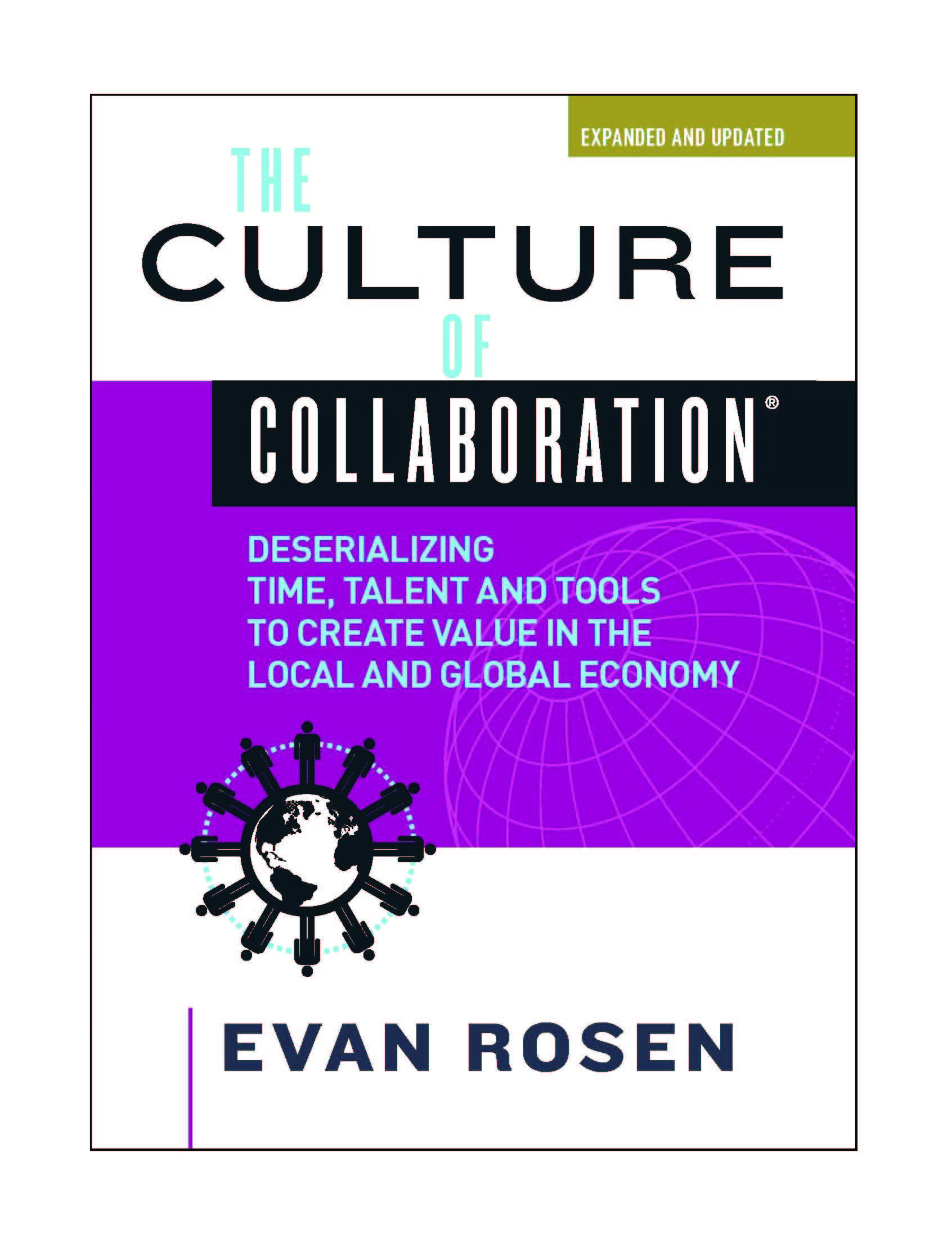
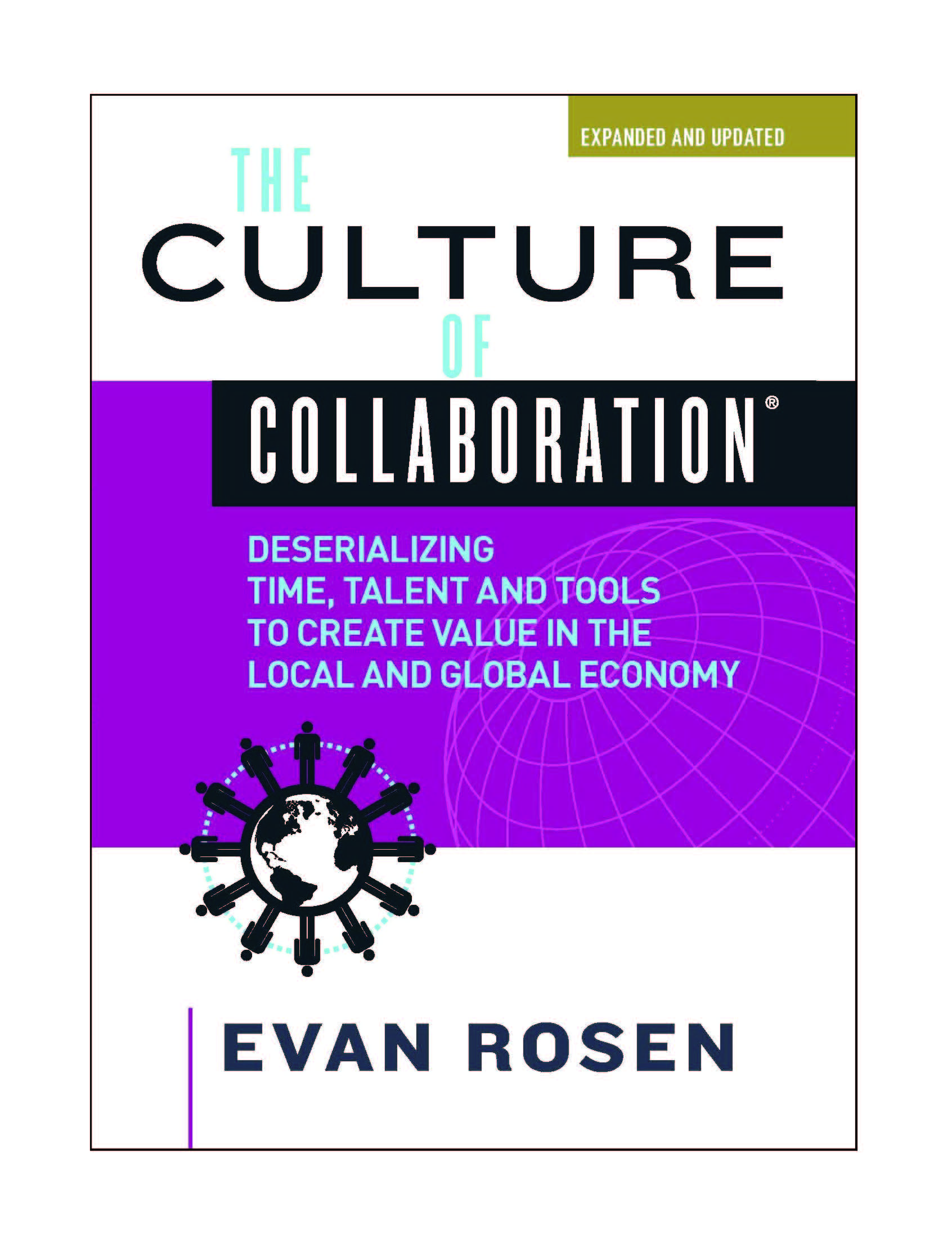
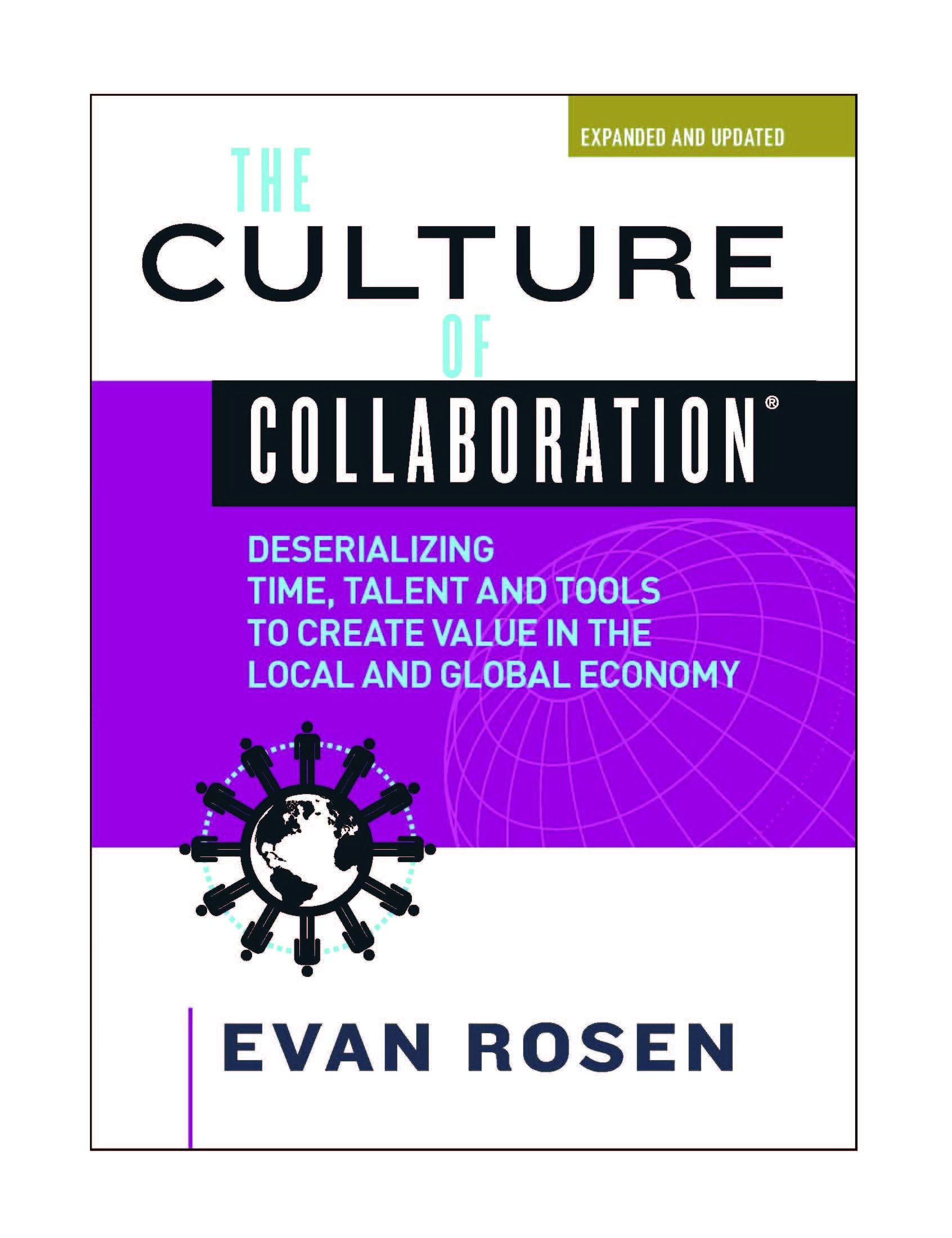
    Jacket with border CofC EU


    The expanded and updated edition has just been released, and I’m proud of the finished work. The 363-page business book includes 54 images and illustrations and a beefy index. By the way, 54 images and illustrations is no easy feat in 2024. Ever wonder why most business books lack pictures? It’s time-consuming to license even a single image from a large organization.

    One thing I’ve learned is that deserialization and collaboration go together like peanut butter and jelly. Deserialization means removing sequences from the lifecycle of products and services. The idea is to collapse outmoded sequential approaches and replace them with spontaneous, real-time processes.

    Deserialization also involves removing sequences from interaction. This means killing what’s left of the in-box culture. In short, deserialization is the key to long-term value creation through collaboration. That’s why the subtitle of the expanded and updated edition of The Culture of Collaboration® is: Deserializing Time, Talent and Tools to create Value in the Local and Global Economy.

    I’ve also learned that despite best efforts, collaboration can stall within highly-collaborative organizations. Paradoxically, collaboration happens in companies in which the dominant culture is command and control. Likewise, internal competition and command and control exist in mostly-collaborative organizations. Many factors, as I explain in the expanded and updated edition, influence both the evolution and regression of The Culture of Collaboration.

    More broadly… as I write in the preface, in some ways we’re less collaborative than we were in the early 2000s. Social media lets us broadcast opinions without refining ideas through real-time interaction. We join groups that make rules for how we should think. Videoconferencing enables interaction at a distance, but too often we’re wasting time in scheduled virtual meetings rather than creating value together spontaneously. While in the same room, we meet rather than collaborate. We leave meetings to work and then schedule follow-up meetings to review work. This serial process zaps value.

    My objective in revisiting this topic is to consider whether we have evolved or veered off track and to provide a new framework for unblocking collaboration and unlocking value.

    Let me know your thoughts about the new, expanded and updated edition of The Culture of Collaboration® book.


  • Goodbye Meetings. Hello Collaborative Group Sessions.

    COVID-19 has taught us that the only thing worse than a meeting is a virtual meeting. And the buzz lately is about the relative merits of video calls vs. in-person work gatherings. I had dinner recently with a former colleague, now a communications professor, who has concluded that videoconferencing is best for meetings people want to avoid while in-person gatherings work better for meetings people want to attend. No question it’s easier to multitask and disengage during virtual meetings.

    Because of my work in this arena—including a book on videoconferencing in the 90s and two subsequent books on collaboration—outlets have been asking me for my take post-COVID on how to improve meetings in the “hybrid” work environment. Since my focus is on completing a new book for release next year, I have been quiet here and elsewhere. Yet I feel compelled to inform those who have yet to read my books about my view of meetings.

    Meetings are a waste of time. That’s true whether we’re talking about same-room or virtual meetings. When I wrote the book Personal Videoconferencing in the mid-90s, I concluded that the benefit of then emerging PC-based videoconferencing was that we could work together screen-to-screen while seeing one another. We could jointly create a work product. In many scenarios, this involved minimizing the video while we shared applications and together produced something.

    Virtual meetings were by no means the killer app for personal videoconferencing. The killer app was co-creation. That’s still true. Yet during COVID, many of us grew to hate videoconferencing because we misused the tool for something we dislike: meetings.

    So how do we fix meetings? We don’t. Instead, we replace them with collaborative group sessions. I write about this in my book The Bounty Effect: 7 Steps to The Culture of Collaboration®. In a nutshell, meetings—whether physical or virtual—are a remnant of command-and-control culture. Often, the highest-ranking or highest-status person sets the agenda and conducts the proceedings. Meetings involve presentation and discussion. Then participants leave to do follow up work, often in isolation. Then this work is reviewed or discussed at yet another meeting. Meetings produce no work product and therefore create no value.

    In contrast, a collaborative group (CGS) session produces a work product. Participants co-create documents, drawings, slideshows, animation, 3D models, spreadsheets—you name it. A CGS creates value and is infinitely more collaborative than a meeting. Goodbye meetings. Hello collaborative group sessions.


  • Changing Organizational Structures for Collaboration

    My new book entitled The Bounty Effect: 7 Steps to The Culture of Collaboration® is now available. It’s the second book in a series which includes The Culture of Collaboration®: Maximizing Time, Talent and Tools to Create Value in the Global Economy. The Bounty Effect shows how to change the structure of organizations for collaboration.

    Why do organizations need to change their structures? The Industrial Age was command and control. The Information Age is collaboration. Yet Industrial Age structures render collaboration dead on arrival in the Bounty Effect Jacket JPGInformation Age. Remnants of these structures—including organization charts, performance reviews, meetings and mission statements—inhibit organizations from using new collaborative methods and tools that spark innovation. Now we’re at the point where many organizations—from corporations and small businesses to universities and government agencies—have a desire to collaborate.  Some have taken action to instill collaborative culture. But what’s holding back collaboration is obsolete organizational structures, which we must change.

    The Bounty Effect gets its name from the mutiny that occurred on the H.M.S Bounty in 1789. Before the mutiny, Captain William Bligh used a well-worn management technique: command-and-control. The mutiny forced the structure and culture to change as Bligh became a collaborative leader and his loyalists participated in decisions as they struggled for survival aboard a small boat. The mutiny was an exigent circumstance, one that compels immediate action.

    The Bounty Effect happens when exigent circumstances compel businesses, governments and organizations to change their structures from command and control to collaborative. Triggers include disruptive market forces, new competitors, regional slowdowns, natural disasters, terrorist attacks and global downturns.

    The book is about how to seize the opportunity that The Bounty Effect provides and change the organizational structure in seven steps.  My objective in writing the book is to provide a framework for structural change necessary to transform organizations into collaborative enterprises. And The Bounty Effect demonstrates how collaborative enterprises create far more value than command-and-control organizations. Using the framework, people and organizations can determine how to redesign and adopt a collaborative structure that fits. I welcome your input.


  • Cisco’s John Chambers: the Hardest Part is the Culture

    I was watching Cisco CEO John Chambers do his trademark walk-and-talk style keynote yesterday at the Hilton San Francisco Union Square as Cisco was kicking off its Collaboration Summit when suddenly John interrupted his pitch for collaboration.


    “Do you know what the hardest change is in this?” he queried the audience rhetorically. “As any CEO will tell you, it’s the culture.”


    John’s observation resonated with me in that the fundamental premise of The Culture of Collaboration book is that “without a culture of collaboration, the best processes, systems, tools and leadership strategies fall flat.” In the book, I also note that “the overwhelming reason why collaboration eludes organizations involves culture.”


    Understanding the role of culture in creating a collaborative enterprise is paramount, particularly as Cisco introduces 61 collaboration products. Collaboration tools are key enablers, but they are far more effective in enabling collaboration in enterprises with collaborative cultures and processes.  Cisco has been focusing on collaboration more than any other initiative as an organizational imperitive and in product efforts. Now the company is fixated on persuading customers that it has reached a milestone in innovating collaboration. With that in mind, Cisco vice president of enterprise solutions Alan Cohen, a history buff and blogger, noted that Cisco was announcing its slew of products on the 20th anniversary of the Berlin Wall’s fall and observed that it was one of the “biggest transitions in our history.”


    As Tony Bates, Senior Vice President and General Manager of the Enterprise Group, highlighted Cisco’s major product introductions, he emphasized the increasing role of video in collaboration—from Flip Video camcorders to WebEx web conferencing to telepresence—and the interactivity of these tools. You can read details of the product announcements here.


    At a cocktail party following the keynotes, Tony and I had an engaging conversation about how the role of video has evolved. I mentioned that when I was researching my first book, Personal Videoconferencing, in the mid-1990’s, there was considerable push back against real-time video as a viable business tool. People were scared of the camera, and there was a pervasive view that one needed to have highly-honed presentation skills to use videoconferencing. Tony observed that people are increasingly accepting that the way they conduct themselves in meetings and in one-on-one workplace interactions is good enough for many video interactions.


    Currently, most telepresence and web conferencing interactions are scheduled. As organizational cultures evolve to support more real-time collaboration, video interaction will become more spontaneous. Then real-time video will transcend communications and become part-and-parcel of collaboration.