People


  • Collaboration Curing Multiple Sclerosis

    It was definitely unorthodox. Many said it was impossible. But it looks like The Myelin Repair Foundation has done it. MRF, which is working on curing multiple sclerosis, is about to meet its ambitious goal of licensing a discovery for commercial drug development within five years. Through a collaborative research model, the Silicon Valley-based foundation has reduced drug development time from 15 years to 5 years. MRF is negotiating with a biotech company and believes a license agreement is in the works.


    Intuit Founder Scott Cook, a foundation supporter, suggested I research MRF when I was writing The Culture of Collaboration book.  In the book, I tell the story of how Scott Johnson, who has MS, learned that a cure was taking three or four times as long because of competition among researchers. This prompted Johnson to rethink the culture of medical research and begin changing that culture. Scientists often refuse to share data and information, because they compete for limited grant money and for publishing articles in top medical journals. The answer was to get experts in different disciplines to collaborate. So Johnson raised money, ultimately plowed $20 million into drug discovery work, and built a collaborative medical research foundation.


    Johnson brought in fellow tech start-up veteran Russell Bromley as chief operating officer. And Johnson and Bromley recruited five principal investigators who head labs.  They proposed a level of collaboration for curing disease that none of the scientists had ever experienced. Their focus was to repair myelin, the sheath that surrounds the nerves, which MS damages. Johnson and Bromley with input from the researchers developed a Collaborative Research Process, which addresses everything from tools to incentives.


    Since its founding in 2004, MRF has advanced work towards a cure for MS beyond anything anybody else had imagined within this timeframe. “Because of our work, we have a much clearer understanding of how to drive neural stem cells to the site of myelin damage in the central nervous system and instruct the myelin-producing cells to remyelinate,” Johnson writes in his recent president’s message.


    The Myelin Repair Foundation’s game-changing collaborative approach sets a new standard for medical research. The broader medical research community should sit up and take notice that collaboration among researchers creates greater value than competition.


  • Collaboration at Fortune Brainstorm: Green

    I came away from the Fortune Brainstorm: Green summit in Laguna Niguel, California convinced that collaboration and sustainability are inextricably linked. Collaboration connects us with a broader ecosystem that creates value for our businesses and also—in a broader sense—for the planet.


    Fortune Managing Editor Andy Serwer, conference chair Marc Gunther and their colleagues created a thoughtful, compelling forum in which participants not only exchanged ideas but also developed solutions together on the fly. In other words, people were collaborating and creating value.  


    Informality is key to getting collaborative juices flowing, and the relaxed physical environment helped. The conference room at the Ritz Carlton featured Herman Miller Aeron chairs and coffee tables with small, sleek monitors on which participants could view close-ups of speakers.


    Here are some highlights of the conference:


    Traceability in the supply chain is good for business. That was the consensus of a break-out session in which Arlin Wasserman, vice president of corporate citizenship of Sodexo, Inc., the food service and facilities management company, noted that we need a “massive reinvention of traceability and transparency” in supply chains. Jill Dumain of Patagonia discussed how her company’s web site reveals both the good and the bad. Check out Patagonia’s Footprint Chronicles here. Now that’s transparency!


    Wal-Mart is collaborating with suppliers on a “360 scorecard” detailing social and environmental footprints of products. Leslie Dach, executive vice president of corporate affairs and government relations, insisted that this effort could affect thousands of products. He also indicated that Wal-Mart would build sustainability into every buyer’s job description.


    Fear of being accused of “green washing” has prevented Tiffany CEO Michael Kowalski from participating in any environmental conference until now. Kowalski described Tiffany & Co.’s efforts over the last decade to short-circuit the trade in “blood diamonds,” which are often mined by slaves controlled by militias and used to finance wars. Tiffany has reportedly removed blood diamonds from its supply chain by focusing on traceability and transparency. Tiffany can now identify the mined source of fifty percent of its products, according to Kowalski.


    Bill Ford, executive chairman of Ford Motor Company, noted that he has focused on protecting research and development dollars, despite the downturn. This is clearly a longer-term view that’s critical to creating value through collaboration. As I explained in my book, The Culture of Collaboration, Ford has highly-collaborative pockets. Its challenge is to leverage those collaborative pockets to adopt an enterprise-wide collaborative culture. When Bill Ford joined the Ford board in 1988, he was told that he needed to stop associating with “known environmentalists.” Guess he’s having the last laugh considering the growing realization that green initiatives create value.


    Peter Darbee, President and CEO of Pacific Gas and Electric Company, challenged the state and federal governments to collaborate with utilities in transforming the economy. At the onset of World War Two, the United States migrated from a peace to war-time economy within two years. “We need to do that,” Darbee insisted. “The government needs to get out of the way,” and streamline the permit process so that utilities can build transmission lines in two years instead of eight or ten.


    Jeffrey Hollender, president and “chief inspired protagonist” of Seventh Generation, challenged participants to create products and services that “restore the Earth rather than being less bad.” He insisted that manufacturers should consider the entire lifecycle of products.


    In an incredible story of collaborative leadership, Kevin Surace, CEO of Serious Materials, described how he reached out to union leaders after learning of a 6-day sit-in by workers at the shuddered Republic  Windows and Doors plant in Chicago. Rather than waiting to buy assets through the bankruptcy court, he proactively engaged the people who make windows and listened to their concerns. Serious Materials, which manufactures windows which Surace says are 400 percent more efficient than dual pane windows, ultimately bought the plant for $1.45 million and rehired the 250 laid-off workers.


    Former U.S. President Bill Clinton delivered the conference’s closing keynote with a call Clinton and Andy Serwer to action that federal and state governments and private industry move beyond policy talks and “operationalize” energy efficiency, carbon reduction and other green initiatives.  He mentioned two particularly interesting initiatives that the Clinton Global Initiative is enabling in collaboration with private industry.  


    Project 2 Degrees developed with Microsoft and others provides online tools that let cities establish a baseline for greenhouse gas emissions, create action plans, track successes for emissions reduction, and share experiences.  Cisco  is investing $15 million to reduce traffic congestion in cities through its Connected Urban Development Program, which uses information and communications technology to monitor emissions. 


     “What we don’t have is enough information sharing in real time,” President Clinton insisted.  Real-time information sharing is key to collaboration whether we’re reducing emissions or developing products. So the discussion of green initiatives comes full circle to spontaneous, on-the-fly collaboration.  I make the case in my book that the quest for value creation has forced the deserialization of work. The need for real-time information sharing is further evidence that sustainability and collaboration are joined at the hip.

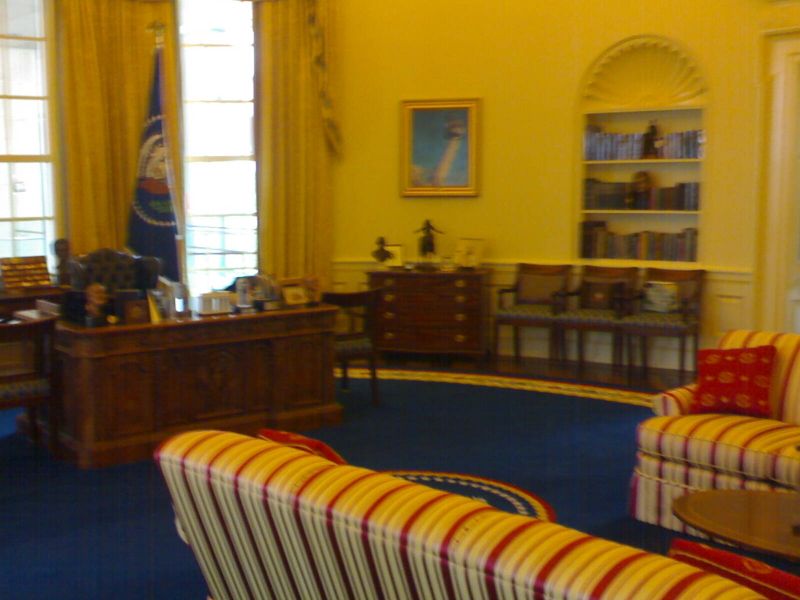


  • Constructive Confrontation at the Clinton Library and Museum

    When I’m on the road, I keep my eyes open for collaboration insights.


    This week I was in Memphis and made a detour to Little Rock. In Memphis, I stayed at the Peabody Hotel, the grand old hotel of the south famous for the daily parade of ducks from the hotel roof to the fountain.  The site of several ducks marching in formation through the hotel lobby certainly requires coordination and arguably collaboration.


    Here in Little Rock…I’m staying at the Capital Hotel, which has an elevator big enough to supposedly have accommodated Ulysses Grant and his horse. Also, the Capital serves one of the best hotel breakfasts I’ve ever eaten. Everything is made from scratch! All of this in a gorgeous, old-world dining room.


    Back to collaboration. Regardless of politics and how you may feel about Bill Clinton, any leader would do well to take note of Little Rock’s favorite son and his thoughts about hiring, culture, and decision-making:


    “I don’t care how smart you are…” Bill Clinton’s voice boomed into my audio tour headset at the William J. Clinton Presidential Library and Museum. “Success and failure depends on how well the staff and cabinet debate honestly and openly and then unite once you’ve made a decision. “


    I was standing in the replica of the White House cabinet room, and President Clinton was setting the scene for the debates that occurred in that room on his watch as the 42nd President of the United States. “You never can tell when somebody who’s in an unrelated agency will have a really keen insight…thinking people, caring people who came from all different backgrounds from all over America.” Amen! Cross-functional collaboration!


    President Clinton was essentially talking about constructive confrontation, one of the Ten Cultural Elements of Collaboration that I identify in my book, The Culture of Collaboration. To effectively collaborate, the culture of any organization—whether it’s the federal government, a large enterprise, a non-profit, or a small business—must encourage debate and constructive confrontation regardless of level, role or region. 


    Constructive means that the confrontation is about making a better decision rather than personality conflicts or posturing. At some point, debate ends and an organization coalesces behind a united position.  Smart organizations encourage debate as President Clinton did among his staff and cabinet rather than blind agreement with the boss.

    Oval Office Replica

    The Clinton Library and Museum includes a replica of the Oval Office as it was when President Clinton occupied it. According to the staff, the former President often moves objects around or borrows them during his monthly or bi-monthly visits to the Library (he has an apartment upstairs with room for his secret service agents). 


    The docents tell me that President Clinton knows them all by name and is closely involved in almost everything that happens at the Library. I spoke at length with one docent, Jane Cazort, whose father-in-law was lieutenant governor of Arkansas and whose granddaughter went to school with Chelsea Clinton.


    Coincidentally, next week I’ll be attending the Fortune Brainstorm: Green 2009 conference in Laguna Niguel, California at which President Clinton is speaking.  More on that later.


  • Collaborating out of the Downturn Focus of Blog Talk Radio Interview

    I discussed collaboration with Zane Safrit yesterday morning on his hour-long Blog Talk Radio show. You can listen to the show here.


    When he was CEO of Conference Calls Unlimited, Zane masterfully used blogging as a marketing and business tool. His small company, based in a rural Iowa community, adopted collaborative culture and tools as an advantage in a marketplace saturated with large players. Zane is a super-capable, collaborative leader.


    Our conversation ranged from common denominators and motivators for companies wanting to adopt collaborative culture and the biggest mistakes companies make. We also discussed the need to replace star-oriented culture and the role of collaboration in an economic recovery.


    Zane asked me how companies can balance the need for collaboration with the need for consistency, routines and procedures. It’s a thoughtful question that organizations should consider. I explained that it’s necessary to include collaboration in policies and procedures, so that people are consistently collaborative J.


    Towards the end of the show, we focused more on the economy. Zane asked me about the biggest trends regarding collaborative culture over the next two years. Here’s what I said:


    People are going to realize what collaboration is and what it isn’t, and I absolutely believe that collaboration will help deliver us from the downturn. We need to abandon the herd mentality. I blogged about this on March 15, 2009 with a call to action. You can read the post here.


    There’s a misconception that collaboration is about running with the herd. Real collaboration involves constructive confrontation….coming together to hash out issues, make decisions, improve processes and develop products and services. And it’s much broader than companies. It’s about governments collaborating across agencies and departments, with citizens and with other governments. It’s about people working together to create value in our communities.


    It’s about changing education so that we’re developing collaborators. The more educated people are, the more competitive they are. Our educational system beats collaboration out of us. That’s changing.


    I’ve lived and worked in smaller communities where many people get jobs right out of high school. They’re used to working together to cook dinner at the VFW or help neighbors repair tornado damage. It’s this type of attitude that we need to nourish in our country, in higher education, in companies, in and among governments. Coming out of this downturn, star culture and internal competition are unaffordable. Collaboration will drive the recovery.


    “How will that change our economy, culture, country?” Zane asked me.

    I responded:


    It’ll be back to basics…working together to create real value. The mortgage mess, the financial collapse were rooted in artificial value. We gave the keys to the country and the economy to star competitors… the best and the brightest who went to top schools and competed for themselves without considering the bigger picture. Now we need to entrust our companies, governments and communities to collaborators. And we’re going to build long-term, sustainable value.


  • Toyota’s Collaborative Leadership Involves “See it for Yourself”

    In selecting Akio Toyoda as its next president, Toyota is reaffirming its commitment to collaborative Akio Toyoda culture and methods. A key tenet of Toyota is genchi genbutsu which means "see it for yourself.” This is related to the leadership method practiced by HP’s David Packard and Bill Hewlett beginning in the 1940’s and later dubbed “management by walking around.” The idea is that to figure out what’s really going on in an organization, a leader needs to get out of the office, go to factories and loading docks and retail outlets, and get his or her hands dirty.


    That’s exactly what Akio Toyoda did when he visited a Toyota dealership in Ann Arbor, Michigan last summer. He wanted to personally investigate a pickup truck recall. A story by Micheline Maynard on February 15, 2009 in the New York Times says Toyoda made a trip “so secret that Toyota’s public relations staff didn’t know he was here.” While at the dealership, he reportedly got down on his hands and knees to examine the undercarriage of a truck. At the news conference in January announcing his appointment, according to the Times, Toyoda announced he would pop up everywhere as he did in Ann Arbor.


    Genchi genbutsu or “see it for yourself” fits squarely into collaborative culture and methods. However, it’s not always possible to fly across the world to see what’s happening. That’s where collaborative tools come into play. Through unified communications, we can find one other and connect regardless of level, role or region. We can escalate IM to voice, web conferencing or videoconferencing and spontaneously hash out problems and make decisions. Visual communications is a critical enabler. An ideal solution is telepresence, which makes people feel practically as if they’re sharing the same physical space regardless of distance.  


    Our research at The Culture of CollaborationÒ Institute has shown that almost all highly-collaborative companies have integrated some form of real-time, interactive video into their operations. As I describe in The Culture of Collaboration book, Toyota uses a custom-designed visual communications system coupled with product lifecycle management and advanced computer-aided design tools that has become essential to its operations. The system links people at design facilities, plants, and at business partner sites and provides a rich virtual environment for developing and producing vehicles.


    Two other areas involving collaboration that Akio Toyoda will likely re-emphasize:

    1)     Making decisions based on long-term goals rather than on short-term developments

    2)     Nemawashi or making decisions slowly by consensus


    While collaborative culture is never about one person, Akio Toyoda is certainly one role model for collaborative leadership.


  • Architectural Collaboration and the California Academy of Sciences

    As I gazed at the Big Dipper, the Little Dipper and other amazingly-clear star formations last Thursday evening, there was no distraction from city lights or from the fog that often defines San Francisco.

    I was sitting in the world’s largest digital planetarium, which uses real-time data from NASA plus immersive video technology. The NASA data accurately represents the current night sky, and the immersive video technology makes visitors feel like they’re travelling through space.


    The star-studded evening program was a departure from the usual daytime planet presentation in honor not only of Charles Darwin’s 200th birthday last Thursday evening, but also of the launch of NightLife at the California Academy of Sciences. NightLife is a weekly Thursday evening event featuring bars, food plus all of the Academy exhibits. 


    I walked, Lagunitas India Pale Ale in hand, through the recently-reopened museum and marveled at the Rainforest Exterior four-story glass rainforest with its colorful poison frogs and Borneo bats and the graceful movement of jellyfish in the Steinhart aquarium, which includes thirty-eight thousand animals. Aside from official certifications that the Academy is the “greenest” museum on the planet, I found the museum’s “Living Roof” stunning and unique.   Living Roof The 197-thousand foot roof features seven hills containing many native plant species. The concept was to blend the building’s environment with that of Golden Gate Park and to reduce the Academy’s energy needs by creating oxygen, capturing rainwater and avoiding the heat-trapping disadvantages of tar-and-asphalt roofs.


    After a decade of planning and $500 million in expenses, the Academy reopened last fall to much fanfare.

    At the time, the San Francisco Chronicle ran an interesting story by John Cote that described how the Academy’s board of directors chose an architectural team for the project. By July of 1999, the board had reportedly narrowed its search to five finalists. According to the story, a British architect arrived with five associates, two trays of slides and detailed mockups of two specific designs. He spoke for an hour and a half.


    When it was Italian architect Renzo Piano’s turn, he began by rearranging the room chairs in a circle. He then used a blank pad to sketch as he listened to board members describe the importance of nature, biodiversity, and naturalistic forms. Renzo Piano Ultimately, Piano and his team got the job because of his collaborative approach. Rather than simply presenting options to the board, Piano engaged and involved his client. The result reflects broad input and the collaborative sessions between architect and client.


    Too often in organizations, people make decisions in a vacuum. Those decisions are handed down to people who must implement them. This causes a chasm between the decision makers and the decision implementers and many others who are impacted by decisions. Then there’s a lot of talk like “They want us to ….” Or “they’ve decided that we’re supposed to….” So, an “us and them” mentality develops and sucks the motivation, innovation and value out of an organization.


    In contrast, collaborative organizations make decisions by involving and engaging people across levels, functions, business units and regions. When people have a stake in decisions, “us and them” dissolves. I’ve written in The Culture of Collaboration book and in this blog about the interplay of culture, environment and tools in sparking collaboration. In his initial session with the Academy’s board, Renzo Piano used all three. He changed the culture by involving the board in the conceptual process. He redesigned the environment by rearranging the rooms chairs in a circle. And he used a blank sketch pad as a collaborative tool.


    It’s a reminder—one that we stress in The Culture of CollaborationÒ Workshop—that collaborative culture can begin with a team gathering or a spontaneous exchange. In the case of the California Academy of Sciences, the result is an extraordinarily functional and “green” architectural masterpiece.


  • Early Input Enhances Collaboration

    The most collaborative organizations get broad input into decisions early and often.


    President-Elect Barack Obama got into some hot water recently when word leaked out that he planned to nominate Leon Panetta as director of the CIA. U.S. Senator Dianne Feinstein, incoming chair of the Senate Intelligence Committee, publicly attacked the decision partly because of Panetta’s lack of intelligence credentials and partly because nobody apparently consulted her about the appointment.


    Aides to the President-Elect insisted that they were planning on getting Feinstein’s input regarding the Panetta appointment before going public.  However, getting a key stakeholder’s input late in the decision-making process is less collaborative and less valuable than getting early input. Requesting late input is often political rather than collaborative and provides an opportunity for the decision-maker to sell key stakeholders on a decision rather than really consider their perspectives.  


    Collaboration means people participate in decisions regardless of level, region, business unit or function. In The Culture of Collaboration book, I write about how Toyota makes decisions and the role of nemawashi, which essentially means consensus building. Before the automaker changes the wheel base on a car model, the company gets broad input from those who design and assemble the vehicle. The decision takes longer, but implementation is swift because stakeholders have already anticipated and addressed potential problems.


    In contrast, faster decisions without broad input may appear more efficient, but such decisions often run into hurdles during implementation and ultimately absorb more of an organization’s resources. Without broad input, people who are impacted often criticize a decision because they had no voice and no stake in the outcome.


    Had the Obama transition team involved Senator Feinstein earlier in the process, the decision on the CIA director nomination would have reflected her input—and the transition team would have avoided the resulting perception that the President-elect and his staff are making decisions in a vacuum. Ironically, the Office of the Director of National Intelligence (ODNI) has been focused on making the intelligence community more collaborative. For more on this, see my December 18, 2008 post.


    Getting early, broad input into decisions enhances collaboration and creates greater value whether the organization is a government, a company, a non-profit, a school, or a club.


  • Collaboration Means Knowing When to Step Aside

    “Do you want to be rich or do you want to be king?” That’s the question Mark Perry, general partner with New Enterprise Associates, asks founders of portfolio companies who resist being replaced. Often, venture capitalists like Mark seek to replace founding CEO’s with leaders who are more suited to take a company to the next level.


    Collaborative leaders willingly step aside when it’s the right decision for the company. After all, many people have a stake in a company’s success including investors, employees and customers. For a founder to remain CEO because of ego and bravado can damage the company he or she has worked hard to create.  And, as Perry points out, the rewards for everybody are often greater when the founding CEO moves on at the right juncture.


    At the 19th Annual IBF Venture Capital Investing Conference last month in San Francisco, venture capitalists and executive search consultants debated issues including CEO succession on a panel called “Building a Management Team in 2008.” The panel included venture capitalists Mark Perry of New Enterprise Associates, Cameron Lester of Azure Capital Partners and Mark Sugarman of MHS Capital plus recruiter Aaron Lapat of J. Robert Scott. Recruiter Jeff Kuhn of FLG Partners moderated the panel.


    The VC’s agreed that it becomes obvious over time if the CEO puts his or her own success above that of the company. This is exactly the kind of behavior smart VC’s seek to identify before they invest. Cameron Lester of Azure Capital Partners recommends asking founders the question, “If this company grew beyond you, would you be willing to step aside?”


    Stepping aside, deferring to others, and soliciting input are among behaviors key to collaborative organizations of all sizes.  When we use collaborative tools including web conferencing, it’s important to relinquish control and let colleagues take the cursor while sharing applications. In a broader sense, collaborative people understand how their expertise contributes to collaborative work and know instinctively when to defer to those with complimentary skills.


    Challenges for collaborative leaders include resisting the control paradigm and inviting input from all levels and functions.  Then it’s easier to recognize when changing roles, relinquishing authority, or even leaving the organization benefits the company. The acid test is whether stepping aside creates organizational value.


  • Collaborating in the Same Room—What a Concept!

    Collaboration happens because of the interplay of culture, environment and tools with an emphasis on culture. While tools are key enablers, collaboration never happens solely because of tools. That said, real-time tools including instant messaging, web conferencing, videoconferencing, telepresence and virtual worlds plus asynchronous tools including wikis, team sites and social networking are extending and enhancing collaborative culture and eliminating distance as a barrier to business and relationships.


    Ironically, we’re getting better at collaborating at a distance than when we’re face to face. Assuming we work in a collaborative culture and effectively use tools, we are more likely to share applications and collaboratively produce products and services when distance is an issue. In contrast, when we’re all in the same room, too often we meet rather than collaborate. Some highly-collaborative organizations are designing their workplace environments to enhance brainstorming and collaboration.


    Microsoft has created a new research entity in its business division called Office Labs, which is focusing on the future of how we work. One effort involves exploring how to more naturally interact with information.  At the Microsoft CEO Summit in May, Bill Gates demonstrated an “intelligent white board” or touch wall called Plex. Plex has scanning cameras at its base, so that it can detect when users touch its surface. Using our hands, we can zoom out to reveal documents, images, spreadsheets, presentations, browsers and other applications. We can touch a document, flip through its pages, and zoom in to examine flow charts and other embedded elements. We can also use our fingers to draw on Plex.


    Intelligent white boards are one tool that may enhance collaboration when we’re sharing the same physical space. Ultimately, every horizontal and vertical surface in collaborative rooms could be an inexpensive intelligent display. Like collaboration at a distance, same-room collaboration requires the right culture, environment and tools.


  • Malcolm Gladwell: Measurement Methods Killing Creativity and Innovation

    Malcolm Gladwell is about to turn talent recruitment and development upside down. Malcolm GladwellLast Monday at the American Society for Training and Development 2008 International Conference and Exposition in San Diego, I talked with Malcolm about his forthcoming book.


    Outliers: Why Some People Succeed and Some Don’t tackles everything from college and graduate school admissions to organizational performance evaluations. An outlier is a statistical term meaning a significant deviation from the mean. The book, which will be published in November, is based largely on the work of David Galenson, an economist at the University of Chicago. For more on Galenson’s work, read the story entitled “What Kind of Genius Are You?” that Daniel H. Pink wrote for the July, 2006 issue of Wired.


    Gladwell’s point is that there’s a disconnect between methodology for evaluating people and individual talents. He’s wary of efforts to predict performance and suspicious of set timeframes to perform. “We’ve become obsessed with this notion that everything can be measured with numbers,” Malcolm insists. “It’s a cultural fixation.” While law schools are obsessed with LSAT scores, Gladwell notes, studies show that people who are admitted with lower scores show no difference 20 years out than those with high scores.


    Gladwell uses the artists Pablo Picasso and Paul Cezanne to illustrate two key types of people. Picassos succeed quickly and often peak early, while Cezannes are typically late bloomers who rely on technique and process and make incremental advances to build a body of work over time. “A late bloomer gives us something you can’t get from a precocious artist. The work is much more powerful and has deeper depth,” says Gladwell. The HBO series, The Sopranos, took three seasons to catch on, Gladwell notes, but ultimately the show developed a deeper level of emotional connection with the audience. This is because HBO is willing to carry a portfolio of under performers; the network realizes the potential for a long-term winner among them.


    At the ASTD conference, I engaged Malcolm about organizational culture, and he agreed that culture plays a huge role in how people are recruited and evaluated. Organizations are clearly comprised of both Picassos and Cezannes, but there is also a collective approach that favors one style over the other. Particularly relevant to collaboration is Malcolm’s use of the U.S. vs. the Japanese auto industry to illustrate his point.  I have written extensively about how collaboration has created substantial value for Toyota and how people throughout the organization provide input into decisions, which are made slowly and carefully. Toyota focuses on incremental improvements over time and building long-term value, a Cezanne approach. Malcolm notes that Detroit-based automakers traditionally rely on big, bold ideas like the SUV and muscle cars. This is more Picasso-like.


    The problem is that measurement and evaluation usually favors Picassos over Cezannes. Organizations value the sprinters over the distance runners and too often sideline people who develop deeper depth over time. Innovation and productivity suffer, because key resources are wasted. This will evolve as organizations become more collaborative, harness talent in all its forms and realize the limitations of a single performance template. Enron selected top performers and pitted them off against each other through “rank and yank.” This created a culture of fear rather than one of collaboration. The company had little tolerance for Cezannes. Look where Enron is now—bankrupt.


    Incidentally, Malcolm’s Wikipedia entry notes that he was an outstanding middle distance runner in high school…