Workplace Design


  • New Expanded and Updated Edition of The Culture of Collaboration® Book

    How has collaboration evolved? What is the current state of collaboration at Toyota, Mayo Clinic, Industrial Light & Magic, Boeing and other companies profiled in the first edition of The Culture of Collaboration® book? What are the keys to long-term value creation through collaboration?

    These are questions I sought to answer as I went back inside collaborative companies to research and write the new, expanded and updated edition of The Culture of Collaboration® book.
    Jacket with border CofC EU


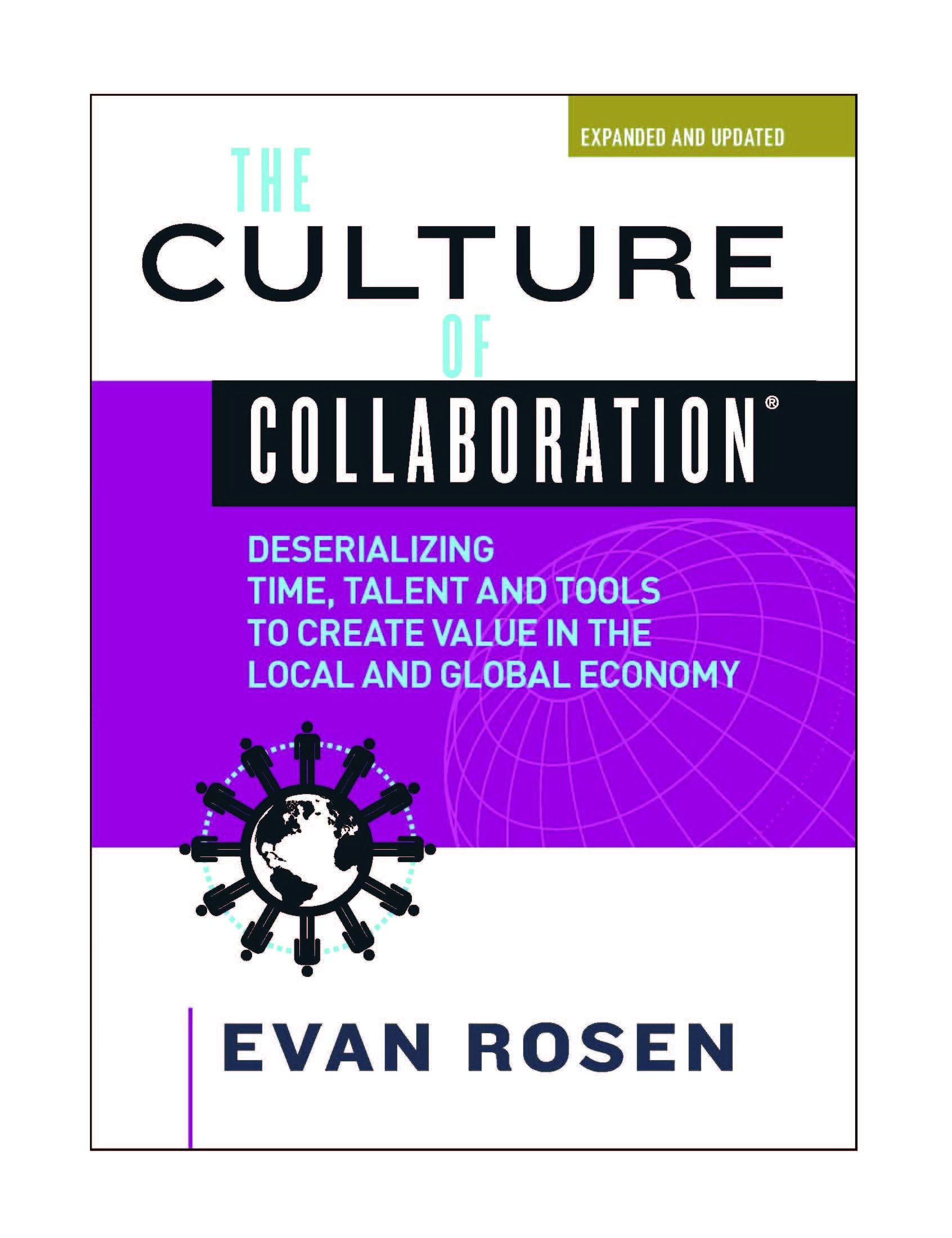
    The expanded and updated edition has just been released, and I’m proud of the finished work. The 363-page business book includes 54 images and illustrations and a beefy index. By the way, 54 images and illustrations is no easy feat in 2024. Ever wonder why most business books lack pictures? It’s time-consuming to license even a single image from a large organization.

    One thing I’ve learned is that deserialization and collaboration go together like peanut butter and jelly. Deserialization means removing sequences from the lifecycle of products and services. The idea is to collapse outmoded sequential approaches and replace them with spontaneous, real-time processes.

    Deserialization also involves removing sequences from interaction. This means killing what’s left of the in-box culture. In short, deserialization is the key to long-term value creation through collaboration. That’s why the subtitle of the expanded and updated edition of The Culture of Collaboration® is: Deserializing Time, Talent and Tools to create Value in the Local and Global Economy.

    I’ve also learned that despite best efforts, collaboration can stall within highly-collaborative organizations. Paradoxically, collaboration happens in companies in which the dominant culture is command and control. Likewise, internal competition and command and control exist in mostly-collaborative organizations. Many factors, as I explain in the expanded and updated edition, influence both the evolution and regression of The Culture of Collaboration.

    More broadly… as I write in the preface, in some ways we’re less collaborative than we were in the early 2000s. Social media lets us broadcast opinions without refining ideas through real-time interaction. We join groups that make rules for how we should think. Videoconferencing enables interaction at a distance, but too often we’re wasting time in scheduled virtual meetings rather than creating value together spontaneously. While in the same room, we meet rather than collaborate. We leave meetings to work and then schedule follow-up meetings to review work. This serial process zaps value.

    My objective in revisiting this topic is to consider whether we have evolved or veered off track and to provide a new framework for unblocking collaboration and unlocking value.

    Let me know your thoughts about the new, expanded and updated edition of The Culture of Collaboration® book.


  • The Amazing, Disappearing (and Collaborative) Phone Call

    Texting and instant messaging (IM) have rapidly supplanted voice calls as our preferred communication mode. When we say “I spoke with him” or “I had a conversation with her” often we’re referring to text chat rather than voice. This lack of real talking adversely impacts collaboration.

    In many organizations, people never bother to set up their voice mail. And we increasingly view voice calls as intrusive. Yet companies have redesigned their physical spaces ostensibly to encourage intrusions such as on-the-fly and chance encounters which can spark collaboration.


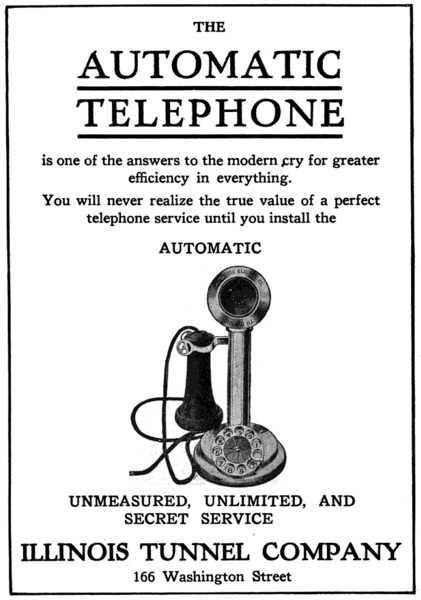
    Telephone advertisement
    1910 Advertisement for the automatic (dial) telephone service of the Illinois Tunnel Company in Chicago

    When I wrote the first edition of The Culture of Collaboration book in 2006, I summed up the deserialization of work and interaction as the “in-box culture is dead.” The idea was that something called presence would allow us to see who’s available and that we could connect with anybody in the organization via instant messaging. Then—and this is the important point—we could escalate that instant messaging session into a spontaneous voice or video call with the simultaneous capability of collaboratively working on documents, spreadsheets, presentations or in any application. So there was no longer a need to schedule voice and video calls. Through real-time collaboration, we could create far greater value.

    Somehow IM took hold in companies but escalation to voice and video calls has seemingly stalled. And use of voice on mobile devices has plummeted. At one time speakerphone quality was a key attribute of devices, but Apple iPhone and Samsung Galaxy marketing barely mention voice.

    IM has the advantage over email in that it’s nearly real-time and there’s an expectation of immediate response. So it’s easy to find people and connect with them. The problem is that like email IM and texting are one dimensional. It can be difficult to determine the real meaning and the emotion behind the words. If we talk with each other on a voice call, we can often understand each other better, cut to the chase and resolve issues more quickly than through IM. If the issues are more involved, a video call fits the bill.

    Also, people feel less isolated when using real-time voice and video. In fact, there are signs that we are desperate for real connection and interaction that IM and texting can’t deliver. The New York Times recently ran a story on how people are using calls to customer service representatives as therapy sessions. Increasingly, companies are training representatives to show compassion and focus on the emotional needs of the customer rather than rush them off the line.

    This phenomenon cuts both ways. Increasingly, customer service representatives are anxious for a real connection. I experienced this first hand when I called a credit card company recently to discuss my airline co-branded card. The representative told me about her background as a former flight attendant and a singer with a band. I also learned that she had a degree in advertising, likes to roller blade and moved from California to Florida. At the end of the call, she arranged a mileage bonus and said “thanks for letting me be me.” We both felt connected in a way that an IM session with the card company could never deliver.

    I’m currently writing a new edition of The Culture of Collaboration book and assessing where we’ve gone wrong and how we can get collaboration back on track. When it comes to tools, we’re half way there. Rather than getting stalled with texting and IM (not to mention social media), our challenge is to maximize our ability to find and connect with people. This means turning some of those texting and IM sessions into voice and video calls so that together we can create value.


  • Does Remote Work Reduce Collaboration?

    Some companies are eliminating remote work or “telecommuting” because they believe their people must share the same physical space to collaborate.

    I define collaboration as “working together to create value while sharing virtual or physical space.” But apparently some organizations want to get more physical rather than virtual.

    According to a recent Wall Street Journal story, companies including IBM, Aetna, Bank of America, Best Buy and Reddit have ended or reduced remote-work arrangements as managers “demand more collaboration, closer contact with customers—and more control over the workday.”

    Companies facing challenges are often the first to scrap or reduce remote work programs. In 2013, as Yahoo was struggling, then CEO Marissa Mayer defended her decision to eliminate work from home. Speaking at the Great Place to Work conference in Los Angeles, Mayer reportedly said “People are more productive when they’re alone, but they’re more collaborative and innovative when they’re together.”

    No question people are more collaborative and innovative when they’re together, but the point is people can be together virtually as well as physically. Many tools and technologies support high-impact virtual collaboration. Forcing people to endure a daily commute and interfering with their life/work balance reinforces command and control and disrupts collaboration and innovation. Also, remote work lets companies tap expertise regardless of geography. And teams are often comprised of people in multiple regions, so forcing people to work from a company location is unlikely to enhance collaboration within a team. It does make sense to encourage remote workers to spend some time at company locations to spark chance encounters in cafeterias, corridors and break rooms with people outside their teams.

    Command and control culture is the opposite of collaborative culture so an organization trying to control team members by keeping them at the workplace short circuits collaboration. Ironically, my research interest in collaboration began in the mid-1990s when I was writing a book on personal videoconferencing. Early telecommuting programs experimented with PC-based videoconferencing so that remote workers could look each other in the eye and talk with colleagues while they were collaboratively working on spreadsheets, documents, design plans and other work. The issue then was whether we could collaborate as effectively at a distance as we could in the same room.

    By the time I wrote The Culture of Collaboration book, the tools and technologies supporting remote work had become pervasive and the culture supporting virtual collaboration had become widespread. People at many organizations were becoming accustomed to collaborating spontaneously from almost anywhere. So the challenge was changing. I wrote:

    “Today we struggle to collaborate as effectively at a distance as we do in the same room. Tomorrow the challenge becomes the reverse.”

    This is because same-room collaboration tools were lagging behind those used at a distance and people were becoming more accustomed to collaborating from applications on their notebook and laptop computers. Also, “presence” technology provided the capability to find colleagues, check their availability and begin collaborating with them on the fly from anywhere.

    Spontaneity and organizational culture supporting ad hoc encounters is critical to creating value collaboratively. In some cultures, this means it’s okay to grab people out of meetings or interrupt their work for on-the-fly collaboration. But in mature companies walking back remote work, often this level of spontaneity is a cultural faux pas. So the most effective way to spontaneously connect in these cultures is often through online chat which can escalate into a collaborative group session (CGS). Organizations create far greater value by moving away from command and control and instead enabling team members to connect and collaborate spontaneously regardless of physical location.

    As I demonstrate in my book The Bounty Effect, exigent circumstances including disruptive market forces, new competitors, or a regional slowdown are opportunities to accelerate collaboration and emerge stronger from the challenge. Eliminating remote work because of a difficult environment rarely enhances collaboration and instead increases command and control. The more effective approach is to seize the opportunity exigent circumstances provide and adopt a more collaborative organizational structure and culture which transcend physical location.


  • Is Radical Transparency Collaborative?

    I was chatting with Ray Dalio, founder of Bridgewater Associates last Tuesday about the thin line between constructive and destructive confrontation in the workplace. “Confrontation has to be constructive,” the founder of the world’s largest hedge fund told me. "You need to get everything out on the table.” Constructive confrontation is one of the Ten Cultural Elements of Collaboration that I introduced in The Culture of Collaboration book. It’s also an aspect of Bridgewater’s controversial culture.

    Ray had just finished an on-stage interview with Charles Duhigg on Bridgewater’s culture at the New York Times New Work Summit in Half Moon Bay, California. Collaboration was a central theme of the conference that brought together a few hundred chief executives, human resources leaders and others to share experiences, insights and challenges involving organizational culture.

    “I want an idea meritocracy. I want independent thinkers who are going to disagree,” Ray told the audience. One way that Bridgewater accomplishes this objective is by capturing ninety-nine percent of meetings on video and making the archived video available to each of its roughly 1400 people at any time. The one percent of meetings not recorded involves personnel issues and proprietary trades.

    “The most important thing I want is meaningful work and meaningful relationships, and we get there through radical truth.” Ray’s point is that radical truth and transparency build trust and curb hidden agendas and spin. “There’s no talking behind people’s backs,” according to Ray. “Bad things happen in the dark.” Bridgewater’s meritocracy, he explains, produces evidence which decreases bias and increases fact-based decisions.

    Information democracy in which organizations widely share data and information is a key principle of collaborative companies. Trust and constructive confrontation are critical to collaboration. Hidden agendas and spin short circuit collaboration. So it would seem that Bridgewater’s brand of radical transparency would enhance collaboration. Right? Well, that depends.

    There’s conflicting information regarding whether all confrontation is thoughtful and constructive at Bridgewater. That’s why I engaged Ray about the thin line between constructive and destructive confrontation and the need to keep disagreements thoughtful. Bridgewater makes performance reviews public and encourages team members to examine themselves before accepting areas for improvement, according to an April, 2014 article in the Harvard Business Review.

    Performance reviews, whether public or private, can exhaust an organization and compromise value. Meetings, whether captured on video or not, waste time and energy.  A more effective alternative to meetings, which I outline in my book The Bounty Effect: 7 Steps to The Culture of Collaboration, is collaborative group sessions in which people co-create something of value.

    Self-actualization seems to play a role in Bridgewater’s culture. Rather than check one’s emotions at the office door, team members are encouraged to recognize their emotional “triggers” and to “recognize the challenge between the logical and emotional self” in Ray’s words. Then people can more easily set aside emotional triggers and baggage.

    I was curious how Bridgewater's culture resonated with the conference crowd, so I continued the discussion over lunch. Capturing almost all meetings on video for everybody to see is one cultural attribute that fell flat.   “That would never work in our organization,” one participant at my table insisted. She explained that her company values privacy and offers private drop-in spaces for on-the-fly interactions. Other attendees expressed similar views.  

    The down side of capturing almost all meeting video is that people may put on game faces whenever they’re in a “live” meeting room and that formality takes hold.  In contrast, informality enhances collaboration which is why so many businesses have been hatched while doodling on napkins in bars and cafes. Floor proceedings in the U.S. House of Representatives and Senate were once far less formal before these bodies allowed television cameras. Now there’s greater transparency but less collaboration across party lines.

    Sometimes collaborators create greater value for the organization during small, private collaborative sessions either through technology or in the same room. Making video capture of these sessions widely available but optional may create the greatest value for collaborative organizations.

    Clearly, radical transparency works for Bridgewater. Could the firm’s industry play a role? “You have to be an independent thinker in markets because consensus is built into price,” explains Ray.  Then again, challenging the status quo creates value in many industries.

    For organizations adopting collaborative structures and cultures, there’s much to learn from Bridgewater. But what works for one company in a particular industry may fall short for another company in a different business. Trying to implement a carbon copy structure and culture would undoubtedly be a mistake.


  • Collaboration Washing

    It takes more than appearing collaborative to achieve The Culture of Collaboration.

    As collaboration has become a trend, companies and people talk collaboration without being collaborative. Just as greenwashing involves deceptively promoting the perception that an organization’s products and policies are environmentally-friendly, something similar is happening with collaboration. It's called collaboration washing: promoting collaboration as a corporate or product trait without any real collaboration happening.

    When the first edition of my book The Culture of Collaboration® appeared in early 2007, consciousness for organizational collaboration was just beginning. One prominent Silicon Valley company had pre-ordered thousands of copies of the book. A new chief marketing officer disliked the word collaboration, and so the books remained in the company’s warehouse until the following year when more people, organizations and media outlets began embracing collaboration. Then the technology company distributed the books to customers globally.

    Now collaboration is a buzz word. Marketers link myriad products to collaboration, and human resources people embrace the word as a corporate culture label. And guess what? The meaning of collaboration is getting diluted. In The Culture of Collaboration® book, I define collaboration as “working together to create value while sharing virtual or physical space.”

    Many people regard social media use as a mark of a collaborative company. As I’ve demonstrated to many audiences, it’s quite possible to use social media and create zero value. It’s also possible to use any collaboration technology without creating value and, therefore, without collaborating. Some consider a youthful workforce as an indicator of a collaborative culture. But I’ve observed, interviewed and worked with numerous engineers in their fifties and sixties who have designed everything from game-changing software to airplanes. Without significant collaboration, these products would have been dead on arrival. And it’s easy to find internally-competitive, command-and-control behavior among people in their twenties working in technology and other leading-edge sectors.

    Real collaboration requires adopting a collaborative organizational structure as I outline in my most recent book, The Bounty Effect: 7 Steps to The Culture of Collaboration®. This goes well beyond buzz words and window dressing. The Bounty Effect is the second book in The Culture of Collaboration® series. The first book, The Culture of Collaboration®, is about raising the consciousness for a new way of working. The Bounty Effect focuses on how to achieve collaboration in organizations

    Open-plan workspaces are a current popular marker of a collaborative company. Collaborative workplace design is much more than window dressing. It’s a key practice in adopting a collaborative structure, but it’s only one element. Citigroup is the latest Fortune 500 company to jump on the open-plan workspace bandwagon. Citi reportedly is adopting a “non-territorial” or “free-address” deskless approach similar to the one GlaxoSmithKline uses in its Philadelphia Navy Yard building. In The Bounty Effect, I explain GlaxoSmithKline's approach to collaborative workspaces and culture.

    Citi CEO Michael Corbat told the Wall Street Journal that he is particularly excited about a “town square” space on the ground floor that will increase serendipitous encounters among team members. This, in turn, he expects will enhance communication and exchange of ideas. Also, Citigroup anticipates that the open-plan workspace will flatten hierarchies.

    Essentially, Citigroup is taking a step towards adopting a more collaborative culture and structure. However, transforming a company into a global collaborative enterprise requires many more structural changes than the physical workplace environment. Many organizations such as police and fire departments, newsrooms and trading floors have operated with open-plan workspaces for years. Yet a lack of collaboration still compromises many of these organizations.

    Citigroup and the increasing numbers of organizations adopting open workspaces can create incredible value through collaboration if they go beyond the most obvious manifestation of a shifting culture—the physical workplace environment—to embrace principles, practices and processes of collaborative organizational structure. These include everything from replacing the traditional organization chart and the traditional meeting to changing the recognition and reward system and keeping measurement mania in check.

    Anything short of structural change is collaboration washing.


  • Kaiser’s Garfield Center Enhances Innovation, Collaboration

    With the growing use of tools enabling collaboration at a distance, it’s easy to forget the value of same-room collaboration and the role of the physical workplace environment. Environment—both physical and virtual– is one of the Ten Cultural Elements of Collaboration that I identify in The Culture of Collaboration book.


    It’s essential to bring collaborative capabilities to people so that collaboration becomes integrated with work styles. Forcing people to walk down the hall or go someplace to collaborate falls short. Therefore, it may seem counter-intuitive that dedicated collaborative spaces not only enhance collaboration, but also are crucial components of collaborative organizations.


    Our research at The Culture of Collaboration® Institute shows that the most collaborative organizations integrate dedicated collaborative spaces into work flow. The distinction is that these physical spaces are by no means the primary means of organizational collaboration. In some cases, dedicated collaborative spaces bridge physical and virtual environments by including geographically-dispersed team members through telepresence or videoconferencing.  


    Garfield Center Yesterday, I had the opportunity to explore one such dedicated collaborative space. From the outside, Kaiser Permanente’s Sidney R. Garfield Health Care Innovation Center looks like a warehouse. In fact, it’s a former check processing center in an industrial park in San Leandro, California. On the inside, the Garfield Center is anything but ordinary. The future of healthcare delivery is unfolding in this 37-thousand square foot laboratory. The Garfield Center includes multiple environments ranging from patient room prototypes to homes outfitted with monitoring and telemedicine technologies.


    There are lots of gee-whiz technologies and environments including a concept operating room in which researchers are testing tools including augmented virtual reality. But what’s most significant about the Garfield Center is that people from across Kaiser regardless of level, role or region come together to brainstorm, innovate and collaborate. Doctors and nurses partner with architects and technologists to create prototypes for patient care in this “touchdown location for innovation work” as Sherry Fry, operations specialist for the Center, describes it. Anybody at Kaiser can use the facility as long as the activity is interdisciplinary. “The Garfield Center has become synonymous with innovation at Kaiser,” notes Dr. Yan Chow, associate director of innovation and advanced technology for Kaiser Permanente.


    In developing the 3-year-old Garfield Center, Kaiser researchers studied models outside healthcare, notably the McDonald’s Innovation Center near Chicago. Kaiser also studied Mayo Clinic's S.P.A.R.C. unit, which I describe in my book. S.P.A.R.C. stands for See Plan Act Refine Communicate. Through S.P.A.R.C., Mayo assembles cross-functional collaborators to conduct live prototyping of healthcare service delivery.


    The value of dedicated collaborative spaces is that they help break down barriers among silos. As doctors engage architects and facilities people brainstorm with technologists, ideas become prototypes which ultimately deliver measurable value.


  • Collaboration at Fortune Brainstorm: Green

    I came away from the Fortune Brainstorm: Green summit in Laguna Niguel, California convinced that collaboration and sustainability are inextricably linked. Collaboration connects us with a broader ecosystem that creates value for our businesses and also—in a broader sense—for the planet.


    Fortune Managing Editor Andy Serwer, conference chair Marc Gunther and their colleagues created a thoughtful, compelling forum in which participants not only exchanged ideas but also developed solutions together on the fly. In other words, people were collaborating and creating value.  


    Informality is key to getting collaborative juices flowing, and the relaxed physical environment helped. The conference room at the Ritz Carlton featured Herman Miller Aeron chairs and coffee tables with small, sleek monitors on which participants could view close-ups of speakers.


    Here are some highlights of the conference:


    Traceability in the supply chain is good for business. That was the consensus of a break-out session in which Arlin Wasserman, vice president of corporate citizenship of Sodexo, Inc., the food service and facilities management company, noted that we need a “massive reinvention of traceability and transparency” in supply chains. Jill Dumain of Patagonia discussed how her company’s web site reveals both the good and the bad. Check out Patagonia’s Footprint Chronicles here. Now that’s transparency!


    Wal-Mart is collaborating with suppliers on a “360 scorecard” detailing social and environmental footprints of products. Leslie Dach, executive vice president of corporate affairs and government relations, insisted that this effort could affect thousands of products. He also indicated that Wal-Mart would build sustainability into every buyer’s job description.


    Fear of being accused of “green washing” has prevented Tiffany CEO Michael Kowalski from participating in any environmental conference until now. Kowalski described Tiffany & Co.’s efforts over the last decade to short-circuit the trade in “blood diamonds,” which are often mined by slaves controlled by militias and used to finance wars. Tiffany has reportedly removed blood diamonds from its supply chain by focusing on traceability and transparency. Tiffany can now identify the mined source of fifty percent of its products, according to Kowalski.


    Bill Ford, executive chairman of Ford Motor Company, noted that he has focused on protecting research and development dollars, despite the downturn. This is clearly a longer-term view that’s critical to creating value through collaboration. As I explained in my book, The Culture of Collaboration, Ford has highly-collaborative pockets. Its challenge is to leverage those collaborative pockets to adopt an enterprise-wide collaborative culture. When Bill Ford joined the Ford board in 1988, he was told that he needed to stop associating with “known environmentalists.” Guess he’s having the last laugh considering the growing realization that green initiatives create value.


    Peter Darbee, President and CEO of Pacific Gas and Electric Company, challenged the state and federal governments to collaborate with utilities in transforming the economy. At the onset of World War Two, the United States migrated from a peace to war-time economy within two years. “We need to do that,” Darbee insisted. “The government needs to get out of the way,” and streamline the permit process so that utilities can build transmission lines in two years instead of eight or ten.


    Jeffrey Hollender, president and “chief inspired protagonist” of Seventh Generation, challenged participants to create products and services that “restore the Earth rather than being less bad.” He insisted that manufacturers should consider the entire lifecycle of products.


    In an incredible story of collaborative leadership, Kevin Surace, CEO of Serious Materials, described how he reached out to union leaders after learning of a 6-day sit-in by workers at the shuddered Republic  Windows and Doors plant in Chicago. Rather than waiting to buy assets through the bankruptcy court, he proactively engaged the people who make windows and listened to their concerns. Serious Materials, which manufactures windows which Surace says are 400 percent more efficient than dual pane windows, ultimately bought the plant for $1.45 million and rehired the 250 laid-off workers.


    Former U.S. President Bill Clinton delivered the conference’s closing keynote with a call Clinton and Andy Serwer to action that federal and state governments and private industry move beyond policy talks and “operationalize” energy efficiency, carbon reduction and other green initiatives.  He mentioned two particularly interesting initiatives that the Clinton Global Initiative is enabling in collaboration with private industry.  


    Project 2 Degrees developed with Microsoft and others provides online tools that let cities establish a baseline for greenhouse gas emissions, create action plans, track successes for emissions reduction, and share experiences.  Cisco  is investing $15 million to reduce traffic congestion in cities through its Connected Urban Development Program, which uses information and communications technology to monitor emissions. 


     “What we don’t have is enough information sharing in real time,” President Clinton insisted.  Real-time information sharing is key to collaboration whether we’re reducing emissions or developing products. So the discussion of green initiatives comes full circle to spontaneous, on-the-fly collaboration.  I make the case in my book that the quest for value creation has forced the deserialization of work. The need for real-time information sharing is further evidence that sustainability and collaboration are joined at the hip.


  • Managing Workflow through the Virtual Worlds of Qwaq Forums

    Some businesspeople are spending most of their day in 3D, immersive environments known as virtual worlds. This development emerged during a wide-ranging discussion last week with Greg Nuyens, CEO of Qwaq, which provides tools to create virtual worlds or “forums” optimized for business users.


    Greg, whose company is today releasing version 2.0 of Qwaq Forums at the 3D Learning, Training and Collaboration conference (3D TLC)  in Washington, D.C., observed that there are three types of Qwaq users. The first group spends about two thirds of the day in Qwaq and likely uses the software’s IP audio capability for most voice calls. The second group jumps in and out of the forums throughout the day, leaving the virtual “lobby” up all day long.  The third group uses Qwaq periodically through a browser, which is a new capability included in version 2.0.


    Qwaq combines the real-time collaboration functionality of web conferencing with the 3D immersive experience of virtual worlds. For background on Qwaq, see my March 13, 2007 post and my September 21, 2007 post.  Clearly, the Qwaq development team has invested significant time and thought into integrating the tool into enterprise workflow.  The version 2.0 interface is more geared to workplace collaboration with greater ability to move easily and gracefully around the virtual workplace– from the lobby to meeting rooms to cubicles to offices to auditoriums to command centers and around campuses. Meantime, users can share documents, slides, MPEG4 video, browsers, whiteboards, and other applications. Also, Qwaq supports real-time, interactive Webcam video and recording/capture of virtual meetings.


    Qwaq customers announced today include Chevron and the U.S. Naval Undersea Warfare Center, two of the roughly one hundred enterprise customers that Qwaq has reportedly garnered.  The Navy is using Qwaq as part of its virtual Combat Systems Center to remotely train submarine operators. The software running in the Center’s Qwaq Forum is the same software running on the weapons console. So the boundaries between real and virtual are clearly fading.


    According to Greg, Qwaq’s goals include “bridging distance to make meetings in forums more efficient than in the same room.” As I noted in my book, The Culture of Collaboration, as collaborative tools get more advanced, the next frontier is making same-room collaboration as effective as collaborating at a distance.


  • Constructive Confrontation at the Clinton Library and Museum

    When I’m on the road, I keep my eyes open for collaboration insights.


    This week I was in Memphis and made a detour to Little Rock. In Memphis, I stayed at the Peabody Hotel, the grand old hotel of the south famous for the daily parade of ducks from the hotel roof to the fountain.  The site of several ducks marching in formation through the hotel lobby certainly requires coordination and arguably collaboration.


    Here in Little Rock…I’m staying at the Capital Hotel, which has an elevator big enough to supposedly have accommodated Ulysses Grant and his horse. Also, the Capital serves one of the best hotel breakfasts I’ve ever eaten. Everything is made from scratch! All of this in a gorgeous, old-world dining room.


    Back to collaboration. Regardless of politics and how you may feel about Bill Clinton, any leader would do well to take note of Little Rock’s favorite son and his thoughts about hiring, culture, and decision-making:


    “I don’t care how smart you are…” Bill Clinton’s voice boomed into my audio tour headset at the William J. Clinton Presidential Library and Museum. “Success and failure depends on how well the staff and cabinet debate honestly and openly and then unite once you’ve made a decision. “


    I was standing in the replica of the White House cabinet room, and President Clinton was setting the scene for the debates that occurred in that room on his watch as the 42nd President of the United States. “You never can tell when somebody who’s in an unrelated agency will have a really keen insight…thinking people, caring people who came from all different backgrounds from all over America.” Amen! Cross-functional collaboration!


    President Clinton was essentially talking about constructive confrontation, one of the Ten Cultural Elements of Collaboration that I identify in my book, The Culture of Collaboration. To effectively collaborate, the culture of any organization—whether it’s the federal government, a large enterprise, a non-profit, or a small business—must encourage debate and constructive confrontation regardless of level, role or region. 


    Constructive means that the confrontation is about making a better decision rather than personality conflicts or posturing. At some point, debate ends and an organization coalesces behind a united position.  Smart organizations encourage debate as President Clinton did among his staff and cabinet rather than blind agreement with the boss.

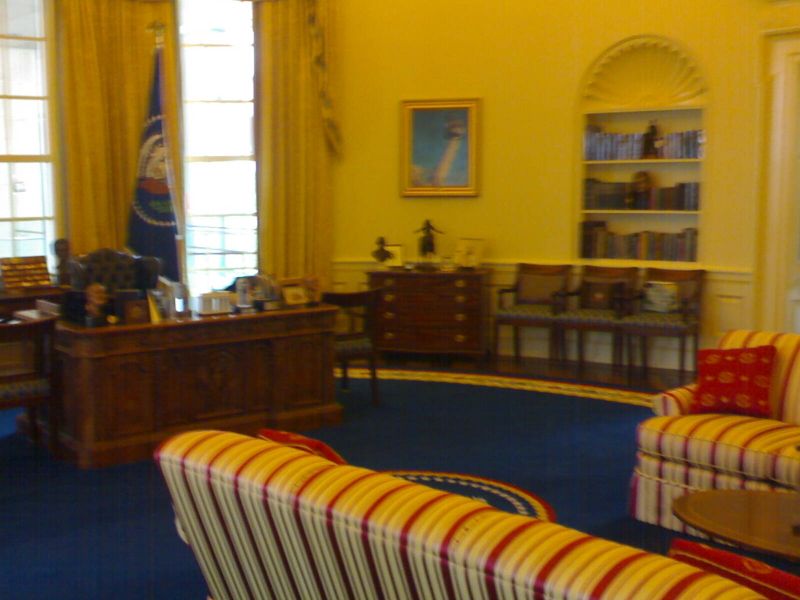
    Oval Office Replica

    The Clinton Library and Museum includes a replica of the Oval Office as it was when President Clinton occupied it. According to the staff, the former President often moves objects around or borrows them during his monthly or bi-monthly visits to the Library (he has an apartment upstairs with room for his secret service agents). 


    The docents tell me that President Clinton knows them all by name and is closely involved in almost everything that happens at the Library. I spoke at length with one docent, Jane Cazort, whose father-in-law was lieutenant governor of Arkansas and whose granddaughter went to school with Chelsea Clinton.


    Coincidentally, next week I’ll be attending the Fortune Brainstorm: Green 2009 conference in Laguna Niguel, California at which President Clinton is speaking.  More on that later.


  • Architectural Collaboration and the California Academy of Sciences

    As I gazed at the Big Dipper, the Little Dipper and other amazingly-clear star formations last Thursday evening, there was no distraction from city lights or from the fog that often defines San Francisco.

    I was sitting in the world’s largest digital planetarium, which uses real-time data from NASA plus immersive video technology. The NASA data accurately represents the current night sky, and the immersive video technology makes visitors feel like they’re travelling through space.


    The star-studded evening program was a departure from the usual daytime planet presentation in honor not only of Charles Darwin’s 200th birthday last Thursday evening, but also of the launch of NightLife at the California Academy of Sciences. NightLife is a weekly Thursday evening event featuring bars, food plus all of the Academy exhibits. 


    I walked, Lagunitas India Pale Ale in hand, through the recently-reopened museum and marveled at the Rainforest Exterior four-story glass rainforest with its colorful poison frogs and Borneo bats and the graceful movement of jellyfish in the Steinhart aquarium, which includes thirty-eight thousand animals. Aside from official certifications that the Academy is the “greenest” museum on the planet, I found the museum’s “Living Roof” stunning and unique.   Living Roof The 197-thousand foot roof features seven hills containing many native plant species. The concept was to blend the building’s environment with that of Golden Gate Park and to reduce the Academy’s energy needs by creating oxygen, capturing rainwater and avoiding the heat-trapping disadvantages of tar-and-asphalt roofs.


    After a decade of planning and $500 million in expenses, the Academy reopened last fall to much fanfare.

    At the time, the San Francisco Chronicle ran an interesting story by John Cote that described how the Academy’s board of directors chose an architectural team for the project. By July of 1999, the board had reportedly narrowed its search to five finalists. According to the story, a British architect arrived with five associates, two trays of slides and detailed mockups of two specific designs. He spoke for an hour and a half.


    When it was Italian architect Renzo Piano’s turn, he began by rearranging the room chairs in a circle. He then used a blank pad to sketch as he listened to board members describe the importance of nature, biodiversity, and naturalistic forms. Renzo Piano Ultimately, Piano and his team got the job because of his collaborative approach. Rather than simply presenting options to the board, Piano engaged and involved his client. The result reflects broad input and the collaborative sessions between architect and client.


    Too often in organizations, people make decisions in a vacuum. Those decisions are handed down to people who must implement them. This causes a chasm between the decision makers and the decision implementers and many others who are impacted by decisions. Then there’s a lot of talk like “They want us to ….” Or “they’ve decided that we’re supposed to….” So, an “us and them” mentality develops and sucks the motivation, innovation and value out of an organization.


    In contrast, collaborative organizations make decisions by involving and engaging people across levels, functions, business units and regions. When people have a stake in decisions, “us and them” dissolves. I’ve written in The Culture of Collaboration book and in this blog about the interplay of culture, environment and tools in sparking collaboration. In his initial session with the Academy’s board, Renzo Piano used all three. He changed the culture by involving the board in the conceptual process. He redesigned the environment by rearranging the rooms chairs in a circle. And he used a blank sketch pad as a collaborative tool.


    It’s a reminder—one that we stress in The Culture of CollaborationÒ Workshop—that collaborative culture can begin with a team gathering or a spontaneous exchange. In the case of the California Academy of Sciences, the result is an extraordinarily functional and “green” architectural masterpiece.