collaborative culture


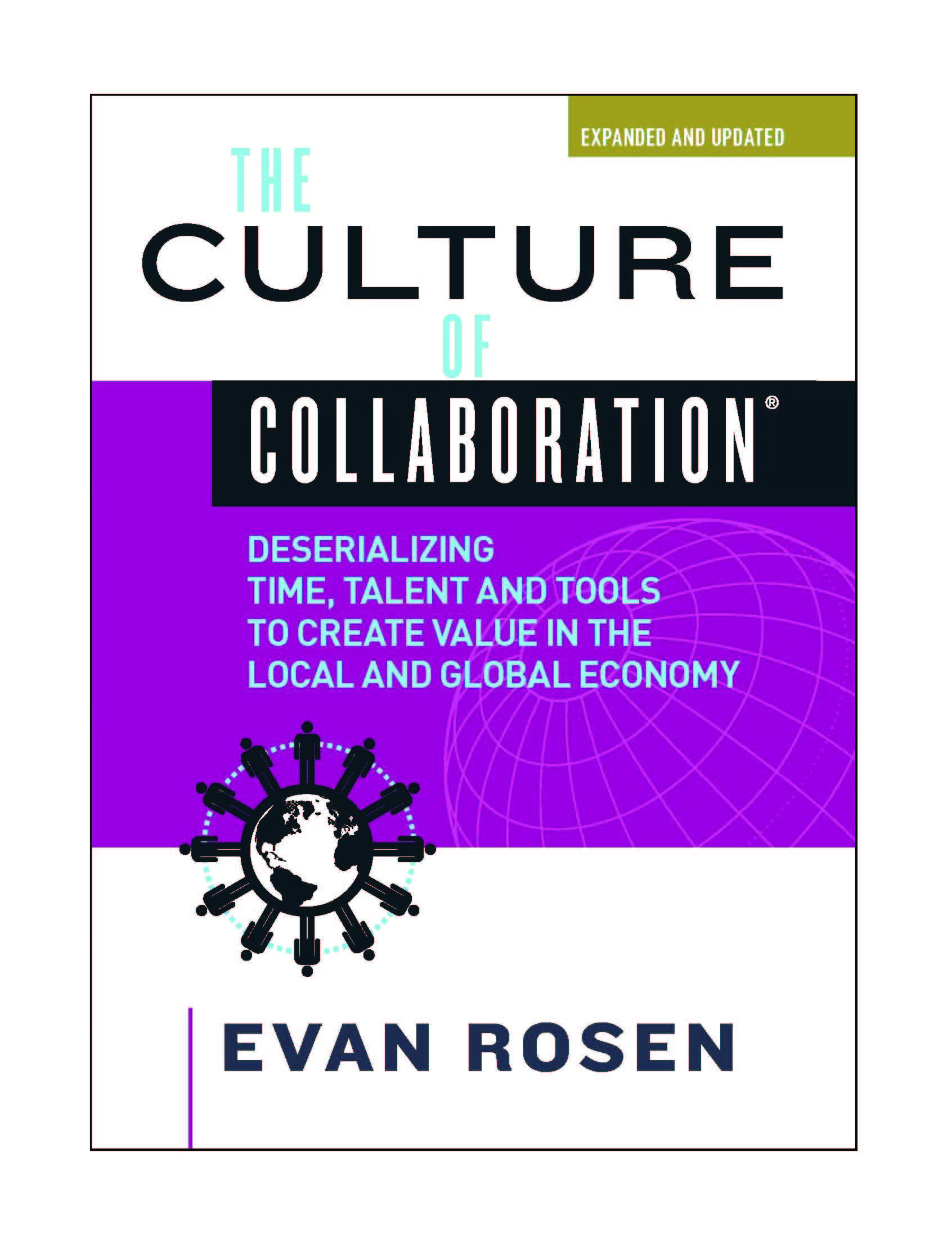
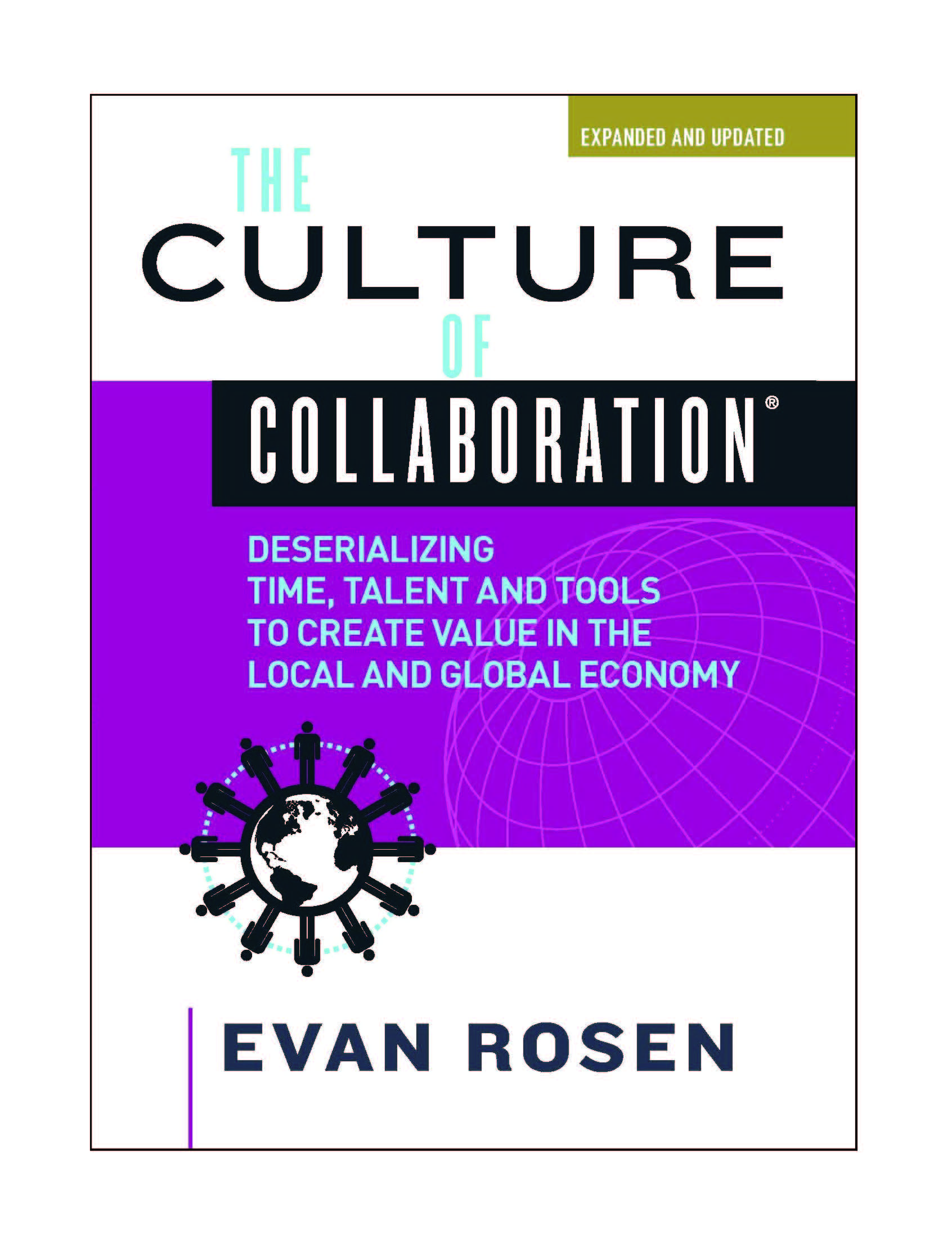
  • New Expanded and Updated Edition of The Culture of Collaboration® Book

    How has collaboration evolved? What is the current state of collaboration at Toyota, Mayo Clinic, Industrial Light & Magic, Boeing and other companies profiled in the first edition of The Culture of Collaboration® book? What are the keys to long-term value creation through collaboration?

    These are questions I sought to answer as I went back inside collaborative companies to research and write the new, expanded and updated edition of The Culture of Collaboration® book.
    Jacket with border CofC EU


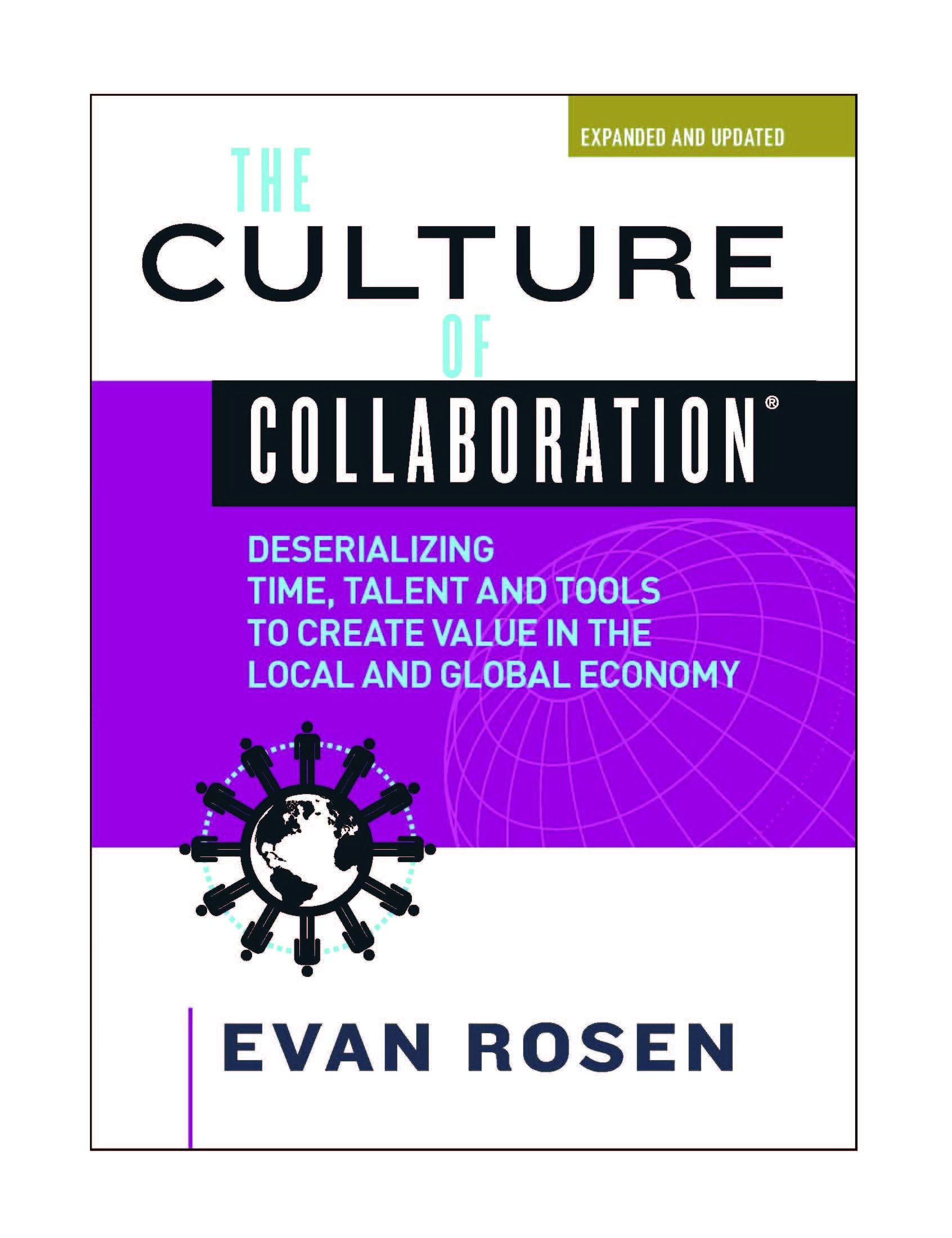
    The expanded and updated edition has just been released, and I’m proud of the finished work. The 363-page business book includes 54 images and illustrations and a beefy index. By the way, 54 images and illustrations is no easy feat in 2024. Ever wonder why most business books lack pictures? It’s time-consuming to license even a single image from a large organization.

    One thing I’ve learned is that deserialization and collaboration go together like peanut butter and jelly. Deserialization means removing sequences from the lifecycle of products and services. The idea is to collapse outmoded sequential approaches and replace them with spontaneous, real-time processes.

    Deserialization also involves removing sequences from interaction. This means killing what’s left of the in-box culture. In short, deserialization is the key to long-term value creation through collaboration. That’s why the subtitle of the expanded and updated edition of The Culture of Collaboration® is: Deserializing Time, Talent and Tools to create Value in the Local and Global Economy.

    I’ve also learned that despite best efforts, collaboration can stall within highly-collaborative organizations. Paradoxically, collaboration happens in companies in which the dominant culture is command and control. Likewise, internal competition and command and control exist in mostly-collaborative organizations. Many factors, as I explain in the expanded and updated edition, influence both the evolution and regression of The Culture of Collaboration.

    More broadly… as I write in the preface, in some ways we’re less collaborative than we were in the early 2000s. Social media lets us broadcast opinions without refining ideas through real-time interaction. We join groups that make rules for how we should think. Videoconferencing enables interaction at a distance, but too often we’re wasting time in scheduled virtual meetings rather than creating value together spontaneously. While in the same room, we meet rather than collaborate. We leave meetings to work and then schedule follow-up meetings to review work. This serial process zaps value.

    My objective in revisiting this topic is to consider whether we have evolved or veered off track and to provide a new framework for unblocking collaboration and unlocking value.

    Let me know your thoughts about the new, expanded and updated edition of The Culture of Collaboration® book.


  • Bankruptcy of Purse–and of Culture

    Can an organization’s culture portend disaster?

    For the answer, we need look no further than some of the most high-profile corporate scandals. Lehman Brothers, Worldcom and Enron— companies that experienced some of the largest bankruptcies in history— used accounting gimmicks which stemmed from bankrupt cultures. Command-and-control, internally-competitive, autocratic, star-oriented organizational cultures breed unethical and—in extreme cases—illegal behavior.

    Now Big Law gives us a new don’t-let-this-happen-to-you poster child for embracing the right culture. Leaders of the once top-tier law firm of Dewey & LeBoeuf overstated revenue and used accounting tricks to hide losses and cash flow shortfalls, according to a 106-count indictment that a New York state grand jury handed up last Thursday. If convicted of the most serious charges, Chairman Steven Davis, Executive Director Stephen DiCarmine and Chief Financial Officer Joel Sanders, each face up to 25 years in prison. Dewey filed for Chapter 11 bankruptcy in May of 2012. The alleged financial shenanigans began as billings dipped and clients evaporated during the depths of the 2008 financial crisis.

    But Dewey’s problems began long before the firm’s leaders allegedly began their deceit, as I describe in my new book, The Bounty Effect: 7 Steps to The Culture of Collaboration®. Formed in 2007 from a merger of two venerable firms, Dewey Ballantine and LeBoeuf, Lamb, Greene & MacRae, the firm reportedly employed three thousand people globally at its height. Dewey’s roots date back a century, but it took roughly five years for the firm to come unglued.

    Among other cultural defects, the newly-merged firm created a two-tier partnership system in which it treated “stars” differently than other “partners.” After the merger, Dewey began recruiting so-called “lateral partners” rather than promoting from within. These partners received multiyear, multimillion-dollar guarantees. Dewey’s secretive culture prevented the firm from sharing this information with all of the partners. While one lateral partner reportedly had a six-million-dollar-a-year guarantee, other partners received four hundred and fifty thousand dollars a year.

    The stars were those who the firm expected would bring in the most business. Dewey considered other partners “service partners,” the ones who wrote briefs and performed or managed the legal heavy lifting. When word of the wide compensation gap spread, the service partners—many of whom had worked for the firm much longer than the newly-recruited “stars”—became resentful. Clearly, star culture had compromised trust and poisoned the organization. And, guess what? Some highly-touted “stars” were unable to live up to their hype, and therefore revenue fell short of what Dewey needed for paying annual compensation commitments to these “stars.”

    The merger occurred right before the financial crisis. By the end of 2008, Dewey had more than $100 million in term debt outstanding and available lines of credits totaling more than $130 million with four banks. The firm’s credit agreements required Dewey to maintain a minimum cash flow. To abide by this covenant, the firm’s leaders and others conspired to misrepresent Dewey’s financial performance, according to the indictment.

    So brazen were the defendants, according to the indictment, that they created a document called the “Master Plan” which outlined fraudulent accounting tricks. Plus they reportedly discussed the alleged fraud in a series of emails. One of these apparently read, “Can you find another clueless auditor for next year?”

    Suppose Dewey had fostered a collaborative rather than command-and-control culture and organizational structure? What if Dewey had shared rather than hoarded information, harnessed broad input into decisions, and encouraged partners to work together both in developing business and producing legal work? The firm may have weathered the financial crisis rather than devolving into apparent unethical and possibly illegal activity.

    Dewey is by no means the only law firm with a two-tier partnership system. Nor is it the only firm that embraces a star-oriented, command-and-control culture. Many law firms and organizations in multiple industries and sectors run the risk of financial implosion, because their cultures are bankrupt. The solution, as I describe in The Bounty Effect, is to change the structure of organizations from Industrial Age command-and-control to Information Age collaborative