organizational change


  • Fixing General Motors and Curing Veterans Affairs

    General Motors chief executive Mary Barra has vowed to change the company’s culture and has testified

    GM Logo1before Congress that GM has taken steps to increase internal transparency and information sharing. This commitment follows a report exposing that GM discouraged raising or sharing safety concerns. The company commissioned the report, because GM failed to recall thousands of cars with defective ignition switches for eleven years.

    Similar calls for culture change have followed the Veterans Health Administration’s wait-for-care and numbers fudging scandal. President Obama has remarked that VA Image the VA needs a culture change so that “bad news gets surfaced quickly.” Not content to wait for culture change, House and Senate negotiators today announced a $17 billion plan that, among other provisions, provides money to lease clinics so that veterans can get treatment outside the VA’s system.

    Culture change emphasizes the result without a way to get there. It’s like telling a poor person to become rich. Culture change has become a common prescription from leaders, pundits and management gurus. The prescription often fails, because the shift originates with executives without detail, discussion or broad buy-in. Meantime, the organizational structure stays the same.

    The Bounty Effect has hit GM and the VA. As I describe in my new book, The Bounty Effect happens when exigent circumstances compel businesses, government and organizations to change their structures from command-and-control to collaborative. The solution for these organizations is to seize the opportunity The Bounty Effect provides and fundamentally change their structures so that people can spontaneously engage one another, share information and participate in decisions regardless of level, role or region. This will cost far less than $17 billion.

    Many organizations, including GM and the VA, still operate with a structure that has barely changed since the Industrial Age.  This obsolete structure based on command-and-control promotes hierarchy and internal competition plus rewards information hoarding, secrecy, and cutting corners. GM and the VA also share a need to go through channels. This inhibits the participation and information flow critical to Information Age organizations.

    Safety concerns apparently never reached GM’s chief executive, nor did problems with scheduling reporting systems apparently flow to former VA Secretary Eric Shinseki.  And both organizations apparently discouraged people from sharing concerns. VA supervisors often retaliated against workers who raised valid complaints, according to a White House report.

    GM chief executive Mary Barra has said that culture change must be leader-led. Barra has also promoted a program called “speak up for safety” plus three GM “core values.” These are “the customer is our compass, relationships matter, and individual excellence is crucial.” But a leader’s words have modest impact without structural change. Yes, GM has added safety investigators, increased safety data mining, and created a vice president of safety position. Nevertheless, none of these actions will reduce information hoarding and internal competition. None of these actions will change GM’s structure from command-and-control to collaborative. 

    When an organization rewards obsolete behavior, change dies on the vine despite a leader’s mandate. If hoarding and hiding information or failing to act on knowledge results in a raise or a promotion, people are unlikely to share information or take action. Pushing safety issues at GM was seemingly no path to promotion. VA managers reportedly kept patient names off the official waiting list, because bonuses depended on concealing information. Recognition and reward systems in obsolete organizational structures often reinforce bad behavior and the status quo regardless of culture change efforts. The same flawed practices and processes that encourage internal competition and information hoarding lead companies to compromise safety and fudge numbers.

    Changing the VA’s structure will enhance transparency and efficiency while saving money rather than costing the $17 billion Congress is authorizing. Changing GM’s structure will ensure that people across the organization share and act on critical information.  And changing the structure of GM and the VA will accomplish what many leaders and pundits are recommending: culture change.


  • World Bank, Microsoft Changing Structure for Collaboration

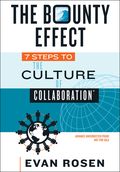
    More and more organizations are recognizing that obsolete organizational structures are impeding collaboration. I identify this issue and detail solutions in my new book, The Bounty Effect: 7 Steps to The Culture of Collaboration®.

    One of the latest organizations to begin adopting a collaborative structure because of The Bounty Effect is the World Bank. The World Bank has announced that it’s moving away from a command-and-control organizational structure that is compromising value. The World Bank will instead adopt a collaborative structure for greater speed and efficiency. The new structure will enable internal collaboration across functions, groups and regions. Plus the new structure will enhance external collaboration particularly with the private sector.

    World Bank President Jim Yong Kim announced the shift after a survey of ten thousand team members revealed a “culture of fear” and a “terrible environment for collaboration,” according to an October 6, 2013 story by Annie Lowrey in the New York Times. Further, Kim told the New York Times he feared the World Bank’s culture and structure might short-circuit its new goals of eradicating extreme poverty by 2030 and ensuring “inclusive growth.”

    The Bounty Effect for the World Bank is that the organization, which is financed by 188 member countries, faces increasing competition in supporting developing economies from many groups. One of these is the Bill and Melinda Gates Foundation. Incidentally, Bill Gates also chairs the Microsoft board of directors. In July, Microsoft announced it would change its organizational structure to reduce internal competition, curb silos and enhance collaboration. Bill read an advance copy of The Bounty Effect: 7 Steps to The Culture of Collaboration®. The book shows how to change the structure and culture of organizations from Industrial Age command-and-control to Information Age collaborative.

    Microsoft, the World Bank and many organizations suffer from similar shortcomings. While many have embraced collaboration as a concept and have even developed pockets of collaborative activity, the broader organization remains mired in command-and-control.

    Remnants of Industrial Age command-and-control compromise value creation. These remnants include 19th Century vertical organization charts, the need to go through channels, traditional meetings, and recognition and reward systems that reinforce internal competition among many others. The Bounty Effect: 7 Steps to The Culture of Collaboration® identifies these remnants and details how to replace them with infinitely more valuable collaborative building blocks.

    As the World Bank, Microsoft and growing numbers of organizations recognize The Bounty Effect’s impact on them, they can use the opportunity to implement the 7 Steps to The Culture of Collaboration® and ultimately create far greater value.


  • Seven Steps to The Culture of Collaboration

    My new book, The Bounty Effect: 7 Steps to The Culture of Collaboration, has received two favorable reviews: one in Publishers Weekly and the other in Library Journal. Both reviews focus on the 7 Steps: Plan, People, Principles, Practices, Processes, Planet and Payoff.

    I’m delighted that both reviewers understood the book’s premise that businesses must abandon obsolete organizational structures designed for the Industrial Age and replace them with infinitely more valuable collaborative structures suitable for the Information Age. Leigh Mihlrad of the National Institutes of Health reviewed The Bounty Effect for Library Journal. “Rosen declares that while the control method might have worked in the Industrial Age, it does not work in today’s Information Age,” according to the review. Mihlrad concludes with the Library Journal's verdict: “For those in positions to bring about organizational change, this book provides many useful examples.”

    The Publishers Weekly review highlights my point that The Bounty Effect is by no means limited to corporations. “Rosen argues that collaboration moves well beyond organizational boundaries, as it applies to neighborhoods, communities, and government,” according to Publishers Weekly.  “Collaboration creates greater value, enhances achievement, and produces sustainable business models; the question then becomes how quickly can an organization free itself from the Industrial Age and operate to its maximum capacity in the Information Age.” The sooner an organization starts the seven steps, the faster it can migrate from command-and-control and maximize value through collaboration


  • Changing Organizational Structures for Collaboration

    My new book entitled The Bounty Effect: 7 Steps to The Culture of Collaboration® is now available. It’s the second book in a series which includes The Culture of Collaboration®: Maximizing Time, Talent and Tools to Create Value in the Global Economy. The Bounty Effect shows how to change the structure of organizations for collaboration.

    Why do organizations need to change their structures? The Industrial Age was command and control. The Information Age is collaboration. Yet Industrial Age structures render collaboration dead on arrival in the Bounty Effect Jacket JPGInformation Age. Remnants of these structures—including organization charts, performance reviews, meetings and mission statements—inhibit organizations from using new collaborative methods and tools that spark innovation. Now we’re at the point where many organizations—from corporations and small businesses to universities and government agencies—have a desire to collaborate.  Some have taken action to instill collaborative culture. But what’s holding back collaboration is obsolete organizational structures, which we must change.

    The Bounty Effect gets its name from the mutiny that occurred on the H.M.S Bounty in 1789. Before the mutiny, Captain William Bligh used a well-worn management technique: command-and-control. The mutiny forced the structure and culture to change as Bligh became a collaborative leader and his loyalists participated in decisions as they struggled for survival aboard a small boat. The mutiny was an exigent circumstance, one that compels immediate action.

    The Bounty Effect happens when exigent circumstances compel businesses, governments and organizations to change their structures from command and control to collaborative. Triggers include disruptive market forces, new competitors, regional slowdowns, natural disasters, terrorist attacks and global downturns.

    The book is about how to seize the opportunity that The Bounty Effect provides and change the organizational structure in seven steps.  My objective in writing the book is to provide a framework for structural change necessary to transform organizations into collaborative enterprises. And The Bounty Effect demonstrates how collaborative enterprises create far more value than command-and-control organizations. Using the framework, people and organizations can determine how to redesign and adopt a collaborative structure that fits. I welcome your input.