organizational structure


  • Media Embraces The Bounty Effect’s Structural Change

    There are encouraging signs that the media is recognizing that the structure of organizations must change to enhance collaboration and maximize value. And when the media gets on board, organizations often follow.

    Several media outlets that have featured The Bounty Effect: 7 Steps to The Culture of Collaboration have focused on changing organizational structures from Industrial Age command-and-control to Information Age collaborative. This is crucial, because The Bounty Effect is about seizing opportunities to design and build new organizational structures that exigent circumstances provide. So, reviewers and journalists have clearly understood the central theme of the book.

    Reviewing The Bounty Effect in The Washington Times, James Srodes describes the big picture of why changing organizational structures is necessary. He relates the need for collaborative structures to the changing “hinges of history” in which a decades-long trend suddenly shifts. Srodes mentions a global economic state where little or no growth is the norm and dwindling raw materials and political instabilities among other trends impacting the planet. This insightful review endorses the book’s approach:

    “If you recoil at the notion of folks sitting around a boardroom campfire singing “Kumbaya,” Mr. Rosen offers an ingenious example of the essence of the collaboration strategy. The “Bounty” in his title is in fact the HMS Bounty, famed in Hollywood’s bogus history for its portrayal of a despotic (command-and-control) Captain Bligh.”

    In a question-and-answer article with me entitled “Can Collaboration Be Forced?” in Talent Management magazine, Kellye Whitney also focuses on changing the organizational structure. My answer to a question about what talent leaders can do to change command-and-control structures echoes the “hinges of history” shift in the Washington Times review:

    “In the workplace we should constantly be working to create value. It used to be that companies could make a decent buck by just telling people what to do. A few people were paid to do the thinking and everybody else was paid to carry out orders. But with globalization, increased competition and the boom and bust cycles, companies are realizing that it’s all hands on deck.”

    In another question-and-answer article entitled “The New Way We…Collaborate” in Avaya Innovations magazine, Eric Lai focuses the interview on changing organizational structure and culture. Here’s my response to his question about the role of technology in changing the structure and culture:

    “The Greek philosopher Socrates believed that the way to truth is through dialogue. Socrates rejected writing because it meant—quite literally in Ancient Athens—that ideas were set in stone or wax and that the process of developing those ideas was dead. Email is the modern equivalent of setting ideas in stone. If given the choice, Socrates would have found a lot more truth in using real-time tools rather than email. Email is essentially an updated version of the old memorandum. In command-and-control organizations, people send an email and wait for a response. An email is often a report or a request for a decision. There is no real-time dialogue in email, so Socrates would have found little truth in email.”

    So the media is beginning to join the growing numbers of organizations that have jumped on the structural change bandwagon.


  • World Bank, Microsoft Changing Structure for Collaboration

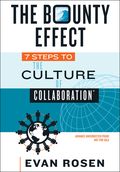
    More and more organizations are recognizing that obsolete organizational structures are impeding collaboration. I identify this issue and detail solutions in my new book, The Bounty Effect: 7 Steps to The Culture of Collaboration®.

    One of the latest organizations to begin adopting a collaborative structure because of The Bounty Effect is the World Bank. The World Bank has announced that it’s moving away from a command-and-control organizational structure that is compromising value. The World Bank will instead adopt a collaborative structure for greater speed and efficiency. The new structure will enable internal collaboration across functions, groups and regions. Plus the new structure will enhance external collaboration particularly with the private sector.

    World Bank President Jim Yong Kim announced the shift after a survey of ten thousand team members revealed a “culture of fear” and a “terrible environment for collaboration,” according to an October 6, 2013 story by Annie Lowrey in the New York Times. Further, Kim told the New York Times he feared the World Bank’s culture and structure might short-circuit its new goals of eradicating extreme poverty by 2030 and ensuring “inclusive growth.”

    The Bounty Effect for the World Bank is that the organization, which is financed by 188 member countries, faces increasing competition in supporting developing economies from many groups. One of these is the Bill and Melinda Gates Foundation. Incidentally, Bill Gates also chairs the Microsoft board of directors. In July, Microsoft announced it would change its organizational structure to reduce internal competition, curb silos and enhance collaboration. Bill read an advance copy of The Bounty Effect: 7 Steps to The Culture of Collaboration®. The book shows how to change the structure and culture of organizations from Industrial Age command-and-control to Information Age collaborative.

    Microsoft, the World Bank and many organizations suffer from similar shortcomings. While many have embraced collaboration as a concept and have even developed pockets of collaborative activity, the broader organization remains mired in command-and-control.

    Remnants of Industrial Age command-and-control compromise value creation. These remnants include 19th Century vertical organization charts, the need to go through channels, traditional meetings, and recognition and reward systems that reinforce internal competition among many others. The Bounty Effect: 7 Steps to The Culture of Collaboration® identifies these remnants and details how to replace them with infinitely more valuable collaborative building blocks.

    As the World Bank, Microsoft and growing numbers of organizations recognize The Bounty Effect’s impact on them, they can use the opportunity to implement the 7 Steps to The Culture of Collaboration® and ultimately create far greater value.


  • Seven Steps to The Culture of Collaboration

    My new book, The Bounty Effect: 7 Steps to The Culture of Collaboration, has received two favorable reviews: one in Publishers Weekly and the other in Library Journal. Both reviews focus on the 7 Steps: Plan, People, Principles, Practices, Processes, Planet and Payoff.

    I’m delighted that both reviewers understood the book’s premise that businesses must abandon obsolete organizational structures designed for the Industrial Age and replace them with infinitely more valuable collaborative structures suitable for the Information Age. Leigh Mihlrad of the National Institutes of Health reviewed The Bounty Effect for Library Journal. “Rosen declares that while the control method might have worked in the Industrial Age, it does not work in today’s Information Age,” according to the review. Mihlrad concludes with the Library Journal's verdict: “For those in positions to bring about organizational change, this book provides many useful examples.”

    The Publishers Weekly review highlights my point that The Bounty Effect is by no means limited to corporations. “Rosen argues that collaboration moves well beyond organizational boundaries, as it applies to neighborhoods, communities, and government,” according to Publishers Weekly.  “Collaboration creates greater value, enhances achievement, and produces sustainable business models; the question then becomes how quickly can an organization free itself from the Industrial Age and operate to its maximum capacity in the Information Age.” The sooner an organization starts the seven steps, the faster it can migrate from command-and-control and maximize value through collaboration


  • Changing Organizational Structures for Collaboration

    My new book entitled The Bounty Effect: 7 Steps to The Culture of Collaboration® is now available. It’s the second book in a series which includes The Culture of Collaboration®: Maximizing Time, Talent and Tools to Create Value in the Global Economy. The Bounty Effect shows how to change the structure of organizations for collaboration.

    Why do organizations need to change their structures? The Industrial Age was command and control. The Information Age is collaboration. Yet Industrial Age structures render collaboration dead on arrival in the Bounty Effect Jacket JPGInformation Age. Remnants of these structures—including organization charts, performance reviews, meetings and mission statements—inhibit organizations from using new collaborative methods and tools that spark innovation. Now we’re at the point where many organizations—from corporations and small businesses to universities and government agencies—have a desire to collaborate.  Some have taken action to instill collaborative culture. But what’s holding back collaboration is obsolete organizational structures, which we must change.

    The Bounty Effect gets its name from the mutiny that occurred on the H.M.S Bounty in 1789. Before the mutiny, Captain William Bligh used a well-worn management technique: command-and-control. The mutiny forced the structure and culture to change as Bligh became a collaborative leader and his loyalists participated in decisions as they struggled for survival aboard a small boat. The mutiny was an exigent circumstance, one that compels immediate action.

    The Bounty Effect happens when exigent circumstances compel businesses, governments and organizations to change their structures from command and control to collaborative. Triggers include disruptive market forces, new competitors, regional slowdowns, natural disasters, terrorist attacks and global downturns.

    The book is about how to seize the opportunity that The Bounty Effect provides and change the organizational structure in seven steps.  My objective in writing the book is to provide a framework for structural change necessary to transform organizations into collaborative enterprises. And The Bounty Effect demonstrates how collaborative enterprises create far more value than command-and-control organizations. Using the framework, people and organizations can determine how to redesign and adopt a collaborative structure that fits. I welcome your input.