Concepts


  • Bankruptcy of Purse–and of Culture

    Can an organization’s culture portend disaster?

    For the answer, we need look no further than some of the most high-profile corporate scandals. Lehman Brothers, Worldcom and Enron— companies that experienced some of the largest bankruptcies in history— used accounting gimmicks which stemmed from bankrupt cultures. Command-and-control, internally-competitive, autocratic, star-oriented organizational cultures breed unethical and—in extreme cases—illegal behavior.

    Now Big Law gives us a new don’t-let-this-happen-to-you poster child for embracing the right culture. Leaders of the once top-tier law firm of Dewey & LeBoeuf overstated revenue and used accounting tricks to hide losses and cash flow shortfalls, according to a 106-count indictment that a New York state grand jury handed up last Thursday. If convicted of the most serious charges, Chairman Steven Davis, Executive Director Stephen DiCarmine and Chief Financial Officer Joel Sanders, each face up to 25 years in prison. Dewey filed for Chapter 11 bankruptcy in May of 2012. The alleged financial shenanigans began as billings dipped and clients evaporated during the depths of the 2008 financial crisis.

    But Dewey’s problems began long before the firm’s leaders allegedly began their deceit, as I describe in my new book, The Bounty Effect: 7 Steps to The Culture of Collaboration®. Formed in 2007 from a merger of two venerable firms, Dewey Ballantine and LeBoeuf, Lamb, Greene & MacRae, the firm reportedly employed three thousand people globally at its height. Dewey’s roots date back a century, but it took roughly five years for the firm to come unglued.

    Among other cultural defects, the newly-merged firm created a two-tier partnership system in which it treated “stars” differently than other “partners.” After the merger, Dewey began recruiting so-called “lateral partners” rather than promoting from within. These partners received multiyear, multimillion-dollar guarantees. Dewey’s secretive culture prevented the firm from sharing this information with all of the partners. While one lateral partner reportedly had a six-million-dollar-a-year guarantee, other partners received four hundred and fifty thousand dollars a year.

    The stars were those who the firm expected would bring in the most business. Dewey considered other partners “service partners,” the ones who wrote briefs and performed or managed the legal heavy lifting. When word of the wide compensation gap spread, the service partners—many of whom had worked for the firm much longer than the newly-recruited “stars”—became resentful. Clearly, star culture had compromised trust and poisoned the organization. And, guess what? Some highly-touted “stars” were unable to live up to their hype, and therefore revenue fell short of what Dewey needed for paying annual compensation commitments to these “stars.”

    The merger occurred right before the financial crisis. By the end of 2008, Dewey had more than $100 million in term debt outstanding and available lines of credits totaling more than $130 million with four banks. The firm’s credit agreements required Dewey to maintain a minimum cash flow. To abide by this covenant, the firm’s leaders and others conspired to misrepresent Dewey’s financial performance, according to the indictment.

    So brazen were the defendants, according to the indictment, that they created a document called the “Master Plan” which outlined fraudulent accounting tricks. Plus they reportedly discussed the alleged fraud in a series of emails. One of these apparently read, “Can you find another clueless auditor for next year?”

    Suppose Dewey had fostered a collaborative rather than command-and-control culture and organizational structure? What if Dewey had shared rather than hoarded information, harnessed broad input into decisions, and encouraged partners to work together both in developing business and producing legal work? The firm may have weathered the financial crisis rather than devolving into apparent unethical and possibly illegal activity.

    Dewey is by no means the only law firm with a two-tier partnership system. Nor is it the only firm that embraces a star-oriented, command-and-control culture. Many law firms and organizations in multiple industries and sectors run the risk of financial implosion, because their cultures are bankrupt. The solution, as I describe in The Bounty Effect, is to change the structure of organizations from Industrial Age command-and-control to Information Age collaborative
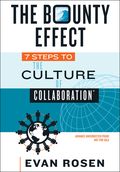


  • Rank and Yank or Differentiation?

    Sometimes corporate speak or shop talk migrates from cubicles to the front page. This is exactly what happened to the terms “performance review” and “performance appraisal” last November. That’s when Microsoft eliminated its so-called “stack ranking” of team members.

    Last spring, Microsoft Chairman and co-founder Bill Gates read an advanced copy of The Bounty Effect: 7 Steps to The Culture of Collaboration®. The book shows how to change organizational structures from Industrial Age command-and-control to Information Age collaborative. Regarding performance reviews, The Bounty Effect demonstrates why ranking team members falls short and how a Collaborative Reward System creates greater value than an internally-competitive system. Ranking is essentially grading on a curve, because the organization often pre-determines which percentage of its workforce must fall into categories such as below target, target, above target and significantly above target. And grading on a curve fosters internal competition rather than collaboration. How encouraged are team members to share information and ideas if they must compete with colleagues for rankings? Not very. More likely, people will try to fake collaboration.

    Headlines regarding Microsoft’s shift include “Stack Ranking Falls Outs of Favor” in Computerworld and “Microsoft Kills Its Hated Stack Rankings” in Bloomberg BusinessWeek. Within several days of Microsoft’s elimination of stack ranking, I was on a flight from Taipei to San Francisco reading The Wall Street Journal Asia edition. And I was fascinated to see a condemnation of Microsoft’s shift and a defense of ranking team members from Jack Welch, who once was CEO of a company known for using what Welch calls “differentiation.” That company is General Electric.

    Here’s how Welch describes differentiation: “It’s about building great teams and great companies through consistency, transparency and candor. It’s about aligning performance with the organization’s mission and values. It’s about making sure that all employees know where they stand. Differentiation is nuanced, humane and occasionally complex, and it has been used successfully by companies for decades.”

    In The Culture of Collaboration® book, I describe “differentiation and affirmation.” The process is more commonly called “rank and yank,” a term that Welch considers “media-invented” and “politicized.”  One company that adopted the approach and created a star culture was Enron, which went bankrupt for many reasons.  Star culture is a hallmark of the Industrial Age command-and-control organization. Such organizations pit people against one another and hidden agendas multiply. In contrast, a collaborative organization encourages team members to work in concert towards common goals.

    Welch seems to endorse star culture in describing “feedback and coaching” as one component that makes “differentiation” work. “Your stars know they are loved and rarely leave. Those in the middle 70% know that they are appreciated, and they receive clear guidance about how to improve their performance. And the bottom 10% is never surprised when the conversation sometimes turns, after a year of candid appraisals, to moving on,” according to Welch.

    Further, Welch endorses the “bell-curve” grading aspect of “differentiation.” “We grade children in school, often as young as 9 or 10, and no one calls that cruel. But somehow adults can’t take it? Explain that one to me.” Well, here it goes, Jack. Curve grading is no more helpful to children in school than it is to organizations. Our educational systems, particularly in the United States, too often foster unnecessary competition rather than collaboration. It’s no wonder why corporations have difficulty migrating from command-and-control to collaboration. Part of the reason is that team members competed for grades in school, competed for graduate school admissions while in college, and then competed for limited grant money and fellowships while in graduate school. In particular, law schools often grade first-year students on a curve in part to limit merit scholarship awards. Eliminating curve grading in which a fixed percentage must fail is a major step towards reducing internal competition and curbing the “star culture” that complicates collaboration.

    Ranking team members is part of the broader recognition and reward process. This process typically features performance reviews, which distract organizations and waste an incredible amount of time. The Bounty Effect describes how to replace performance reviews with a far more collaborative approach. Whether we call ranking team members “differentiation” or “rank and yank,” this Industrial Age command-and-control approach has no place in an Information Age collaborative organization.


  • Media Embraces The Bounty Effect’s Structural Change

    There are encouraging signs that the media is recognizing that the structure of organizations must change to enhance collaboration and maximize value. And when the media gets on board, organizations often follow.

    Several media outlets that have featured The Bounty Effect: 7 Steps to The Culture of Collaboration have focused on changing organizational structures from Industrial Age command-and-control to Information Age collaborative. This is crucial, because The Bounty Effect is about seizing opportunities to design and build new organizational structures that exigent circumstances provide. So, reviewers and journalists have clearly understood the central theme of the book.

    Reviewing The Bounty Effect in The Washington Times, James Srodes describes the big picture of why changing organizational structures is necessary. He relates the need for collaborative structures to the changing “hinges of history” in which a decades-long trend suddenly shifts. Srodes mentions a global economic state where little or no growth is the norm and dwindling raw materials and political instabilities among other trends impacting the planet. This insightful review endorses the book’s approach:

    “If you recoil at the notion of folks sitting around a boardroom campfire singing “Kumbaya,” Mr. Rosen offers an ingenious example of the essence of the collaboration strategy. The “Bounty” in his title is in fact the HMS Bounty, famed in Hollywood’s bogus history for its portrayal of a despotic (command-and-control) Captain Bligh.”

    In a question-and-answer article with me entitled “Can Collaboration Be Forced?” in Talent Management magazine, Kellye Whitney also focuses on changing the organizational structure. My answer to a question about what talent leaders can do to change command-and-control structures echoes the “hinges of history” shift in the Washington Times review:

    “In the workplace we should constantly be working to create value. It used to be that companies could make a decent buck by just telling people what to do. A few people were paid to do the thinking and everybody else was paid to carry out orders. But with globalization, increased competition and the boom and bust cycles, companies are realizing that it’s all hands on deck.”

    In another question-and-answer article entitled “The New Way We…Collaborate” in Avaya Innovations magazine, Eric Lai focuses the interview on changing organizational structure and culture. Here’s my response to his question about the role of technology in changing the structure and culture:

    “The Greek philosopher Socrates believed that the way to truth is through dialogue. Socrates rejected writing because it meant—quite literally in Ancient Athens—that ideas were set in stone or wax and that the process of developing those ideas was dead. Email is the modern equivalent of setting ideas in stone. If given the choice, Socrates would have found a lot more truth in using real-time tools rather than email. Email is essentially an updated version of the old memorandum. In command-and-control organizations, people send an email and wait for a response. An email is often a report or a request for a decision. There is no real-time dialogue in email, so Socrates would have found little truth in email.”

    So the media is beginning to join the growing numbers of organizations that have jumped on the structural change bandwagon.


  • World Bank, Microsoft Changing Structure for Collaboration

    More and more organizations are recognizing that obsolete organizational structures are impeding collaboration. I identify this issue and detail solutions in my new book, The Bounty Effect: 7 Steps to The Culture of Collaboration®.

    One of the latest organizations to begin adopting a collaborative structure because of The Bounty Effect is the World Bank. The World Bank has announced that it’s moving away from a command-and-control organizational structure that is compromising value. The World Bank will instead adopt a collaborative structure for greater speed and efficiency. The new structure will enable internal collaboration across functions, groups and regions. Plus the new structure will enhance external collaboration particularly with the private sector.

    World Bank President Jim Yong Kim announced the shift after a survey of ten thousand team members revealed a “culture of fear” and a “terrible environment for collaboration,” according to an October 6, 2013 story by Annie Lowrey in the New York Times. Further, Kim told the New York Times he feared the World Bank’s culture and structure might short-circuit its new goals of eradicating extreme poverty by 2030 and ensuring “inclusive growth.”

    The Bounty Effect for the World Bank is that the organization, which is financed by 188 member countries, faces increasing competition in supporting developing economies from many groups. One of these is the Bill and Melinda Gates Foundation. Incidentally, Bill Gates also chairs the Microsoft board of directors. In July, Microsoft announced it would change its organizational structure to reduce internal competition, curb silos and enhance collaboration. Bill read an advance copy of The Bounty Effect: 7 Steps to The Culture of Collaboration®. The book shows how to change the structure and culture of organizations from Industrial Age command-and-control to Information Age collaborative.

    Microsoft, the World Bank and many organizations suffer from similar shortcomings. While many have embraced collaboration as a concept and have even developed pockets of collaborative activity, the broader organization remains mired in command-and-control.

    Remnants of Industrial Age command-and-control compromise value creation. These remnants include 19th Century vertical organization charts, the need to go through channels, traditional meetings, and recognition and reward systems that reinforce internal competition among many others. The Bounty Effect: 7 Steps to The Culture of Collaboration® identifies these remnants and details how to replace them with infinitely more valuable collaborative building blocks.

    As the World Bank, Microsoft and growing numbers of organizations recognize The Bounty Effect’s impact on them, they can use the opportunity to implement the 7 Steps to The Culture of Collaboration® and ultimately create far greater value.


  • Big Data, Measurement Mania and Collaboration

    The world is drowning in data. The term “Big Data” appears in most technology trend articles in 2013 and reverberates at seemingly every conference regardless of industry. This reminds me of a quote attributed to Mark Twain that I used with my senior picture in the high school yearbook: “Collecting data is much like collecting garbage. You must know in advance what you are going to do with the stuff before you collect it.”

    Now companies and government agencies have an idea what they’re going to do with the data they collect. And a leading use of data is measurement. Measurement mania has spread throughout every function of seemingly every organization from government agencies and universities to public school systems and corporations. Organizations can now measure traits among applicants and team members ranging from emotional intelligence to flexibility. Plus companies can calculate transactional cost-per-hire.

    The relentless drive to measure people can reduce value creation and compromise collaboration. Measurement mania breeds fear and internal competition among team members and encourages leaders to focus on short-term results which create less sustainable value than achieving longer-term objectives. In a numbers-obsessed organization, leaders are more likely to cut corners by booking phantom sales or sacrificing safety in manufacturing plants. With hidden agendas running rampant, collaboration towards common goals becomes impossible.

    Media reports suggest that Zynga, the company that develops online games including FarmVille, has thrived on numbers. “Relentlessly aggregating performance data, from the upper ranks to the cafeteria staff,” is the way Evelyn M. Rusli of the New York Times describes the company in a November 27, 2011 story. According to a November 28, 2011 blog post by Ryan Fleming of Digital Trends, executives nurture “fierce competition both between the groups and within each department.”

    Apparent measurement mania is one of many structural and cultural issues that have plagued Zynga. A September 8, 2010 story in SF Weekly by Peter Jamison indicates that the company’s values are sub-optimal and that rather than focusing on innovation, Zynga has instead pushed team members to appropriate ideas from competitors. If these assessments are accurate, it appears that Zynga would benefit from changing the structure and culture of its organization. Principles is one step that I explain in my new book, The Bounty Effect: 7 Steps to The Culture of Collaboration.

    In perhaps the most sober indication of problems with Zynga’s focus, the company reported second quarter results last Thursday that contained few bragging rights. While the results exceeded analyst expectations, the number of daily active users declined 45 percent in the quarter from the same period last year. In the three months ending June 30, Zynga’s sales fell 31 percent to $231 million. According to the Wall Street Journal, Zynga CEO Don Mattrick indicated that “getting a business back on track isn’t quick, and isn’t easy.” Mattrick recently replaced founder Mark Pincus as CEO.

    While Zynga clearly faces challenges on many fronts, the company’s structure and culture are likely factors in Zynga’s woes. The company is by no means alone in the issues it faces and the possible structure and culture elements. Organizations of all kinds face exigent circumstances ranging from new competitors and disruptive market forces to natural disasters and terrorist attacks. These storms that blow through businesses provide opportunities to change.

    In The Bounty Effect, I discuss how to replace command-and-control remnants including measurement mania and how to adopt collaborative principles, practices and processes among other steps. Creating value through collaboration happens only when organizations change their structures and cultures from Industrial Age command-and-control to Information Age collaborative.


  • Seven Steps to The Culture of Collaboration

    My new book, The Bounty Effect: 7 Steps to The Culture of Collaboration, has received two favorable reviews: one in Publishers Weekly and the other in Library Journal. Both reviews focus on the 7 Steps: Plan, People, Principles, Practices, Processes, Planet and Payoff.

    I’m delighted that both reviewers understood the book’s premise that businesses must abandon obsolete organizational structures designed for the Industrial Age and replace them with infinitely more valuable collaborative structures suitable for the Information Age. Leigh Mihlrad of the National Institutes of Health reviewed The Bounty Effect for Library Journal. “Rosen declares that while the control method might have worked in the Industrial Age, it does not work in today’s Information Age,” according to the review. Mihlrad concludes with the Library Journal's verdict: “For those in positions to bring about organizational change, this book provides many useful examples.”

    The Publishers Weekly review highlights my point that The Bounty Effect is by no means limited to corporations. “Rosen argues that collaboration moves well beyond organizational boundaries, as it applies to neighborhoods, communities, and government,” according to Publishers Weekly.  “Collaboration creates greater value, enhances achievement, and produces sustainable business models; the question then becomes how quickly can an organization free itself from the Industrial Age and operate to its maximum capacity in the Information Age.” The sooner an organization starts the seven steps, the faster it can migrate from command-and-control and maximize value through collaboration


  • Changing Organizational Structures for Collaboration

    My new book entitled The Bounty Effect: 7 Steps to The Culture of Collaboration® is now available. It’s the second book in a series which includes The Culture of Collaboration®: Maximizing Time, Talent and Tools to Create Value in the Global Economy. The Bounty Effect shows how to change the structure of organizations for collaboration.

    Why do organizations need to change their structures? The Industrial Age was command and control. The Information Age is collaboration. Yet Industrial Age structures render collaboration dead on arrival in the Bounty Effect Jacket JPGInformation Age. Remnants of these structures—including organization charts, performance reviews, meetings and mission statements—inhibit organizations from using new collaborative methods and tools that spark innovation. Now we’re at the point where many organizations—from corporations and small businesses to universities and government agencies—have a desire to collaborate.  Some have taken action to instill collaborative culture. But what’s holding back collaboration is obsolete organizational structures, which we must change.

    The Bounty Effect gets its name from the mutiny that occurred on the H.M.S Bounty in 1789. Before the mutiny, Captain William Bligh used a well-worn management technique: command-and-control. The mutiny forced the structure and culture to change as Bligh became a collaborative leader and his loyalists participated in decisions as they struggled for survival aboard a small boat. The mutiny was an exigent circumstance, one that compels immediate action.

    The Bounty Effect happens when exigent circumstances compel businesses, governments and organizations to change their structures from command and control to collaborative. Triggers include disruptive market forces, new competitors, regional slowdowns, natural disasters, terrorist attacks and global downturns.

    The book is about how to seize the opportunity that The Bounty Effect provides and change the organizational structure in seven steps.  My objective in writing the book is to provide a framework for structural change necessary to transform organizations into collaborative enterprises. And The Bounty Effect demonstrates how collaborative enterprises create far more value than command-and-control organizations. Using the framework, people and organizations can determine how to redesign and adopt a collaborative structure that fits. I welcome your input.


  • How Bean Counting Compromised Value at General Motors

    Too often companies emphasize numbers over products and forecasting over customers. Such firms typically focus on short-term results over long-term value. This creates greater internal competition and encourages shorter-term supplier relationships rather than enhancing collaboration internally among functions and externally with business partners.

    The relentless focus on numbers at the expense of domain expertise figures prominently in the book, Car Guys vs. Bean Counters (Portfolio, 2011) by Bob Lutz, former vice chairman of General Motors. Fifty years ago, GM products were the epitome of design. Over the last half century, though, the company’s products have steadily lost traction with customers. This decline culminated in the company’s reorganization under Chapter 11 in June of 2009. While many factors contributed to GM’s bankruptcy, short-sighted bean counting was undoubtedly one of them.

    “It’s time to stop the dominance of the number crunchers, living in their perfect, predictable, financially projected world,” writes Bob, who specializes in getting people’s attention. I first encountered Bob early in my career when I was reporting on the auto industry and attending the introduction of the Jeep Grand Cherokee at the 1992 North American International Auto Show in Detroit. Bob exuded machismo as he drove the SUV through a plate-glass window into the hall, shocking me and other journalists awaiting the usual dull presentations. At the time, Bob was president of Chrysler.

    Bob’s detractors consider him an old-school, shoot-from-the-hip executive who makes decisions based on his gut with little analysis. In reality, Bob understands the need for left brain and right brain driven people to collaborate regardless of their titles or functions. And he encourages more junior people to challenge him. In short, he values constructive confrontation, one of the ten cultural elements of collaboration I introduce in my book, The Culture of Collaboration

    The former Marine Corps pilot insists that “car guys” should run auto companies, “supermarket guys” should run supermarkets, and “software guys” should run software companies. He concedes that these “guys” can be of either sex. Too often, as I noted in The Culture of Collaboration book, boards of directors and senior leaders believe that if they hire “star players” these supposed stars can and will achieve results regardless of their domain knowledge or industry experience. Some prominent management consulting firms reinforce this skewed logic. The so-called star players are typically numbers-driven MBA’s interested more in units rather than in products and in forecasting rather than in customers. The organization promotes these internally-competitive numbers crunchers and sidelines others who focus on improving products and interacting with customers.

    Of course, quantitative analysis is critical to any business. The problem arises when quantitative analysis dominates and pervades every aspect of a business while designing awesome products and creating market stickiness take a back seat. As Lutz chronicles in his entertaining and informative Chevrolet 1957 book, once upon a time design dominated the auto industry. Think of the tail fin era of the late 1950’s which gave rise to cars including the 1957 Chevrolet and the 1959 Cadillac (see images, Chevy image courtesy Trekphiler). Designers originated products. By the 1970’s, General Motors had reigned in designers, made design “part of the system,” and assigned product origination to a department called Product Planning staffed by former finance people.

    Neither the old design-driven General Motors nor the newer numbers-driven organization is a model of collaboration. In the 1960’s, when design and the designers were at their pinnacle, Lutz writes thatCadillac 1959  chief designers in well-tailored suits graced magazine covers. Essentially, designers had become stars and expected star status and treatment within GM and in society. Chief designers often silenced and sidelined people in other functions.

    When GM reduced the role of designers, the organization empowered product planning to originate products in a vacuum. Handing plans off to designers with the instruction “go design this” hardly enhances collaboration. Ideally, designers would lead a design process with input from, engineering, manufacturing, marketing, sales and dealers. In a collaborative organization, people come together across departmental and functional barriers to share ideas and develop products and services in concert.

    At least among senior leaders, GM more recently came closer to this ideal when it hatched the Chevrolet Volt, a hybrid electric/gas car introduced in December, 2010. Lutz, who had advocated an all-electric vehicle, describes how he sat across from Jon Lauckner, former GM vice president of product planning, as Lauckner sketched out the first drawing depicting the “sequential” hybrid technology of the Volt. This differs from the “parallel” hybrid technology of the Toyota Prius (The Volt is designed to go forty miles without using gasoline unlike the Prius which alternates between electric and gas). And almost immediately people Lutz dubs “unconventional thinkers” in design and product planning began collaborating.

    Whether it’s skimping on ingredients in restaurant kitchens or using inferior paint in automobile assembly plants, focusing on numbers over products and forecasting over customers reinforces the wrong organizational values. In time, team members become comfortable sacrificing products and shortchanging customers. Ultimately, value evaporates.  More collaborative organizations use quantitative analysis as a tool rather than as the primary organizational focus.


  • Collaborative Chaos at the New York Times

    Journalism, at its best, involves constant collaboration.

    In television newsrooms, reporters, producers and assignment editors engage in a continuous conversation about stories and often edit scripts together in real time. While real-time group writing is a relatively new phenomenon in education and business, reporters and producers frequently write story introductions and “teases” together. This traditionally involves no electronic screen-sharing or web conferencing, but rather colleagues shouting to one another across the newsroom or two people hunched over a single terminal. In newspaper newsrooms, a similar continuous dialogue occurs among reporters and editors. Some colleagues get to know one another so well that they even finish each other’s sentences.

    All of this newsroom interaction requires informality. Corporations and government agencies are increasingly embracing informality, because of a growing realization that formality compromises value creation. But informality is nothing new in newsrooms. The informality of journalism dates back at least to the early 20th Century when few reporters got “formal” higher education and the socialization that accompanies it. Newsrooms then felt more like police stations in which colleagues sat in an open room exchanging sarcastic, irreverent banter. And though most journalists (and many police) now graduate from college and the journalistic culture has evolved, newsrooms have nevertheless retained much of their informality.

    Films about journalism have captured this informality. Examples include the 1931 and 1974 versions of The Front Page, written by Ben Hecht and Charles MacArthur, about newspaper reporting in Chicago. Also, the 1976 film, All the President’s Men, directed by Alan Pakula, about Washington Post reporters Bob Woodward and Carl Bernstein’s investigative reporting on the Watergate scandal, reveals the constant conversation among all the players in the Post newsroom. The conversation continues down corridors and into the elevator where executive editor Ben Bradlee (played by Jason Robards), in a dramatic moment, instructs Woodward (played by Robert Redford) and Bernstein (played by Dustin Hoffman) to “print it” meaning to run a story about Watergate.

    Fast forward to 2011. Traditional journalism is under siege, in part because of the Great Recession’s 
    Page One ravages but mostly because of systemic shifts in the media industry. These include shrinking audiences and advertising dollars flowing to Web-based alternatives including social media. Against this backdrop comes Page One: Inside the New York Times, a documentary directed by Andrew Rossi, which attempts to capture a leading newspaper and its people at a pivotal point. (Photo of Times newsroom above courtesy of Magnolia Pictures)

    The reviews have been mixed, a charitable adjective for Michael Kinsley’s take on the film that ran in—of all outlets—the New York Times itself. Kinsley takes the documentary to task for flitting “from topic to topic, character to character, explaining almost nothing.” Kinsley suggests that the movie is disjointed and confusing. The film does take up a series of topics: WikiLeaks, the Pentagon Papers, the Times survival, Comcast’s purchase of NBC Universal, Twitter’s impact, the Times’ plagiarism scandal involving former reporter Jayson Blair, Iraq, the Apple iPad, and the ups and downs of the Tribune Company, among others.

    And all of this comes in the form of a continuous conversation upon which we as the audience eavesdrop. “Like a shopper at the supermarket without a shopping list, “Page One” careens around the aisles picking up this item and that one, ultimately coming home with three jars of peanut butter and no 2-percent milk,” Kinsley writes. Yes, but the collaborative process is rarely pretty.

    In The Culture of Collaboration book, I identify the Ten Cultural Elements of Collaboration that are typically present when collaboration works. One of these elements is collaborative chaos, which is exactly what Page One reveals. Collaborative chaos, the unstructured exchange of ideas to create value, lets the unexpected happen and generate rich returns. In the film, we see former cocaine addict and current Times media columnist David Carr sharing ideas with his sources, his colleagues and his editor, Bruce Headlam. These exchanges culminate in value creation, Carr’s columns. And the film invites us into the Times daily story conferences during which editors jostle over which articles should appear on the front page.

    Kinsley, no stranger to journalism as the former editor of the New Republic and Slate, would undoubtedly argue that while confusion may prevail in newsrooms, it’s the job of the filmmaker to present a more organized picture. But attempting to sanitize or beat the collaborative chaos out of the Times or any news operation would present a distorted view. It would be like eating street food in an upscale setting, a current trend in the restaurant business incidentally.

    Journalism, and collaboration itself, involves a continuous conversation during which collaborative chaos prevails, recedes, only to prevail again all the while creating value.


  • Recasting Knowledge Management

    Collaboration is shaking up the once-staid field of Knowledge Management (KM) as enterprise social media and interaction play an increasing role. The premise of KM is that an organization’s intellectual capital or “intangible” assets comprise its greatest value and that therefore the organization must manage these assets.  Through the 1990’s, KM gained traction with the growth of data networks, the evolution of database technology and the increasing premium placed on information.

    KM has traditionally supported command-and-control organizational cultures and structures in which the organization seeks to gather, retain, unlock and control its resources. And often believing that data drives knowledge, organizations have pushed to populate data repositories. Enterprise blogs and wikis have added an unstructured element to creating and capturing knowledge. As social media takes hold in organizations, KM practitioners are rethinking their craft, integrating social media and collaborative tools into their frameworks, and recasting KM as embodying collaboration. The goal is to broaden KM’s appeal and, in particular, engage younger team members.

    “I define knowledge management as information management and collaboration,” insists Katrina B.  Pugh, author of Sharing Hidden Know-How (Jossey-Bass, 2011). Kate, a KM consultant and former vice president of knowledge management at Fidelity Investments, believes gathering data should take a back seat to sharing information. “It’s much more about improving those interactions than populating those repositories,” she explained during a compelling conversation recently.

    People often use the terms social media and collaboration interchangeably. Social media describes a category of tools that can be used to collaborate. In The Culture of Collaboration book, I define collaboration as “working together to create value while sharing virtual or physical space.” It’s quite possible to create no value while using social media. It’s also possible to create substantial value. And considering the current excitement over these tools, I asked Kate whether there’s a downside to social media when it comes to KM. “It’s losing the person-to-person interaction,” she quickly responded. By person-to-person, Kate means voice, video and face-to-face encounters. I suggested these real-time encounters have a more “three-dimensional” quality. Kate agreed. “The best social media interactions are the ones that follow a conversation,” she noted.

    Conversation, in fact, is at the heart of Kate’s approach to KM outlined in her book. She calls the approach "Knowledge Jam." The idea is to transfer knowledge from “knowledge originators” to “knowledge brokers” through facilitation, conversation and translation. A facilitator, either an outside consultant or internal team member, jump starts the Knowledge Jam during a series of structured 90-minute sessions.

    I raised two issues with Kate:

    1. Many knowledge originators are “go-to” people who hoard information
    2. Is a facilitator necessary?

    Absolutely, Kate agrees, knowledge originators may hoard. That’s why “there must be something in it for them [to share knowledge],” Kate explains. And that something is that “in a shifting environment, they need to learn the new playing field.” In other words, to remain relevant and keep their jobs, Kate believes knowledge originators will trade their knowledge for new context and skills. What about the need for a facilitator? Yes, Kate says, getting the conversation going between knowledge originators and knowledge brokers requires a facilitator.

    I get that a facilitator can jump start Knowledge Jam, but ultimately organizations must share knowledge and collaborate naturally. The problem with consultants as facilitators (full disclosure: I’m a consultant) is that when they step aside, the organization can easily revert to previous behaviors. The problem with internal facilitators is their perceived and, at times, actual lack of neutrality. For collaborative organizations, sharing must become part of DNA. And KM is part of that equation.

    As KM evolves to fit with more collaborative organizational cultures and structures, the term knowledge management also needs updating. Management suggests hierarchy and command-and-control. How about knowledge collaboration (KC)?