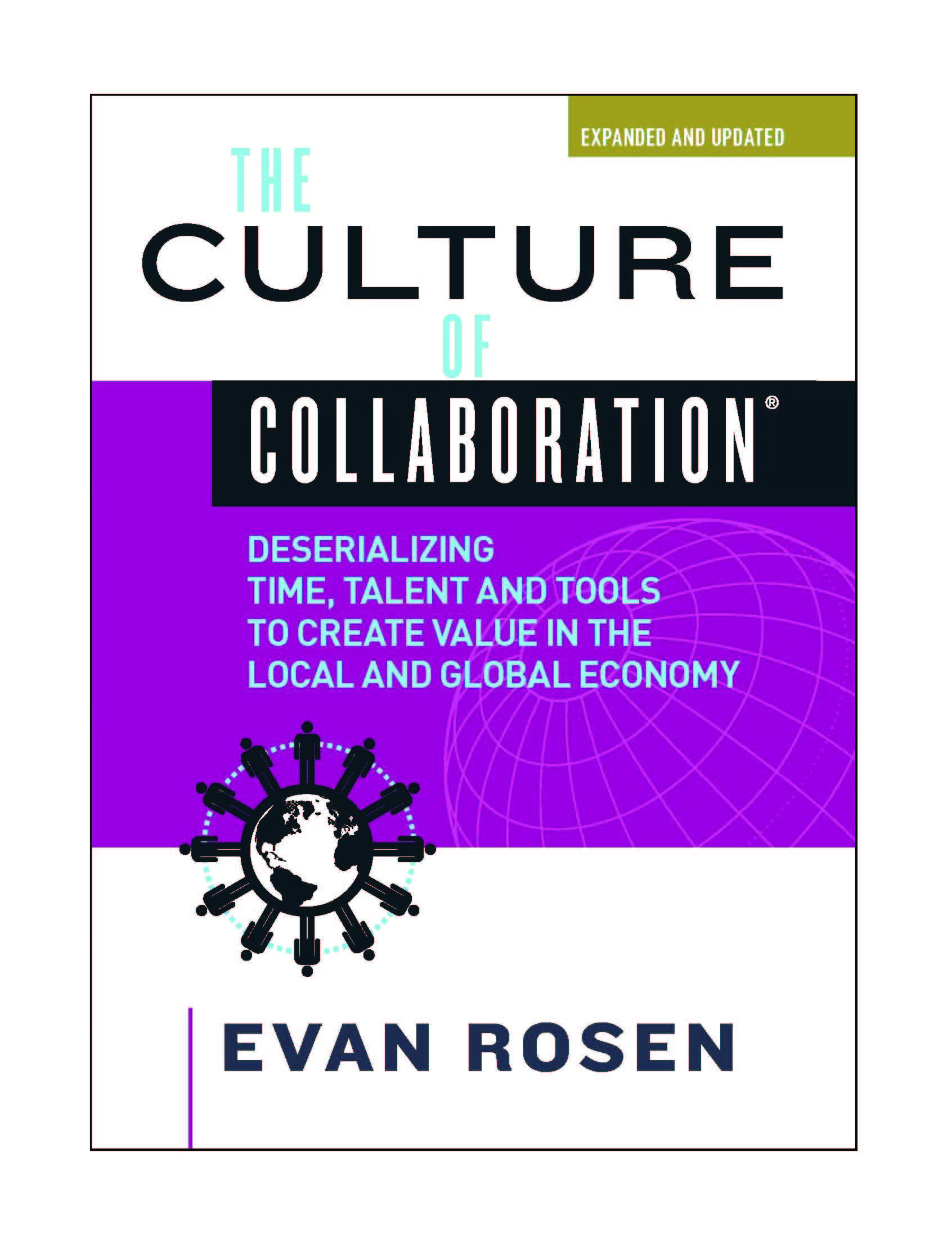
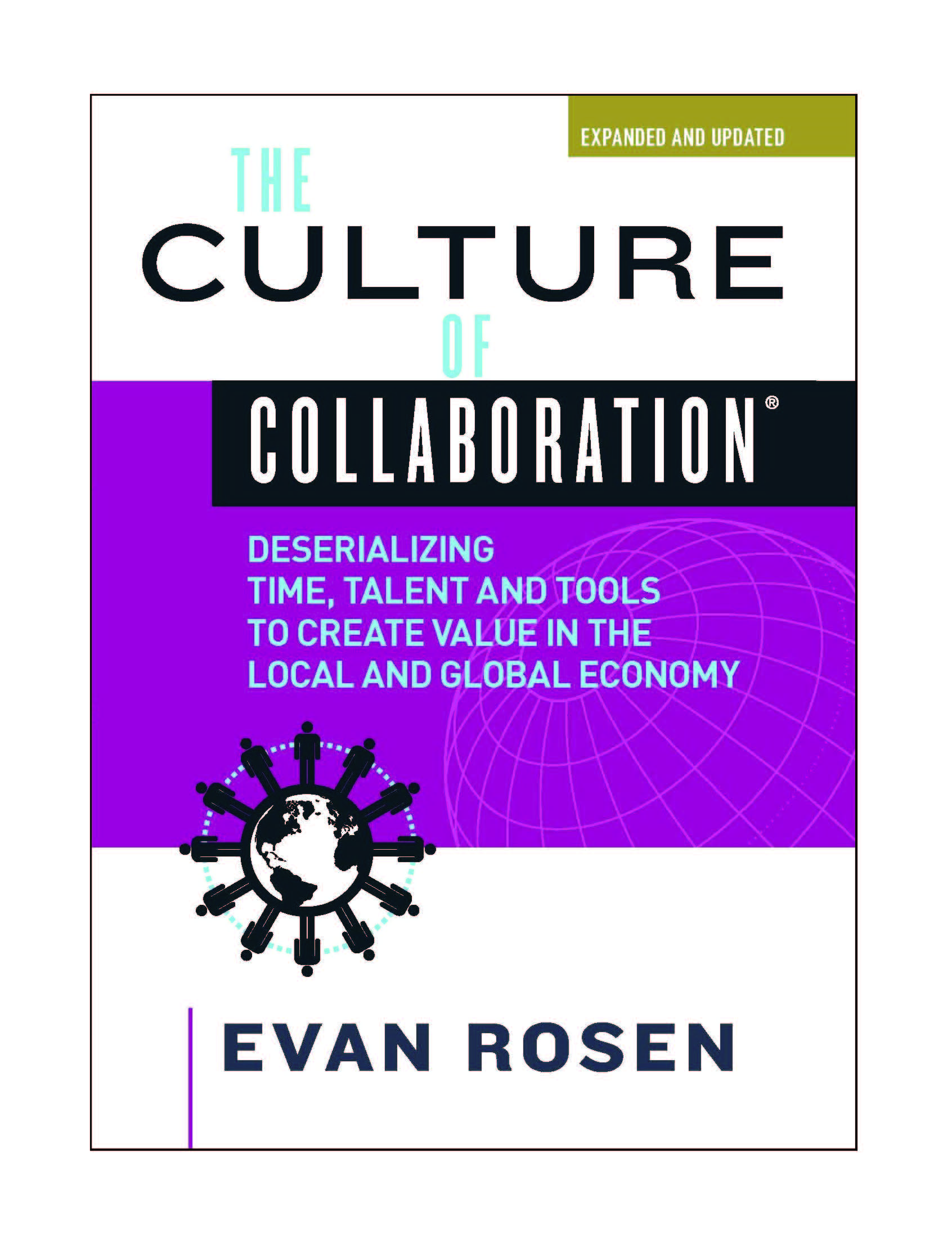
How has collaboration evolved? What is the current state of collaboration at Toyota, Mayo Clinic, Industrial Light & Magic, Boeing and other companies profiled in the first edition of The Culture of Collaboration® book? What are the keys to long-term value creation through collaboration?
These are questions I sought to answer as I went back inside collaborative companies to research and write the new, expanded and updated edition of The Culture of Collaboration® book.
The expanded and updated edition has just been released, and I’m proud of the finished work. The 363-page business book includes 54 images and illustrations and a beefy index. By the way, 54 images and illustrations is no easy feat in 2024. Ever wonder why most business books lack pictures? It’s time-consuming to license even a single image from a large organization.
One thing I’ve learned is that deserialization and collaboration go together like peanut butter and jelly. Deserialization means removing sequences from the lifecycle of products and services. The idea is to collapse outmoded sequential approaches and replace them with spontaneous, real-time processes.
Deserialization also involves removing sequences from interaction. This means killing what’s left of the in-box culture. In short, deserialization is the key to long-term value creation through collaboration. That’s why the subtitle of the expanded and updated edition of The Culture of Collaboration® is: Deserializing Time, Talent and Tools to create Value in the Local and Global Economy.
I’ve also learned that despite best efforts, collaboration can stall within highly-collaborative organizations. Paradoxically, collaboration happens in companies in which the dominant culture is command and control. Likewise, internal competition and command and control exist in mostly-collaborative organizations. Many factors, as I explain in the expanded and updated edition, influence both the evolution and regression of The Culture of Collaboration.
More broadly… as I write in the preface, in some ways we’re less collaborative than we were in the early 2000s. Social media lets us broadcast opinions without refining ideas through real-time interaction. We join groups that make rules for how we should think. Videoconferencing enables interaction at a distance, but too often we’re wasting time in scheduled virtual meetings rather than creating value together spontaneously. While in the same room, we meet rather than collaborate. We leave meetings to work and then schedule follow-up meetings to review work. This serial process zaps value.
My objective in revisiting this topic is to consider whether we have evolved or veered off track and to provide a new framework for unblocking collaboration and unlocking value.
COVID-19 has taught us that the only thing worse than a meeting is a virtual meeting. And the buzz lately is about the relative merits of video calls vs. in-person work gatherings. I had dinner recently with a former colleague, now a communications professor, who has concluded that videoconferencing is best for meetings people want to avoid while in-person gatherings work better for meetings people want to attend. No question it’s easier to multitask and disengage during virtual meetings.
Because of my work in this arena—including a book on videoconferencing in the 90s and two subsequent books on collaboration—outlets have been asking me for my take post-COVID on how to improve meetings in the “hybrid” work environment. Since my focus is on completing a new book for release next year, I have been quiet here and elsewhere. Yet I feel compelled to inform those who have yet to read my books about my view of meetings.
Meetings are a waste of time. That’s true whether we’re talking about same-room or virtual meetings. When I wrote the book Personal Videoconferencing in the mid-90s, I concluded that the benefit of then emerging PC-based videoconferencing was that we could work together screen-to-screen while seeing one another. We could jointly create a work product. In many scenarios, this involved minimizing the video while we shared applications and together produced something.
Virtual meetings were by no means the killer app for personal videoconferencing. The killer app was co-creation. That’s still true. Yet during COVID, many of us grew to hate videoconferencing because we misused the tool for something we dislike: meetings.
So how do we fix meetings? We don’t. Instead, we replace them with collaborative group sessions. I write about this in my bookThe Bounty Effect: 7 Steps to The Culture of Collaboration®. In a nutshell, meetings—whether physical or virtual—are a remnant of command-and-control culture. Often, the highest-ranking or highest-status person sets the agenda and conducts the proceedings. Meetings involve presentation and discussion. Then participants leave to do follow up work, often in isolation. Then this work is reviewed or discussed at yet another meeting. Meetings produce no work product and therefore create no value.
In contrast, a collaborative group (CGS) session produces a work product. Participants co-create documents, drawings, slideshows, animation, 3D models, spreadsheets—you name it. A CGS creates value and is infinitely more collaborative than a meeting. Goodbye meetings. Hello collaborative group sessions.
We are living in a time of exigent circumstances. What do I mean by exigent circumstances? I mean a do-or-die challenge that raises the stakes for survival.
Exigent circumstances ignite the structural change necessary to collaborate for governments, companies, non-profits, universities and just about every organization. This is The Bounty Effect which I describe in my bookThe Bounty Effect: 7 Steps to The Culture of Collaboration®. I call this The Bounty Effect using the metaphor of the mutiny that occurred on the H.M.S. Bounty more than two centuries ago. For Captain Bligh and his loyalists who were cast adrift on a small boat in stormy seas, surviving meant changing the structure and culture from command-and-control to collaborative.
COVID-19 is an exigent circumstance. COVID-19 is The Bounty Effect.
The pandemic is kick starting collaboration in myriad ways as command-and-control practices recede. Companies that weeks ago shunned telecommuting now embrace working from home. Organizations that paid a few people to think and paid everybody else to carry out orders want everybody thinking and contributing. It’s all hands on deck!
Deficit hawks have voted for the largest stimulus in history as legislators of both parties collaborate in ways not seen for at least a decade. Companies are mobilizing and retooling to manufacture medical supplies. Toyota says it’s ready to produce face shields, face masks and respirators.
Companies that preferred email and messaging are integrating rich, real-time collaboration tools such as videoconferencing into work processes and they’re rediscovering an age-old synchronous tool called the telephone. Companies with centralized decision making at “headquarters” are spreading decision making around the organization.
Is this actually lasting structural change or just a temporary reaction to an imminent threat? COVID-19 is a watershed event in the modern history of the world, and many shifts in practices and processes will become permanent.
We’ve seen The Bounty Effect before with pandemics. AIDS changed the structure of vaccine development from competing isolated labs to collaborating across organizational boundaries. Likewise, we will experience not only lasting structural change in organizations of all kinds but also more institutionalized cross-organizational and cross-sector collaboration.
My college housemate, an early and frequent Facebook user, recently announced that he’s pulling the plug on his Facebook account. This decision is apparently based on the perception that Facebook has deceived users about how it shares and profits from personal data. Facebook users are essentially its business partners.
Meantime, the City and County of Los Angeles is suing the business unit of IBM that includes the Weather Channel app. According to the complaint filed in Los Angeles County Superior Court, the IBM unit has “deceptively used its users’ private, personal geolocation data.” The app reportedly has 45 million users monthly.
The tide is turning against social media services and various apps that fail to adequately protect user’s data and privacy. Both Facebook and the IBM weather unit also serve business customers. “We want to be the place where work happens,” Facebook VP of Workplace Julien Cordorniou has reportedly told ZDNet. In an interview on Weather.com, Michael Rodriguez, head of mobile apps for The Weather Company, an IBM Business, says “the app has your back.”
These pronouncements sound great but fall flat. The problem is deterioration of trust. Trust is one of the Ten Cultural Elements of Collaboration that are critical to collaboration. I identify these in The Culture of Collaborationbook. Both Facebook and the Weather Company are essentially asking us to trust them with our data so that we can collaborate with other users and with the companies themselves.
Sneaky language, allegedly deceptive practices and hidden agendas destroy trust and therefore inhibit collaboration. Say a firm wants to collaborate with a business partner. Before partnering companies can effectively collaborate, they must establish the rules of engagement which, among other things, spell out the ownership and use of jointly-created intellectual property. If one partner has a hidden agenda, what are the chances trust will flourish and the collaboration will create value? Practically zero.
Similarly, when we input data into social media and other apps, we are essentially partnering with the app owner. When the word gets out about allegedly deceptive practices and sneaky language in the terms of service, which is the contract between vendor and user, hidden agendas are no longer hidden. Trust vanishes and with it collaboration. Instead of creating value through collaboration, the deception costs a company plenty in reputation, litigation and revenue.
Because only the vendor writes the rules of engagement or terms of service, there can be no real collaboration or partnering with the user. While negotiating the terms with each user is impossible, companies would do well to seek input into privacy guidelines and other terms from, say, a panel of user representatives. Then something closer to collaboration with user/partners could occur.
If Facebook had not lost the trust of many users, my college housemate would undoubtedly continue to partner with Facebook by inputting his data. Companies seeking to truly collaborate with customers and business partners seek clarity and transparency.
The recent rash of sexual misconduct accusations against prominent men provide a lens through which we can view the death of star culture. For generations, we have bestowed God-like status on so-called stars whether they’re politicians, chefs, entertainers, executives, athletes or show hosts. This exalted status makes “stars” believe they are special.
The #metoo movement is a proxy for rejecting star culture. And now this cultural shift is manifesting in other ways. Viewership for last Sunday’s Grammy Awards dropped 24 percent compared with viewership for last year’s Grammy Awards. We’re tired of stars.
If “stars” like Bill Cosby, Harvey Weinstein, Matt Lauer, Mario Batali, Kevin Spacey, Charlie Rose, Steve Wynn and so many others get a pass on just about everything for being stars, our star culture is responsible for their transgressions. We elevate them to status so rarified that they may believe laws and standards of fairness and decency do not apply to them.
Star culture reinforces the false notion that we achieve great feats by ourselves. Whether the so-called star is a movie producer, chef, tv host, actor or executive, the reality is that he or she succeeds because of others. Nobody achieves great feats entirely on their own. Behind the scenes, many people work to make the movie, the meal, the talk show, the team, the business a success regardless of the “star.”
In The Culture of Collaboration book, I describe the Myth of the Single Cowboy. This is the notion that one self-sufficient, rugged individual can achieve smashing success without help from anybody. When we perpetuate this myth, we make so-called stars feel that they’re a breed apart and can conduct themselves without consequences.
Star culture reinforced by the media and society at large also infects organizations. The result is that contributors who are not considered A-listers get sidelined. Their input and ideas are lost, and value creation suffers. Plus internal competition to become a star increases bad behavior such as sabotaging others and hoarding information.
Our excuse for star culture and for tolerating transgressions is that stars supposedly create more revenue. There is evidence, though, that the financial performance of stars is often overstated. NBC’s Today Show picked up more viewers after the network fired Matt Lauer.
Rejecting star culture is nothing short of a fundamental shift in our society. This shift will impact companies, universities, government agencies and organizations of all types. Smart organizations will get ahead of the curve and take the necessary steps to replace star culture with a collaborative culture
People who become stars often cheat to achieve or keep their rarefied status. Social media is a case in point. One way we measure star power is to count the number of followers on social media. Did we really think that stars are so popular that millions of people read their posts and tweets? It turns out that “stars” and wannabe “stars” pay for fake followers which create fake data on which companies base advertising and endorsement decisions.
A reporting team at the New York Times recently investigated a company named Devumi that sells Twitter followers and retweets. The company reportedly has at least 3.5 million automated accounts for rent. Customers include reality television “stars.”
So it turns out that star culture is related to another unfortunate phenomenon that compromises collaboration: measurement mania and the tyranny of data. Fake data is by no means limited to social media. In command-and-control organizational cultures that foster internal competition and information hoarding, team members get the message that the goal is winning at all costs. In this type of culture, numbers get fudged and corners get cut.
Fake data scandals cost these companies plenty. A recent glaring example is the fake bank account scandal at Wells Fargo. Companies that embrace fake data are often the same companies that promote “stars” and minimize the contributions of others.
Many companies have yet to catch up with our evolving society. Successful organizations use real data and replace star culture with collaborative culture.
I was chatting with Ray Dalio, founder of Bridgewater Associates last Tuesday about the thin line between constructive and destructive confrontation in the workplace. “Confrontation has to be constructive,” the founder of the world’s largest hedge fund told me. "You need to get everything out on the table.” Constructive confrontation is one of the Ten Cultural Elements of Collaboration that I introduced in The Culture of Collaborationbook. It’s also an aspect of Bridgewater’s controversial culture.
Ray had just finished an on-stage interview with Charles Duhigg on Bridgewater’s culture at the New York Times New Work Summit in Half Moon Bay, California. Collaboration was a central theme of the conference that brought together a few hundred chief executives, human resources leaders and others to share experiences, insights and challenges involving organizational culture.
“I want an idea meritocracy. I want independent thinkers who are going to disagree,” Ray told the audience. One way that Bridgewater accomplishes this objective is by capturing ninety-nine percent of meetings on video and making the archived video available to each of its roughly 1400 people at any time. The one percent of meetings not recorded involves personnel issues and proprietary trades.
“The most important thing I want is meaningful work and meaningful relationships, and we get there through radical truth.” Ray’s point is that radical truth and transparency build trust and curb hidden agendas and spin. “There’s no talking behind people’s backs,” according to Ray. “Bad things happen in the dark.” Bridgewater’s meritocracy, he explains, produces evidence which decreases bias and increases fact-based decisions.
Information democracy in which organizations widely share data and information is a key principle of collaborative companies. Trust and constructive confrontation are critical to collaboration. Hidden agendas and spin short circuit collaboration. So it would seem that Bridgewater’s brand of radical transparency would enhance collaboration. Right? Well, that depends.
There’s conflicting information regarding whether all confrontation is thoughtful and constructive at Bridgewater. That’s why I engaged Ray about the thin line between constructive and destructive confrontation and the need to keep disagreements thoughtful. Bridgewater makes performance reviews public and encourages team members to examine themselves before accepting areas for improvement, according to an April, 2014 article in the Harvard Business Review.
Performance reviews, whether public or private, can exhaust an organization and compromise value. Meetings, whether captured on video or not, waste time and energy. A more effective alternative to meetings, which I outline in my bookThe Bounty Effect: 7 Steps to The Culture of Collaboration, is collaborative group sessions in which people co-create something of value.
Self-actualization seems to play a role in Bridgewater’s culture. Rather than check one’s emotions at the office door, team members are encouraged to recognize their emotional “triggers” and to “recognize the challenge between the logical and emotional self” in Ray’s words. Then people can more easily set aside emotional triggers and baggage.
I was curious how Bridgewater's culture resonated with the conference crowd, so I continued the discussion over lunch. Capturing almost all meetings on video for everybody to see is one cultural attribute that fell flat. “That would never work in our organization,” one participant at my table insisted. She explained that her company values privacy and offers private drop-in spaces for on-the-fly interactions. Other attendees expressed similar views.
The down side of capturing almost all meeting video is that people may put on game faces whenever they’re in a “live” meeting room and that formality takes hold. In contrast, informality enhances collaboration which is why so many businesses have been hatched while doodling on napkins in bars and cafes. Floor proceedings in the U.S. House of Representatives and Senate were once far less formal before these bodies allowed television cameras. Now there’s greater transparency but less collaboration across party lines.
Sometimes collaborators create greater value for the organization during small, private collaborative sessions either through technology or in the same room. Making video capture of these sessions widely available but optional may create the greatest value for collaborative organizations.
Clearly, radical transparency works for Bridgewater. Could the firm’s industry play a role? “You have to be an independent thinker in markets because consensus is built into price,” explains Ray. Then again, challenging the status quo creates value in many industries.
For organizations adopting collaborative structures and cultures, there’s much to learn from Bridgewater. But what works for one company in a particular industry may fall short for another company in a different business. Trying to implement a carbon copy structure and culture would undoubtedly be a mistake.
I was in northwest Ohio this summer where Trump yard signs were everywhere and Clinton signs were practically nowhere.
What changed? The increasing role of data.
Most Clinton staffers apparently believed that targeted election canvassing and social media produce greater results than yard signs, campaign buttons and bumper stickers. And the data suggests that physical signs have only a slight impact on campaigns.
The Hillary Clinton campaign favored online ads like this one over yard signs.
The lack of Ohio yard signs was a shock in that I covered presidential campaigns in Ohio during my early career as a reporter for WTOL-TV, the CBS affiliate in Toledo. Yard signs always dominated the landscape during election season. For voters looking around for clues of which way the wind is blowing among friends and neighbors, yard signs matter.
Yard signs illustrate how data and common sense can diverge. Common sense suggests that campaign signs, particularly those on residential lawns, have a significant impact. Many people vote for the candidate their friends and neighbors support. And regardless of ads and chatter on social media, there’s nothing quite like the real-world visual reinforcement of a candidate’s signs dominating one’s street or neighborhood.
And Ohio is by no means the only state that lacked Clinton yard signs. Published reports indicate that Trump signs dominated rural Pennsylvania. Last January, Wired profiled Edward Kimmel, a part-time campaign photographer and Clinton supporter, who noticed the visual shift from previous presidential campaigns in Iowa. Kimmel voiced concerns about the impact a lack of signs might have on voter turnout. Kimmel was prescient.
A tyranny of data short circuited the Hillary Clinton campaign and contributed to Donald Trump’s victory. From the bubble of its Brooklyn Heights headquarters, the Hillary Clinton campaign apparently viewed yard signs as obsolete in the age of targeted digital canvassing and social media.
The Clinton campaign is just one example of how relying exclusively on data can compromise value. Wells Fargo emphasized measurement over common sense, and its reward system encouraged team members to cut corners and open unauthorized accounts for customers as I detailed in my September 13, 2016 post. The company is now paying the price in fines, lost business and compromised reputation.
A Donald Trump for President campaign yard sign in West Des Moines, Iowa. Photo by Tony Webster. Licensed under CC BY 2.0
Measurement mania and the tyranny of data are nothing new. In my most recent bookThe Bounty Effect: 7 Steps to The Culture of Collaboration , I write about the myopic approach dubbed “management by measurement” which dates back to the so-called Whiz Kids. In the 1940s, the Whiz Kids were junior faculty from Harvard Business School recruited by Charles “Tex” Thornton to run the Statistical Control unit of the Unites States Army. The group included Robert McNamara, who would later become president of Ford Motor Company, secretary of defense and president of the World Bank.
The Whiz Kids applied statistical rigor in running the army, and later Henry Ford II hired the team to bring a similar data-driven focus to Ford. The Whiz Kids also introduced bureaucracy and hierarchy and developed rules requiring that, among other things, memos from vice presidents must appear on blue paper to highlight their importance.
The Whiz Kids sacrificed long-term value for short-term targets by limiting investment in new equipment and R&D. Plus Ford’s products suffered when plant leaders failed to prove through numbers the necessity for new equipment. Ultimately, this myopic focus on data led to foreign competition from companies that focused as much on engineering and production as on finance.
The Clinton campaign is by no means the only organization blinded by data. Organizations in every sector and industry suffer from measurement mania that impedes collaboration and value creation. In The Bounty Effect, I detail Five Measurement Counter-Measures to prevent data from short circuiting collaboration and compromising value. One of them is “perform a common sense reality check.”
Had the Clinton campaign used common sense to check its data, yard signs might have sprouted in the industrial Midwest and, more broadly, the campaign might have adopted a message that would have resonated with swing-state voters.
Regardless of level, role, region, organization or sector…never rely on data without a common sense reality check.
Wells Fargo CEO John Stumpf will testify before the Senate Banking Committee next Tuesday about the company’s sales practices. This word comes less than a week after Wells Fargo agreed to pay $185 million in fines from the Consumer Financial Protection Bureau, the Comptroller of the Currency and the City Attorney of Los Angeles. So what went wrong?
Well, I’ve seen similar disasters in other companies when the structure—and, yes, the culture—of the organization encourages competing with colleagues and cutting corners rather than collaborating with colleagues, customers and partners. The key building blocks of the organizational structure are principles, practices and processes. We get clues about Wells Fargo’s principles from its written “vision and values” which include:
“Our ethics are the sum of all the decisions each of us makes every day. If you want to find out how strong a company’s ethics are, don’t listen to what its people say. Watch what they do.”
So what exactly did Wells Fargo people do to cost the company $185 million plus untold damage to its brand and reputation?
According to the Consumer Financial Protection Bureau, Wells Fargo opened over 1.5 million unauthorized deposit accounts and may have funded these accounts by transferring funds from existing customer accounts without consent or through “simulated” funding. This practice generated about two million dollars in fees from 85,000 accounts. The CFPB consent order also states that Wells Fargo submitted credit card applications, ordered debit cards and enrolled consumers in online banking without customer consent. Clearly, this behavior represents at best a disconnect between principles and processes particularly the reward system process.
Wells Fargo’s “vision and values” cover everything from ethics to doing what’s right for customers. But written “vision and values” and mission statements don’t tell the whole story for many companies. Often, the real principles that govern an organization are unwritten. These principles manifest in break rooms, cafeterias, meetings, “off-site” sessions and sometimes during dreaded performance reviews. At best, Wells Fargo’s unwritten principles echo its written values and the problem is a disconnect between principles and processes that culminated in widespread abuses.
At worst, the company’s unwritten principles are something like “win at all costs” and “loyalty above all” which by some accounts were the unwritten principles of Lehman Brothers. Lehman, once the fourth largest investment bank in the United States, no longer exists. Neither does Enron which embraced the principle of following orders without questioning them. The wrong unwritten principles or a disconnect between the right principles and processes can start small with, say, approving mortgages for people who don’t qualify and culminate in a near collapse of the financial system.
Many organizations espouse collaborative principles while short circuiting collaboration and value creation through reward systems that reinforce internally-competitive, command-and-control behavior which can easily morph into cutting corners and illegally fudging numbers. Along the way, trust dies among team members and ultimately among customers, partners, regulators and others. This happens in industries ranging from financial services and healthcare to manufacturing and technology. And it doesn’t help that increasingly team members across multiple industries prefer to interact with devices and computer systems rather than with their customers.
Why would the third largest U.S. bank by assets—and a favorite stock of Warren Buffett—risk its reputation by cutting corners? The most likely answer: to keep the squeeze on team members through a reward system that the bank believed would deliver ever better quarterly returns.
When I hear analysts and others suggest that a company has a secret sauce shrouded in mystery that delivers outlier returns, alarm bells reverberate in my brain. This is also true of financial advisors touting a particular investment. In 2009, Warren Buffett suggested in a Fortune interview that there was something special about how Wells Fargo does business. “The key to the future of Wells Fargo is continuing to get the money in at very low costs, selling all kinds of services to their customer and having spreads like nobody else has.” This sounds sort of like a secret sauce—and there go the alarm bells. Sometimes there’s a reason why a company is an outlier. Mostly, what Buffett was referring to is the Wells Fargo practice of cross selling which is simply selling more products to existing customers. It turns out that cross selling involved phantom sales. Wells has told some team members to stop cross-selling amid the crisis.
So how can Wells Fargo be fixed? The company has fired more than 5000 employees, because of the illegal practices. But is the real problem these team members or the company’s principles, practices and processes? Wells Fargo CFO John Shrewsberry apparently feels it’s the former. Shrewsberry reportedly told the Barclays Global Financial Conference in New York on Tuesday that the team members who committed the illegal acts were “at the lower end of the performance scale” and they were trying to hold onto their jobs.
Wells Fargo senior leaders are missing the point. The real villain is the reward system they created or approved that drives the behavior of team members at bank branches. This system apparently rewarded employees for opening accounts regardless of whether customers funded these accounts with new money. What value does this create? None. In fact, it likely costs more to open and ultimately close an unauthorized account than to do nothing. It makes little sense to blame bank branch employees for trying to retain their jobs when senior leaders have likely created principles, practices and processes that prevented more than 5000 people from acting ethically, selling products and creating value.
As its CEO prepares to testify before the Senate Banking Committee, Wells Fargo announced today the company is eliminating sales goals for retail bankers. Fixing the reward system without systemic repair may help for a while, but a lasting solution requires a more comprehensive approach. I’ve learned that trying to change an ingrained culture fails without changing the organizational structure.
The unfolding crisis provides an opportunity for Wells Fargo and many other companies in multiple industries with similar issues to replace an obsolete organizational structure while revamping the flawed reward system. This involves focusing like a laser beam on the key building blocks of a value-creating collaborative company: principles, practices and processes. Only then can the culture evolve.
It takes more than appearing collaborative to achieve The Culture of Collaboration.
As collaboration has become a trend, companies and people talk collaboration without being collaborative. Just as greenwashing involves deceptively promoting the perception that an organization’s products and policies are environmentally-friendly, something similar is happening with collaboration. It's called collaboration washing: promoting collaboration as a corporate or product trait without any real collaboration happening.
When the first edition of my book The Culture of Collaboration® appeared in early 2007, consciousness for organizational collaboration was just beginning. One prominent Silicon Valley company had pre-ordered thousands of copies of the book. A new chief marketing officer disliked the word collaboration, and so the books remained in the company’s warehouse until the following year when more people, organizations and media outlets began embracing collaboration. Then the technology company distributed the books to customers globally.
Now collaboration is a buzz word. Marketers link myriad products to collaboration, and human resources people embrace the word as a corporate culture label. And guess what? The meaning of collaboration is getting diluted. In The Culture of Collaboration® book, I define collaboration as “working together to create value while sharing virtual or physical space.”
Many people regard social media use as a mark of a collaborative company. As I’ve demonstrated to many audiences, it’s quite possible to use social media and create zero value. It’s also possible to use any collaboration technology without creating value and, therefore, without collaborating. Some consider a youthful workforce as an indicator of a collaborative culture. But I’ve observed, interviewed and worked with numerous engineers in their fifties and sixties who have designed everything from game-changing software to airplanes. Without significant collaboration, these products would have been dead on arrival. And it’s easy to find internally-competitive, command-and-control behavior among people in their twenties working in technology and other leading-edge sectors.
Real collaboration requires adopting a collaborative organizational structure as I outline in my most recent book, The Bounty Effect: 7 Steps to The Culture of Collaboration®. This goes well beyond buzz words and window dressing. The Bounty Effect is the second book in The Culture of Collaboration® series. The first book, The Culture of Collaboration®, is about raising the consciousness for a new way of working. The Bounty Effect focuses on how to achieve collaboration in organizations
Open-plan workspaces are a current popular marker of a collaborative company. Collaborative workplace design is much more than window dressing. It’s a key practice in adopting a collaborative structure, but it’s only one element. Citigroup is the latest Fortune 500 company to jump on the open-plan workspace bandwagon. Citi reportedly is adopting a “non-territorial” or “free-address” deskless approach similar to the one GlaxoSmithKline uses in its Philadelphia Navy Yard building. In The Bounty Effect, I explain GlaxoSmithKline's approach to collaborative workspaces and culture.
Citi CEO Michael Corbat told the Wall Street Journal that he is particularly excited about a “town square” space on the ground floor that will increase serendipitous encounters among team members. This, in turn, he expects will enhance communication and exchange of ideas. Also, Citigroup anticipates that the open-plan workspace will flatten hierarchies.
Essentially, Citigroup is taking a step towards adopting a more collaborative culture and structure. However, transforming a company into a global collaborative enterprise requires many more structural changes than the physical workplace environment. Many organizations such as police and fire departments, newsrooms and trading floors have operated with open-plan workspaces for years. Yet a lack of collaboration still compromises many of these organizations.
Citigroup and the increasing numbers of organizations adopting open workspaces can create incredible value through collaboration if they go beyond the most obvious manifestation of a shifting culture—the physical workplace environment—to embrace principles, practices and processes of collaborative organizational structure. These include everything from replacing the traditional organization chart and the traditional meeting to changing the recognition and reward system and keeping measurement mania in check.
Anything short of structural change is collaboration washing.
General Motors CEO Mary Barra is taking aim at the “C” word.
“I hate the word culture,” Barra is quoted as saying in an article by Joseph B. White in the September 30 edition of the Wall Street Journal. “Culture is really just how we all behave,” according to Barra. The comments are curious in that Barra testified before a Congressional subcommittee last June that she would
GM CEO Mary Barra outlines new strategic plan (Image copyright GM)
not rest until GM’s “deep underlying cultural problems” are resolved. The subcommittee was investigating GM’s failure to recall thousands of cars with defective ignition switches for eleven years.
It’s myopic to dismiss the word culture. Merriam-Webster Dictionary’s third definition of culture is “a way of thinking, behaving, or working that exists in a place or organization.” GM would benefit from focusing on these issues plus the broader context of the word culture. In his Tusculan Disputations, the ancient Roman orator Cicero introduced the concept of culture as cultivation of the soul as a farmer cultivates crops. Culture has come to represent beliefs and customs of societies. Cultural anthropologists study social structure and customs in populations ranging from villages to corporations.
Culture is inextricably intertwined with collaboration in that how “we all behave” in Barra’s words determines whether we’re working together towards common goals or working at cross purposes. Ironically, in a July 28, 2014 post, The Culture of Collaboration® blog took General Motors to task for overemphasizing culture change without structural change. Culture change typically delivered as an edict often highlights the desired result without providing a way to get there. This common prescription from leaders, pundits and management gurus often fails, because the shift originates with executives without detail, discussion or broad buy-in. Meantime, the outmoded organizational structure stays the same. To achieve collaborative culture and the payoff that collaboration provides, it’s necessary to change the organizational structure. Then culture change can happen.
On October 1, GM outlined its new strategic plan that focuses on technology and product advances, growth in China, establishing Cadillac as a separate business unit “headquartered” in New York City and delivering “core operating efficiencies.” Incidentally, the notion of headquarters is a relic of Industrial Age command and control. Nowhere does the plan mention structural change, which the automaker sorely needs. Changing GM’s structure requires overhauling everything from how team members share information across levels, roles and regions to how the company recognizes and rewards people as I detail in my book, The Bounty Effect: 7 Steps to The Culture of Collaboration®.

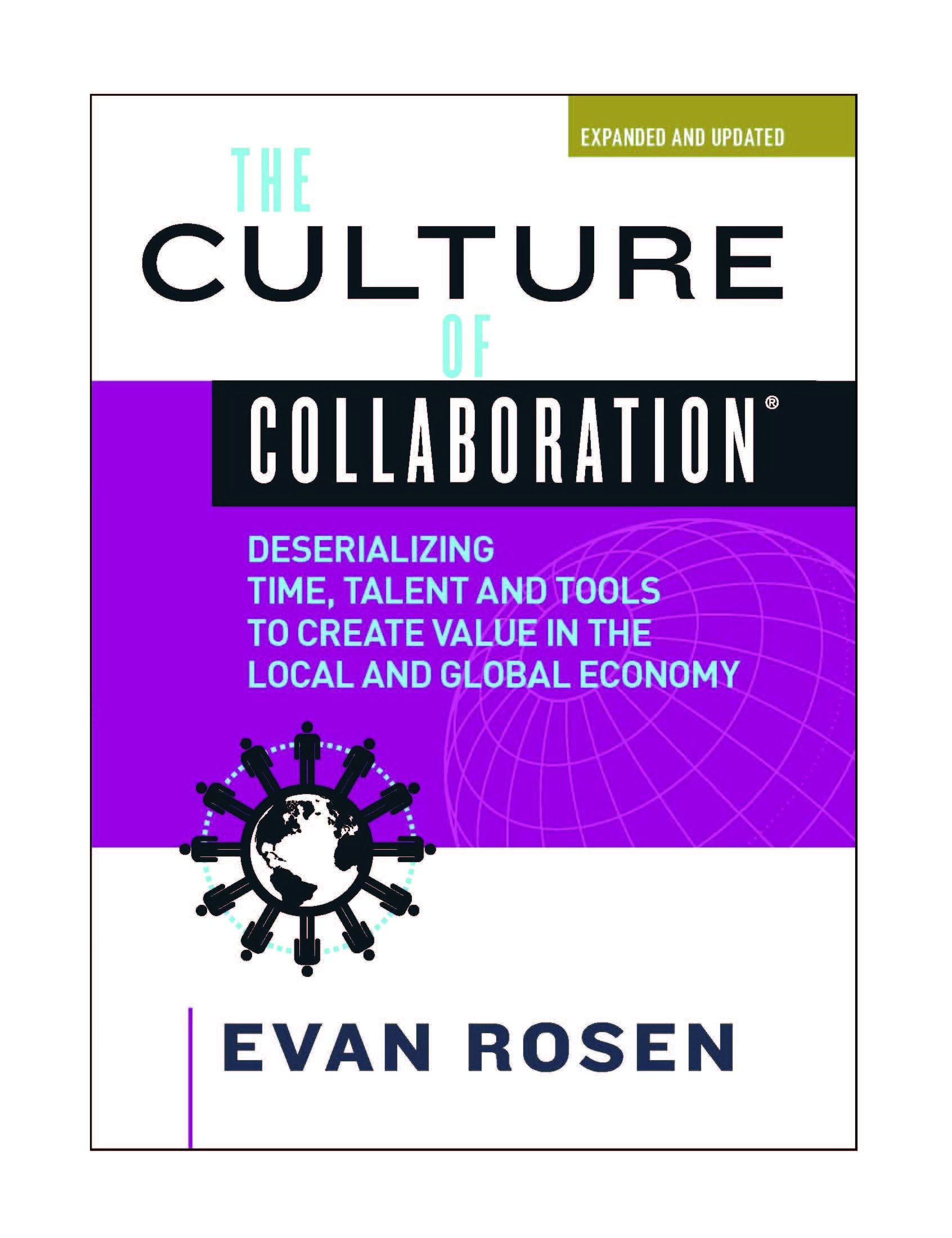





 The Culture of Collaboration Blog